
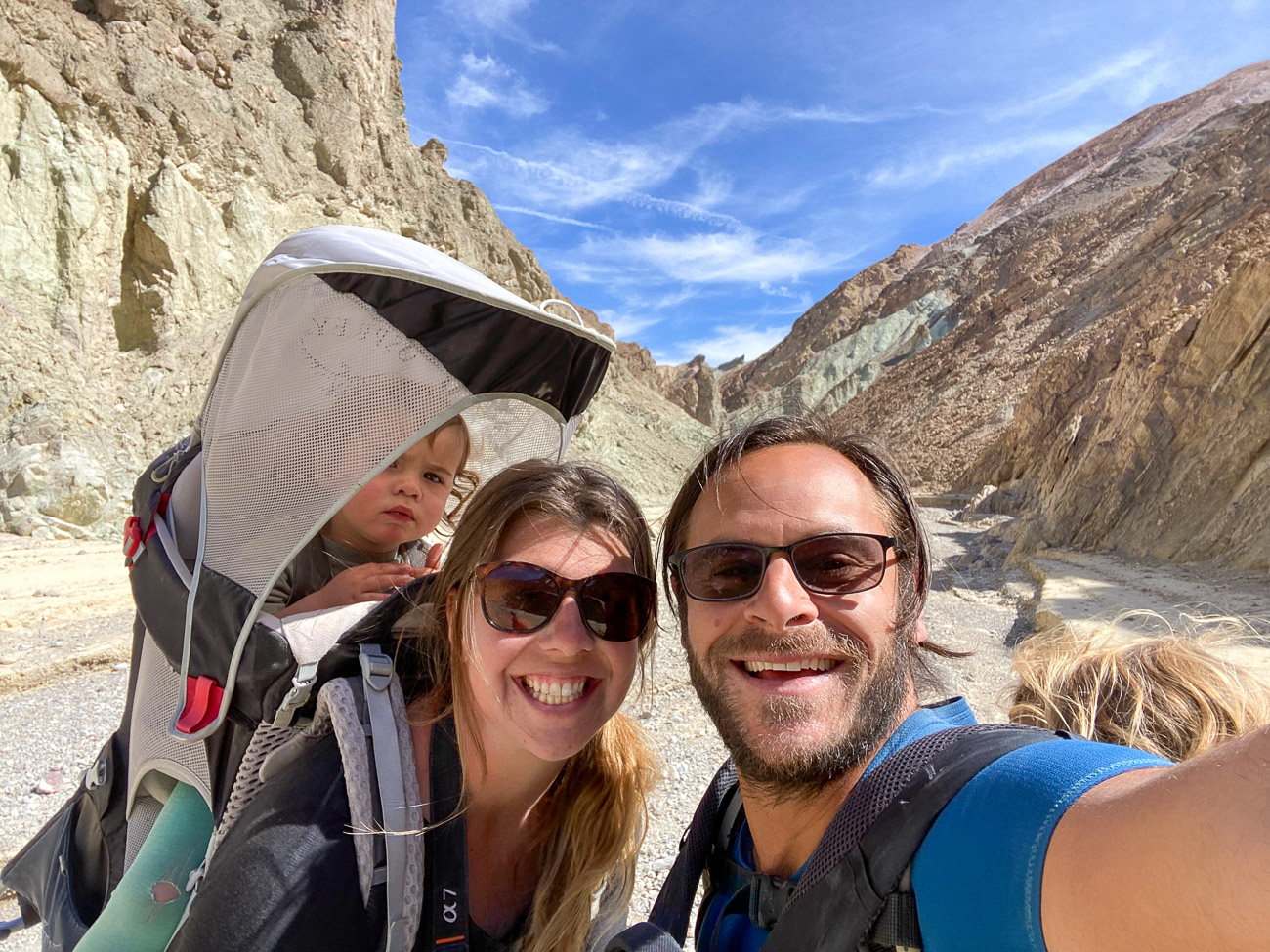
If you’re planning Death Valley with kids, the trip is most manageable when you treat the park as an extreme desert environment rather than a typical sightseeing stop. This guide is for families who want to experience the park’s unusual landscapes while keeping heat, driving, and outdoor exposure within realistic limits.
A Death Valley family trip works best at a slower pace, with short outdoor stops, flexible plans, and enough margin to adjust when conditions change. The most common planning mistake is underestimating how quickly heat and direct sun can make even simple walks feel harder than expected.
With the right preparation, visiting Death Valley with children can be very doable. The key is matching the day’s activities to the weather, choosing experiences that fit your family’s energy, and being willing to shorten or change plans when the environment demands it.
If you have any comments/questions, please leave them below.
Table of Contents
Is Death Valley Safe to Visit With Kids?
Death Valley can be safe to visit with kids when temperatures are manageable and your plans are built around the park’s extreme environment rather than treated like a typical national park day.
The biggest mistake is assuming that a short walk or scenic stop is automatically easy. In Death Valley, heat, direct sun, elevation, and distance from services can matter more than trail length.
When Is Death Valley Most Manageable With Children?
Cooler months are generally the best fit for a family trip because they give you far more flexibility for short walks, viewpoints, and outdoor stops.
Summer changes the experience considerably. Even brief exposure can become difficult when temperatures are extreme, especially at low elevations such as Badwater Basin.
For most families, the decision should come down to:
- Current forecast
- Time of day
- Planned activity
- Children’s age and heat tolerance
- Distance from the vehicle
- Access to shade and air conditioning
With younger kids, expect energy to drop faster than it would on a mild-weather hike.
What Do Families Underestimate About Death Valley?
Most families underestimate how quickly the environment can turn a simple stop into a tiring one.
A viewpoint may require only a few minutes of walking, but direct sun, dry air, and reflected heat can make the outing feel much harder than expected. Cars also heat up quickly when parked, so transitions between stops are part of the planning.
Common friction points include:
- Little natural shade
- Long distances between services
- Limited cell coverage in some areas
- Hot vehicle interiors
- Children wanting to walk farther than planned
- Adults waiting too long to shorten the day
A useful rule is to decide on turnaround limits before everyone is tired.
Does Season Matter More Than the Itinerary?
Yes. In Death Valley, weather should determine the itinerary rather than the itinerary determining how much exposure your family accepts.
A plan that works well in cooler conditions may not be appropriate during a heat wave.
That means being willing to:
- Shorten walks
- Replace hiking with scenic drives
- Spend more time at higher elevations
- Skip exposed stops
- Change the day entirely if conditions are poor
This flexibility is a strength, not a failure of planning.
How Should Parents Decide Whether to Keep Going?
Use a simple decision framework.
Continue as planned when conditions are moderate, everyone feels well, and the activity remains short and manageable.
Scale back when temperatures rise, kids slow down, or water use is higher than expected.
Change plans completely when the heat makes outdoor exposure inappropriate.
The National Park Service identifies extreme heat as one of Death Valley’s primary hazards and provides current alerts, weather information, road conditions, and safety guidance that families should review before entering the park.
Planning Takeaway
Death Valley with kids works best when you treat the environment as the main planning factor.
Choose cooler conditions when possible, keep outdoor stops flexible, and be willing to shorten the day before anyone reaches their limit. That approach gives your family a much better chance of enjoying Death Valley without turning the trip into an endurance test.
How Does Death Valley’s Extreme Heat Affect Your Family, Vehicle, and Gear?
Extreme heat in Death Valley affects more than comfort; it can also change how long your family can stay outside and how reliably your vehicle, batteries, and electronics perform.
This is one of the reasons Death Valley with kids requires a different planning mindset from a typical national park road trip. In a remote desert environment, small equipment or vehicle problems can become more consequential simply because services and shade are limited.
How Does Extreme Heat Affect Kids and Adults?
Extreme heat reduces stamina and makes even short periods outside feel more demanding.
Children may tire before adults expect, especially when walking on exposed surfaces with little shade. Dry air can also make it less obvious how much fluid everyone is losing.
Most families underestimate how quickly a short scenic stop can turn into a physically tiring activity when direct sun, hot ground, and high temperatures are combined.
That makes pacing important. Shorter stops, more frequent cooling breaks, and a willingness to change plans can matter more than trying to complete a full itinerary.
Why Does Vehicle Reliability Matter More in Death Valley?
Vehicle problems become more serious when temperatures are extreme and help may be far away.
Before entering the park, families should pay particular attention to:
- Tire condition and pressure
- Coolant and cooling system
- Battery condition
- Fuel level
- Air conditioning
- Warning lights
- Overall mechanical reliability
A vehicle that is already showing signs of trouble is a poor match for remote desert driving.
With kids in the car, working air conditioning is more than a comfort feature during very hot conditions; it is an important part of how you manage heat exposure between stops.
How Does Heat Affect Batteries and Electronics?
High temperatures can stress batteries, electronics, and other power-related equipment that families may rely on for navigation, communication, photography, or charging.
That includes:
- Vehicle batteries
- Phones
- Cameras
- GPS devices
- Portable power stations
- Charging equipment
Equipment designed for demanding environments often relies on components selected to remain resilient against stressors like voltage and heat, which helps explain why high temperatures deserve consideration when families depend on electronics or other power systems in remote places.
Avoid leaving essential electronics in direct sun or on a dashboard, and follow manufacturer guidance for operating and storage temperatures.
Should Families Leave Electronics in a Parked Car?
Sensitive electronics should not be treated as immune to the temperatures that can build inside a parked vehicle.
If a device is important for navigation or communication, keep it shaded and protected rather than leaving it exposed in the hottest part of the car.
Practical steps include:
- Keep devices out of direct sunlight
- Avoid dashboard storage
- Use shaded or insulated storage when appropriate
- Keep critical devices charged
- Carry backup charging options if needed
This is especially important if your phone is also serving as your map, camera, and primary communication device.
What Should Families Check Before Driving Into Remote Areas?
A quick vehicle and gear check before leaving developed areas can prevent unnecessary problems later.
Useful items to confirm include:
- Full or sufficient fuel
- Water supply
- Tire condition
- Coolant
- Battery condition
- Charged phones
- Offline maps
- Backup power
- Current road conditions
The National Highway Traffic Safety Administration provides vehicle-safety and road-trip guidance that can help families think through basic vehicle preparation before traveling in extreme conditions.
Planning Takeaway
In Death Valley, heat preparation should include your family, your vehicle, and the equipment you rely on.
Keep outdoor exposure conservative, make sure the vehicle is dependable, protect important electronics from unnecessary heat, and avoid creating a situation where a minor mechanical or battery issue becomes a bigger problem because of the environment.
What Are the Best Things to Do in Death Valley With Kids?
The best things to do in Death Valley with kids are scenic stops, short walks, and viewpoints that deliver a strong sense of the landscape without requiring long exposure to heat or remote terrain.
For most families, the park works better as a series of short, high-value experiences than as a place to stack multiple long hikes into one day.
Is Badwater Basin Worth Visiting With Kids?
Yes. Badwater Basin is one of the easiest places for families to experience Death Valley’s extreme landscape without committing to a long hike.
The salt flats are immediately distinctive, and you can make the walk as short or as long as conditions allow.
What families should keep in mind:
- There is very little shade
- Ground temperatures can become intense
- Kids may want to keep walking farther than expected
- The return walk is fully exposed
A useful strategy is to decide on a turnaround point before everyone starts walking.
Is Zabriskie Point Good for Families?
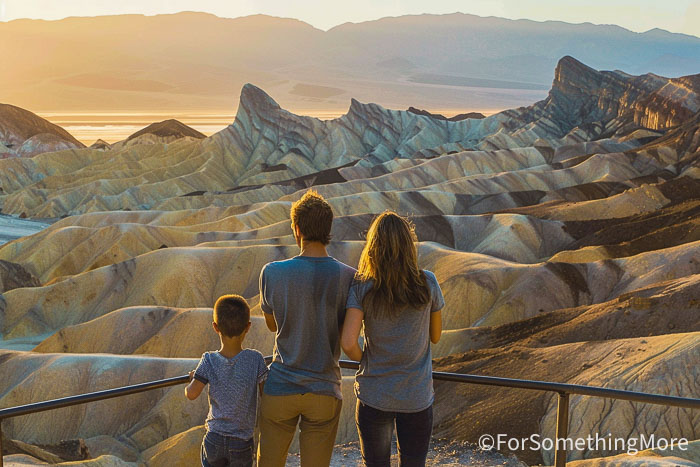
Yes. Zabriskie Point is one of the highest-value stops in the park because the scenery is dramatic and the walking requirement is minimal.
It works especially well for:
- Younger children
- Shorter visits
- Hotter days when exposure needs to be limited
- Families with mixed energy levels
This is the kind of stop that can make Death Valley with kids feel manageable, because you can get a strong sense of the terrain without turning the experience into a demanding outing.
Is Artist’s Drive Worth Doing With Kids?

Yes. Artist’s Drive is a practical family option because much of the experience happens from the vehicle.
The main highlight is Artist’s Palette, where mineral-rich hills create bands of color across the landscape.
This type of scenic drive is especially useful when:
- Temperatures are rising
- Kids need a break from walking
- You still want to keep exploring
- The family has already done one active stop that day
Families should check current road conditions and any vehicle restrictions before driving the route.
Are the Mesquite Flat Sand Dunes Good With Kids?
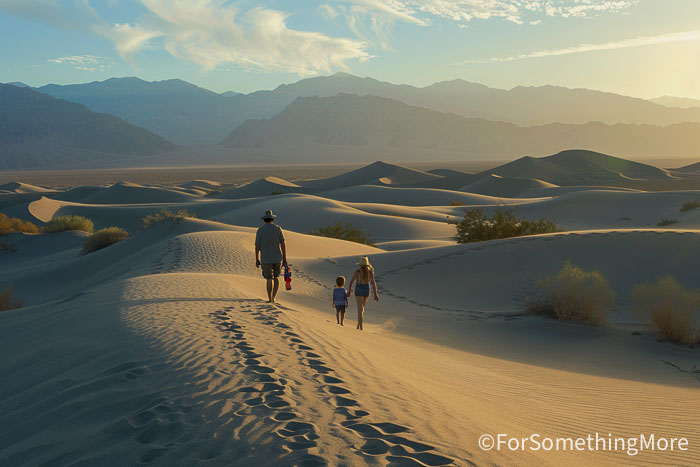
Yes, but the dunes are more tiring than they look.
There is no required endpoint, which makes them flexible. You can walk for 10 minutes or much longer depending on conditions and energy.
The main challenge is the sand itself.
Walking through loose sand takes more effort, and there is almost no shade. With younger kids, expect the return walk to feel slower than the walk out.
That makes the dunes best for cooler parts of the day.
Is Dante’s View Worth the Drive?
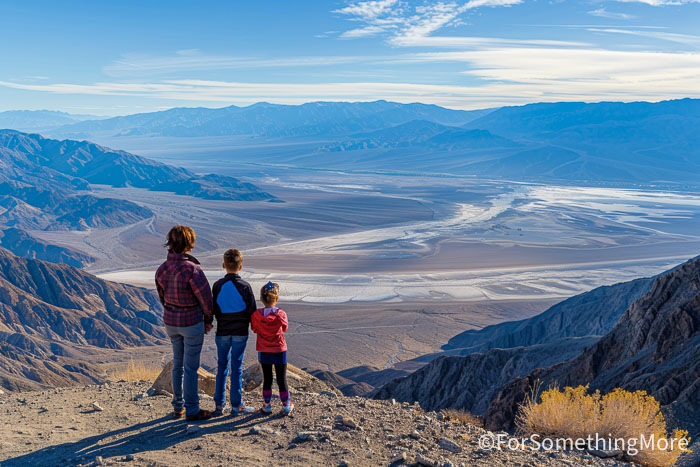
Yes. Dante’s View is a useful contrast to the valley floor because it gives families a broad view of Death Valley from much higher elevation.
That difference in elevation can also make the stop feel noticeably different from lower areas of the park.
Dante’s View works well when you want:
- A panoramic viewpoint
- Less walking
- A break from low-elevation heat
- A broader sense of the park’s geography
Which Stops Are Best for Different Families?
A simple comparison can help:
| Place | Best For | Main Constraint |
|---|---|---|
| Badwater Basin | Iconic salt flats | Heat and exposure |
| Zabriskie Point | Big scenery with little walking | Minimal shade |
| Artist’s Drive | Scenic driving | Road conditions and vehicle limits |
| Mesquite Flat Sand Dunes | Flexible exploration | Sand and heat |
| Dante’s View | Panoramic views | Longer drive |
The National Park Service provides current information on major Death Valley destinations, access, road conditions, and closures, which families should check before finalizing a sightseeing route.
Planning Takeaway
The best family itinerary in Death Valley does not need many stops.
Choose a few places that give you different kinds of scenery, keep walking distances flexible, and let temperature and energy determine how much you do. That usually creates a better family experience than trying to cover every major attraction in one day.
How Much Hiking Should Families Actually Do in Death Valley?
Families should choose hikes in Death Valley based more on temperature, exposure, and turnaround options than on mileage alone.
A trail that looks short on paper can still feel difficult in direct sun, dry heat, or loose terrain. For most families, especially with younger kids, shorter walks with easy exit options are the better fit.
Are Short Hikes Automatically Family-Friendly?
No. Short distance does not always mean low effort in Death Valley.
Before choosing a hike, consider:
- Shade
- Surface
- Elevation gain
- Exposure
- Distance from the vehicle
- Time of day
- Forecast temperature
- How easily you can turn around
With younger kids, expect pace to slow faster on sand, gravel, or exposed terrain.
Which Shorter Walks Can Families Consider?
Several shorter options can work well depending on weather, access, and current conditions.
Good examples include:
- Badwater Basin
- Harmony Borax Works
- Natural Bridge
- Salt Creek Interpretive Trail when open and accessible
- Short exploration at Mesquite Flat Sand Dunes
These are useful because families can often adjust the outing based on energy and temperature instead of committing to a long route.
Is Golden Canyon a Good Option With Kids?
Golden Canyon can work for families when conditions are cool enough and the route is treated as flexible rather than all-or-nothing.
The advantage of an out-and-back route is that you can turn around whenever the group reaches its limit.
That makes it easier to adjust for:
- Rising temperatures
- Slower pace
- Tired kids
- Lower water reserves
- Changing conditions
The goal should be a successful outing, not completing a specific distance.
How Far Should Kids Hike in Death Valley?
There is no single ideal mileage for children because heat and exposure can matter more than their usual hiking ability.
A child who comfortably hikes several miles in cool weather may tire much sooner on an exposed desert trail.
It is usually better to choose:
- Shorter routes
- Earlier starts
- Clear turnaround points
- Trails close to the vehicle
- Options with easy exits
Most families underestimate how much repeated short walks can add up over the course of a full sightseeing day.
When Should Families Turn Around?
Families should turn around before anyone is struggling, not after.
Useful decision points include:
- A child’s pace slows noticeably
- Water use is higher than expected
- Temperatures are rising
- Shade is limited
- Someone begins feeling unwell
- You reach your planned turnaround time
The National Park Service publishes Death Valley hiking and heat-safety guidance, including warnings about hiking at low elevations during dangerously hot conditions.
Planning Takeaway
The best Death Valley hike with kids is usually the one that gives you control.
Choose routes that are short, flexible, and easy to exit, and let temperature and energy determine how far you go. In this environment, stopping early is often better planning than pushing to finish a trail.
How Should Families Handle Water, Food, Sun, and Heat Safety?
Families should treat hydration, sun protection, food, and cooling breaks as part of the itinerary itself rather than as backup measures once someone starts feeling uncomfortable.
In Death Valley, small planning choices can make a big difference. The goal is to reduce heat exposure before it becomes a problem, especially when traveling with children.
How Much Water Should Families Bring?
Families should carry more water than they expect to use and avoid relying on finding water at every stop.
How much you need depends on:
- Temperature
- Activity level
- Time outside
- Age and body size
- How remote the day’s route is
For Death Valley with kids, it is smart to keep a reserve in the vehicle in addition to what you carry on short walks.
With younger children, offer water regularly rather than waiting for them to ask.
Is Drinking Water Enough in Extreme Heat?
No. Hydration matters, but it does not make prolonged exposure to dangerous heat safe.
Families should also reduce heat load by:
- Starting earlier
- Limiting exposed walking
- Taking air-conditioned breaks
- Using shade when available
- Shortening activities
- Changing plans if conditions worsen
Most families underestimate how much direct sun and reflected heat can affect children even during brief stops.
What Should Kids Wear in Death Valley?
Light, sun-protective clothing is usually more useful than dressing only for the air temperature.
Useful items include:
- Wide-brimmed hat
- Sunglasses if appropriate
- Sunscreen
- Lightweight long sleeves
- Comfortable walking shoes
- Clothing that provides sun coverage
Footwear matters because sand, salt, and rocky surfaces can become very hot.
Should Families Carry Extra Food and Snacks?
Yes. Families should carry enough food and snacks to avoid depending on services being available exactly when they need them.
This is especially important with kids because hunger can make heat, driving, and waiting much harder to manage.
Good options are foods that:
- Travel well
- Are easy to eat in the car
- Do not depend on refrigeration
- Provide a mix of carbohydrates and protein
Avoid turning snack stops into long periods sitting in direct sun.
What Does a Heat-Aware Day Look Like?
A heat-aware day usually puts the most active outdoor time in the coolest conditions and uses the hottest part of the day for driving, resting, or shorter stops.
A simple pattern might be:
- Early: main walk or outdoor stop
- Late morning: shorter scenic stop
- Midday: cooling break, meal, or drive
- Later: another short activity only if conditions are appropriate
Afternoons tend to be less forgiving, especially at low elevations.
How Should Families Recognize When to Stop?
Families should stop or cool down when anyone is showing signs that the heat is affecting them.
Watch for:
- Unusual fatigue
- Headache
- Dizziness
- Nausea
- Confusion
- Irritability
- Rapid decline in pace
The Centers for Disease Control and Prevention provides guidance on preventing and recognizing heat-related illness, which is useful background for families planning time in extreme temperatures.
Planning Takeaway
Heat safety in Death Valley is mostly about reducing exposure before anyone reaches their limit.
Carry more water than you expect to need, plan regular food and cooling breaks, protect everyone from direct sun, and let conditions determine how much outdoor time your family does.
How Should Families Plan Driving, Fuel, and Remote Logistics?
Death Valley is manageable by road, but families should plan fuel, navigation, services, and driving distances more carefully than they would in a typical national park.
The park is enormous, and many major sights are farther apart than they initially appear on a map. With kids, the most practical approach is to cluster stops geographically and avoid turning every day into a long back-and-forth drive.
How Spread Out Is Death Valley?
Death Valley’s size means driving time can become a major part of the day.
Families should avoid assuming they can comfortably visit every famous stop in one loop. Even when individual attractions require little walking, the time between them adds up.
A better strategy is to group nearby destinations, such as:
- Badwater Basin + Artist’s Drive + Zabriskie Point
- Mesquite Flat Sand Dunes + Stovepipe Wells area
- Dante’s View paired with nearby central park stops
With younger kids, repeated car transitions can become tiring even when the outdoor activities themselves are short.
Where Should Families Stay?
The best place to stay is usually the one that reduces driving to the sights you most want to see.
Common bases include:
- Furnace Creek area
- Stovepipe Wells area
- Communities outside the park, depending on your route
When choosing accommodation, consider:
- Distance to planned sights
- Air conditioning
- Fuel access
- Food availability
- Driving time
- Season
In hot conditions, staying closer to your main activities can make it much easier to return for a cooling break.
Should Families Fill Up Before Entering the Park?
Yes. Families should avoid letting fuel become a concern in a remote park with long driving distances and limited services.
Do not assume every fuel stop shown on an older map will be operating normally.
Before heading into more remote parts of the park:
- Check your fuel level
- Confirm current service availability
- Avoid running the tank unnecessarily low
- Consider the distance required to return to developed areas
For a family trip, a conservative fuel plan is more useful than trying to maximize range.
Can Families Depend on Cell Service?
No. Families should not rely on continuous cell coverage throughout Death Valley.
Prepare basic navigation before entering the park:
- Download offline maps
- Save your planned route
- Screenshot key directions if useful
- Keep phones charged
- Tell someone your general plan if traveling into more remote areas
Limited cell coverage matters more when kids are involved because navigation, communication, and roadside assistance may all depend on your phone elsewhere.
Should Families Drive Unpaved Roads?
Unpaved and remote roads should be treated as a separate decision from standard Death Valley sightseeing.
Families should consider:
- Vehicle clearance
- Tire condition
- Road surface
- Recent weather
- Current closures
- Rental-car restrictions
- How far the road travels from services
You do not need remote backcountry roads to have a worthwhile Death Valley family trip. Many of the park’s most recognizable landscapes are accessible from standard sightseeing routes.
How Should Families Check Road Conditions?
Always check current conditions shortly before driving, because storms and flooding can change road access in desert environments.
The National Park Service maintains current Death Valley road conditions, closures, and alerts that families should review before finalizing their driving route.
Planning Takeaway
Keep the driving plan simple.
Cluster nearby sights, maintain a comfortable fuel reserve, download navigation in advance, and treat remote roads as optional rather than essential. Death Valley with kids is much easier when the route leaves you plenty of margin for changing conditions and family energy.
What Does a Realistic 2-Day Death Valley Family Itinerary Look Like?
A realistic two-day Death Valley itinerary should combine several short scenic stops, limited hiking, and enough flexibility to adjust for heat, road conditions, and family energy.
For most families, two well-paced days are more useful than trying to rush through every major attraction. The goal is to see a range of landscapes without turning the trip into a long sequence of exposed stops.
What Should Families Do on Day 1?
Day 1 works best when you focus on the southern and central parts of the park.
A practical sequence could include:
- Badwater Basin
- Artist’s Drive and Artist’s Palette
- Zabriskie Point
- A longer midday cooling or meal break
Badwater Basin and Artist’s Drive pair well because they are in the same general part of the park, while Zabriskie Point adds a different landscape without requiring much walking.
With younger kids, three meaningful stops may be enough for the day.
What Should Families Do on Day 2?
Day 2 can focus on dunes, history, and a higher-elevation viewpoint.
A realistic combination could include:
- Mesquite Flat Sand Dunes
- Harmony Borax Works
- Dante’s View, depending on your route and conditions
The dunes are best kept flexible. Walk only as far as the family is comfortable going, since sand, heat, and the return walk can make the outing harder than expected.
Harmony Borax Works can provide a shorter stop between more active experiences.
Dante’s View works well as a final scenic stop because it gives families a broader perspective on the valley.
How Many Major Stops Should Families Plan Each Day?
Three or four meaningful stops are usually enough.
Driving, parking, getting kids in and out of the vehicle, walking, eating, and cooling down all take more time than a simple list of attractions suggests.
Most families underestimate how much energy repeated short stops can consume over a full day.
A useful rhythm is:
- One main outdoor stop
- One or two shorter scenic stops
- A substantial break
- One optional stop if everyone still has energy
What Should Families Skip if Everyone Is Tired?
Skip the least important walk, not the break.
If energy drops, prioritize:
- Safety
- Easy-access iconic landscapes
- Scenic viewpoints
- Optional longer walks
There is no need to complete every stop for the trip to feel worthwhile.
Should Families Follow This Itinerary Exactly?
No. The weather and current conditions should take priority over the sequence.
A flexible Death Valley itinerary should be easy to shorten, reorder, or split differently depending on:
- Temperature
- Wind
- Road access
- Child energy
- Vehicle concerns
- How long previous stops take
The National Park Service provides current road conditions, closures, and alerts that families should check before setting the final order of stops.
Planning Takeaway
A good two-day Death Valley trip is not about maximizing the number of attractions.
Keep each day simple, group stops geographically, and leave one or two experiences optional. That gives your family enough structure to see the park while still allowing you to respond to heat, delays, and changing energy levels.
Is Death Valley With Kids the Right Trip for Your Family?
Death Valley is a good fit for families who enjoy road trips, unusual landscapes, short outdoor stops, and flexible plans that can change with weather and energy levels.
It is less ideal for families who want long shaded hikes, highly structured days, or a trip where every activity can happen regardless of temperature.
Which Families Are Most Likely to Enjoy Death Valley?
Death Valley works best for families who are comfortable with a slower, more deliberate style of travel.
It is a strong fit if your family enjoys:
- Scenic driving
- Geology
- Salt flats and sand dunes
- Short hikes
- Viewpoints
- National park road trips
- Learning about extreme environments
Kids who like unusual landscapes often have plenty to engage with, especially when stops are short and varied.
Is Death Valley Interesting Enough for Kids?
Yes. Death Valley can hold kids’ attention when the trip focuses on what makes the landscape physically different.
That includes:
- Badwater Basin’s salt flats
- Mesquite Flat Sand Dunes
- Colorful formations around Artist’s Palette
- Large elevation changes
- Mining history
- Desert wildlife
- Extreme heat and geology
With younger kids, expect interest to be strongest when they can get out, explore briefly, and move on rather than spending long stretches only looking through the car window.
Which Families May Find the Trip More Difficult?
Death Valley may be a poor fit when the environment conflicts with the kind of trip your family wants.
It can be harder if:
- Your kids strongly dislike long drives
- The forecast limits safe outdoor time
- You want full-day hikes
- You prefer shaded recreation
- Your vehicle is unreliable
- You cannot easily change plans
Most families underestimate how important flexibility is here. A good Death Valley itinerary may need to change the same morning if conditions shift.
Should Families Visit During Very Hot Conditions?
Families should be willing to shorten, modify, or postpone the trip when extreme temperatures make the planned outdoor experiences impractical.
That does not mean every warm day requires cancellation. It means the family should not feel committed to completing a specific hike or stop simply because it was on the itinerary.
A cooler-season trip generally gives you far more freedom to explore.
How Should Families Make the Final Decision?
The simplest way to decide is to ask whether your family is comfortable with a trip where weather and environment have more control over the schedule than usual.
If the answer is yes, Death Valley with kids can be very manageable.
Before making final plans, the National Park Service’s current alerts, weather information, road conditions, and safety notices should take priority over any static itinerary.
Planning Takeaway
Death Valley is best for families who are comfortable keeping the trip flexible and conservative.
You do not need long hikes or remote backcountry travel to make the visit worthwhile. Short scenic stops, unusual landscapes, and a well-paced route can give kids a strong sense of the park without pushing the family beyond what the conditions allow.
Final Thoughts – Death Valley with Kids
Death Valley with kids is very achievable when you plan around the environment instead of trying to force a fixed itinerary. This trip is best suited to families who enjoy scenic road trips, short outdoor exploration, and unusual landscapes, and who are comfortable adjusting the pace when weather or energy changes.
Even relatively short stops can feel more demanding in extreme heat and direct sun than they would in a milder national park. With realistic expectations, flexible plans, and a clear sense of your family’s limits, you can experience Death Valley in a way that feels manageable, safe, and worthwhile.
FAQs – Death Valley Family Trip
- Q: Is Death Valley safe to visit with kids? A: Yes, Death Valley can be safe with kids when temperatures are manageable and the trip is planned around heat, limited shade, long driving distances, and flexible outdoor time.
- Q: What is the best time of year to visit Death Valley with kids? A: Cooler months are generally the most practical because they allow more flexibility for short hikes, viewpoints, and outdoor stops without the extreme heat that can limit summer activities.
- Q: How hot does Death Valley get? A: Death Valley is known for extreme summer heat, especially at low elevations. Families should always check the current forecast and National Park Service guidance before planning outdoor activities.
- Q: What are the best things to do in Death Valley with kids? A: Strong family-friendly options include Badwater Basin, Zabriskie Point, Artist’s Drive and Artist’s Palette, Mesquite Flat Sand Dunes, and Dante’s View.
- Q: Is Badwater Basin good for kids? A: Yes. Badwater Basin is easy to access and lets families experience the salt flats without committing to a long hike, but there is very little shade and walking distances should stay flexible.
- Q: Are the Mesquite Flat Sand Dunes suitable for children? A: Yes, when conditions are appropriate. The dunes are easy to explore without a fixed endpoint, but loose sand, direct sun, and heat can make even short walks more tiring than expected.
- Q: How much hiking should families do in Death Valley? A: Families should choose hikes based on temperature, exposure, and turnaround options rather than mileage alone. Short, adjustable walks are usually the most practical choice with children.
- Q: Can families visit Death Valley in summer? A: Summer visits require much more caution because extreme heat can severely limit outdoor activity. Families should be prepared to shorten, modify, or cancel plans if conditions make outdoor exposure inappropriate.
- Q: How much water should families bring to Death Valley? A: Families should carry more water than they expect to use and keep additional reserves in the vehicle. Exact needs depend on temperature, activity level, body size, and time spent outside.
- Q: Is there cell service in Death Valley National Park? A: Cell coverage is limited in parts of the park, so families should download offline maps, save directions, and avoid depending on continuous phone service for navigation or communication.
- Q: Do families need a special vehicle for Death Valley? A: Most major sightseeing areas can be reached on standard paved roads, but remote or unpaved routes may require more capable vehicles. Families should check current road conditions before driving.
- Q: How important is vehicle preparation in Death Valley? A: Vehicle reliability is especially important because heat, long distances, and limited services can make mechanical problems more serious. Tires, coolant, fuel, battery condition, and air conditioning should all be checked before the trip.
- Q: How many days do families need in Death Valley? A: Two well-paced days are enough for many families to see several major landscapes without rushing, although the ideal length depends on weather, driving route, and how much hiking you want to include.
- Q: Is Death Valley interesting for younger kids? A: Yes. Salt flats, sand dunes, colorful rock formations, unusual geology, and dramatic viewpoints can keep younger children engaged when stops are short and varied.
- Q: What type of family is Death Valley best for? A: Death Valley is best suited to families who enjoy scenic road trips, unusual landscapes, short outdoor adventures, and flexible plans that can change with heat, weather, and energy levels.
+++BEFORE using this information, please read our Legal Disclaimer+++