
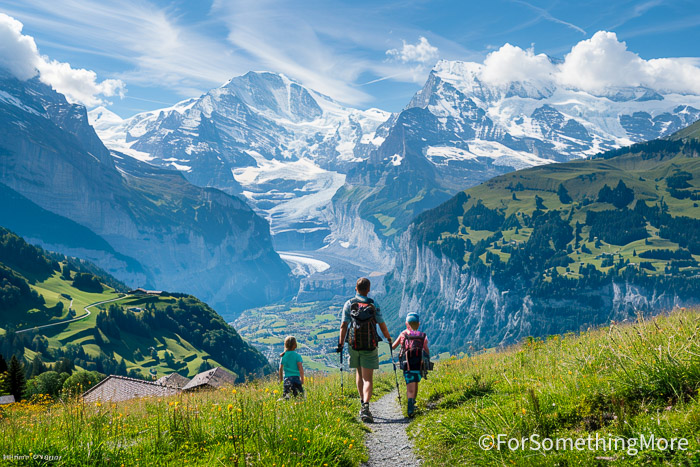
If you’re planning family hiking in Europe, the best trip is usually not the one with the most famous trails, but the one that gives you enough flexibility to match the terrain, pace, and daily effort to your kids. This guide is for families who want an active, outdoor-focused trip through Europe without turning every day into a demanding mountain objective.
The destinations here range from alpine regions and coastal paths to volcanic islands and quieter mountain ranges, so the experience can be shaped around how much hiking your family actually wants to do. A common planning mistake is assuming that trail distance alone tells you how hard a day will feel, when elevation, weather, exposure, and repeated hiking days often matter just as much.
With the right preparation, Europe hiking with kids can be very manageable. The key is choosing a destination with the right balance of trail difficulty, access, scenery, and non-hiking options so you can keep the trip active while still leaving room to adjust when energy or conditions change.
If you have any comments/questions, please leave them below.
Table of Contents
What Makes a Great Family Hiking Destination in Europe?
The best destinations for family hiking in Europe combine memorable scenery with flexible trail options, practical access, manageable terrain, and enough variety that you can adjust plans when weather or energy levels change.
A good family hiking destination does not have to mean easy trails. What matters more is having choices. Families generally do better in regions where they can choose between a short scenic walk, a moderate half-day hike, or a more demanding route without reorganizing the entire trip.
How Difficult Should a Family Hiking Trip Be?
The right difficulty depends on elevation gain, terrain, exposure, and time on the trail rather than distance alone.
A three-mile alpine hike can be harder for a child than a much longer woodland walk if it includes steep climbing, loose rock, or exposed sections.
Before choosing a route, look at:
- Total distance
- Elevation gain and loss
- Estimated hiking time
- Trail surface
- Exposure or steep drop-offs
- Availability of shorter alternatives
With younger kids, expect more stops than the mileage might suggest. Older children may handle longer distances well but still lose interest if every day feels the same.
What Makes Hiking Logistics Easier With Kids?
Family hiking vacations in Europe are easier when you can reach trails without spending most of the day driving or climbing before the real hike begins.
This is one reason places such as Switzerland and the Dolomites work so well for families. Cable cars, mountain railways, buses, and village-based trailheads can reduce unnecessary effort while still giving kids a genuine mountain experience.
Useful features include:
- Multiple trails from one base
- Public transportation to trailheads
- Mountain lifts or gondolas
- Clearly marked routes
- Short and long trail variations
- Nearby non-hiking activities
Families often underestimate how valuable easy trail access becomes after several active days.
Should Families Stay in One Place or Move Around?
One or two well-chosen bases usually work better than changing accommodation every night or two.
Staying longer in one area gives you more freedom to choose each day’s hike according to weather, energy, and trail conditions. If clouds obscure the high mountains, you can choose a lower route. If everyone wakes up tired, you can shorten the day without losing time to another transfer.
This flexibility is especially useful in mountain regions, where wind, rain, afternoon storms, or lingering snow can affect hiking plans.
Which European Hiking Destination Fits Your Family?
The best destination depends on whether hiking is the main purpose of the trip or one part of a broader outdoor vacation.
| Destination | Best For |
|---|---|
| Switzerland | Alpine scenery with excellent transportation |
| Ireland | Coastal and countryside hiking mixed with culture |
| Slovenia | Lakes, mountains, and compact road-trip logistics |
| Dolomites | Lift-assisted alpine hiking and mountain huts |
| Madeira | Levada walks and volcanic landscapes |
| Azores | Hiking mixed with wildlife, water, and road trips |
| Pyrenees | Quieter high-mountain adventures |
Families new to Europe hiking with kids may prefer destinations with extensive infrastructure, such as Switzerland or the Dolomites.
Ireland and the Azores work especially well when hiking is only one part of the trip, while the Pyrenees may suit families already comfortable with more independent mountain travel.
How Much Hiking Should Families Plan Each Day?
Most families should plan one meaningful hike or outdoor objective per day rather than trying to maximize trail mileage.
That still leaves room for an easier afternoon activity if everyone feels good, but it avoids assuming that children will maintain the same energy every day.
A realistic day might include:
- One primary hike
- A relaxed lunch or substantial snack break
- A village, lake, beach, or scenic stop afterward
- An early finish if children are tired
Most families underestimate cumulative fatigue more than the difficulty of a single trail. A child who handles an ambitious hike easily on day two may be much less enthusiastic by day five.
How Should Families Evaluate Trail Safety?
Parents should evaluate exposure, trail surface, weather, and exit options rather than relying only on labels such as “easy” or “family-friendly.”
Those descriptions can be subjective.
Before heading out, check:
- Current trail conditions
- Weather forecast
- Elevation and exposure
- Remaining snow at higher elevations
- Thunderstorm risk
- Trail closures
- Appropriate footwear
- Whether your family can turn around easily
The European Ramblers Association provides information about established walking routes and trail standards across Europe, which can help families understand the broader hiking infrastructure available in different regions.
Official regional resources should still be checked for current conditions before individual hikes.
Planning Takeaway
Choose a destination that gives your family room to adjust.
Switzerland and the Dolomites work particularly well when you want alpine scenery supported by lifts and transportation. Ireland and the Azores offer more variety beyond hiking, Slovenia provides a compact mix of lakes and mountains, Madeira offers distinctive volcanic and levada walks, and the Pyrenees suit families looking for a quieter mountain experience.
The best family hiking in Europe is not about completing the longest trail. It is about choosing terrain, pacing, and logistics that leave your kids interested in hiking again the next day.
Is Switzerland One of the Best Places for Family Hiking in Europe?
Switzerland is one of the strongest destinations for family hiking in Europe because its mountain transport, well-marked trails, and village-based logistics make alpine scenery much easier to access with kids.
The main advantage is flexibility. Families can choose short scenic walks, moderate half-day hikes, or more ambitious routes without changing regions, and mountain lifts make it much easier to adjust the day around children’s energy.
Where Should Families Hike in Switzerland?
The Bernese Oberland, Zermatt, and the Engadin are among the best regions for families because each offers a wide range of routes and strong transportation links.
In the Bernese Oberland, bases such as Lauterbrunnen, Wengen, Mürren, and Grindelwald give families access to mountain railways, cable cars, waterfalls, and a dense network of hiking trails.
Zermatt offers similar flexibility, with lift-accessed trails and views toward the Matterhorn. The Engadin, around St. Moritz and nearby valleys, provides another strong option for families who want lakes, mountain scenery, and a broad mix of trail difficulty.
You do not need to move between all three regions. For most families, choosing one area and staying several nights creates a better hiking rhythm than trying to cover too much of the country.
Why Do Mountain Lifts Matter So Much With Kids?
Mountain lifts let families spend more of their energy on the enjoyable part of the hike rather than using most of the day simply gaining elevation.
That can make a major difference with younger children.
A gondola or mountain railway can help you:
- Start directly in alpine terrain
- Shorten a route when energy is low
- Create downhill-heavy hikes
- Reach viewpoints without a long approach
- Give different family members different difficulty options
Young kids may happily explore for hours once they are in the mountains but have far less patience for a long uphill approach from the valley floor.
The tradeoff is cost. Lift tickets can add up quickly for a family, so it is worth checking regional passes and deciding in advance how often you are likely to use mountain transport.
Should Families Hike Independently or Use a Guide?
Independent hiking works well on many established Swiss trails, while a private guide can be useful when families want customized routes, more complicated logistics, or help matching terrain to children’s abilities.
For families looking for a luxury hiking tour in Switzerland, a private itinerary can make it easier to adjust hiking distance, transportation, meal stops, and daily pacing around the needs of the group.
That can be especially useful when children differ significantly in age or hiking ability.
If you prefer to hike independently, Switzerland is still one of the easiest European mountain destinations to manage because trail signs, public transportation, and mountain infrastructure are generally straightforward.
How Much Hiking Should Families Plan Each Day?
One primary hike per day is usually enough, especially if you are using lifts, trains, or other mountain transport as part of the outing.
A realistic family day might include:
- Morning lift or train to the trail
- Two to four hours of hiking
- Lunch at a mountain restaurant or picnic stop
- An easier afternoon in the village or near a lake
The mistake to avoid is assuming that lift-assisted hiking means the day is effortless. Children may still be walking at altitude, covering uneven ground, and dealing with sun, wind, or sudden weather changes.
What Weather Should Families Expect in the Swiss Alps?
Mountain weather can change quickly, even during summer, so families should build flexibility into each day.
Higher trails may still hold snow early in the season, while afternoon thunderstorms can affect exposed routes later in the day.
Useful preparation includes:
- Light waterproof layers
- Warm midlayers
- Sun protection
- Appropriate hiking shoes
- Water and snacks
- A backup lower-elevation route
It is generally better to move a hike to another day than force an exposed alpine route when conditions are poor.
SwitzerlandMobility provides official route information for hiking throughout the country and is useful for comparing distance, elevation, and transportation connections before choosing a family trail.
Planning Takeaway
Switzerland is especially well suited to families who want alpine hiking without committing to technical trekking or complicated logistics.
The combination of lifts, railways, well-marked trails, and village bases makes it easy to adapt the experience to different ages and energy levels. If your family wants dramatic mountain scenery with plenty of control over how hard each day becomes, Switzerland is one of the easiest places in Europe to make that work.
Is Ireland a Good Hiking Destination With Kids?
Ireland is a strong choice for family hiking because it combines coastal paths, rolling mountains, countryside walks, and village-based travel without requiring families to spend every day on demanding alpine terrain.
Compared with Switzerland, hiking in Ireland generally feels less technical and more integrated into a broader trip. You can pair a morning walk with a castle, village, beach, or scenic drive, which makes the destination especially useful for families who want hiking to be important without making it the only focus.
Where Should Families Hike in Ireland?
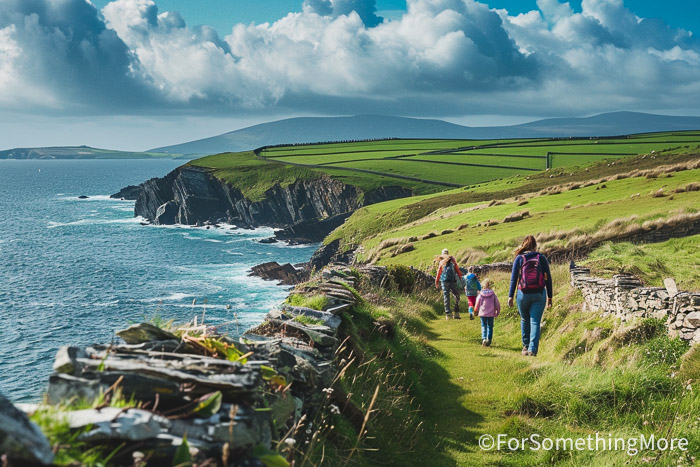
Wicklow, Kerry, Connemara, the Dingle Peninsula, and the Burren all offer strong family hiking options with very different landscapes.
Some areas worth considering include:
- Wicklow Mountains for accessible mountain and woodland walks
- Connemara for rugged hills, lakes, and open countryside
- Dingle Peninsula for coastal routes and village-based exploration
- County Kerry for mountain scenery and sections of longer walking routes
- The Burren for limestone landscapes and shorter walks
For most families, it is better to choose one or two regions than try to cover the entire country.
A base in one area gives you more flexibility to select shorter or longer routes depending on weather and energy.
How Is Hiking in Ireland Different From Hiking in Switzerland?
Ireland generally offers lower-elevation hiking and easier integration with cultural stops, while Switzerland provides more alpine terrain and mountain transport.
That distinction matters with kids.
In Ireland, a hiking day can more easily become part of a road trip or village visit rather than a full-day mountain objective. That can work particularly well for families with mixed interests.
Ireland also gives you more opportunities to combine hiking with:
- Coastal viewpoints
- Historic sites
- Small towns and villages
- Beaches
- Scenic drives
- Shorter countryside walks
The tradeoff is weather. Trails can become wet, muddy, and slippery, and visibility can change quickly in exposed areas.
Should Families Hike Independently or Join a Small Group?
Independent hiking works well on many established routes, while small-group or guided travel can simplify transportation and make it easier to combine hiking with other parts of Ireland.
For families interested in tailored small group tours of Ireland, this approach can reduce the amount of route planning and driving while still allowing hiking to remain a meaningful part of the trip.
That can be especially useful if you want to explore several regions without spending a large portion of each day managing logistics.
Families who prefer independent travel can still plan Ireland easily, particularly when staying several nights in the same area and choosing established routes close to their accommodation.
What Weather Should Families Expect While Hiking in Ireland?
Families should expect changeable conditions and plan for rain, wind, and wet trails even during the main travel season.
The practical challenge is usually not extreme temperature. It is staying comfortable when conditions change during the hike.
Useful items include:
- Waterproof jacket
- Quick-drying layers
- Hiking shoes or boots with good traction
- Spare socks
- Small daypack
- Water and snacks
- Light insulating layer
Most families underestimate how much muddy ground can slow children down. A relatively short trail can take longer than expected when the surface is wet or uneven.
Wind can also matter on coastal and exposed mountain routes, so a shorter sheltered trail may be the better choice when conditions are poor.
How Much Hiking Should Families Plan Each Day?
One main walk or hike per day is usually enough, particularly if you are also exploring towns, beaches, or historic sites.
A realistic day might include:
- Morning hike
- Lunch in a nearby village
- Short scenic stop or cultural visit
- Flexible afternoon
This rhythm is one of Ireland’s biggest strengths for families.
You do not need to create a hiking-only itinerary to justify traveling there for outdoor adventure. Shorter walks can still feel substantial when they are combined with coastal scenery, open landscapes, and other stops along the route.
How Should Families Choose Safe Walking Routes?
Families should choose established trails that match children’s abilities and check current route and weather information before heading out.
Pay attention to:
- Trail surface
- Distance
- Elevation gain
- Exposure
- Wind
- Rain
- Boggy or muddy sections
- Available turnaround points
Ireland’s official Sport Ireland Outdoors resources provide information on accredited walking trails and outdoor recreation opportunities across the country, which can help families identify established routes before planning individual hikes.
Local conditions should still guide the final decision on the day.
Planning Takeaway
Ireland is a particularly good fit for families who want hiking to sit alongside culture, villages, beaches, and road-trip exploration rather than dominate the entire vacation.
It does not offer the same lift-assisted alpine experience as Switzerland, but that is part of its advantage. Families can choose meaningful walks without committing to long mountain days, and the ability to combine hiking with other activities makes it easier to adjust the trip around weather, energy, and different interests.
Where Can Families Find Easier Mountain Hiking in Slovenia and the Dolomites?
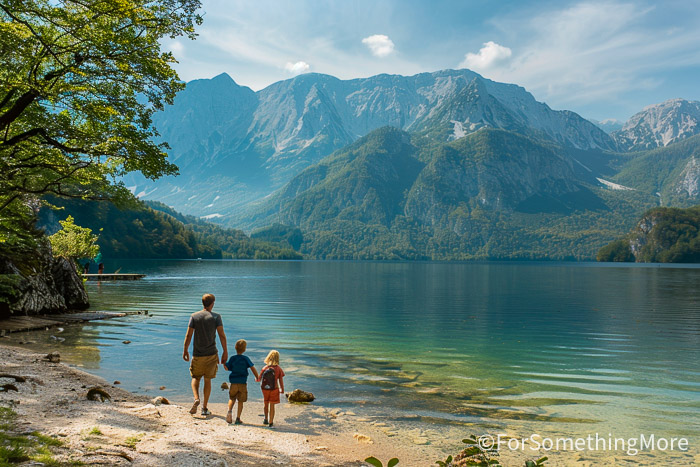
Slovenia and Italy’s Dolomites both offer dramatic mountain hiking with strong family infrastructure, making them excellent alternatives to Switzerland for parents who want alpine scenery without committing to highly technical trekking.
The two destinations feel different in practice. Slovenia is especially appealing if you want a compact road trip with lakes, gorges, and mountain trails close together, while the Dolomites are stronger for lift-assisted hiking and hut-to-hut style mountain days.
Is Slovenia Good for Hiking With Kids?
Slovenia is a strong family hiking destination because lakes, valleys, gorges, and mountain trails are concentrated within a relatively compact area.
That makes it easier to alternate demanding days with easier ones.
Some of the best family bases and hiking areas include:
- Lake Bohinj
- Kranjska Gora
- Julian Alps
- Triglav National Park
- Vintgar Gorge
Lake Bohinj is particularly useful because families can combine mountain walks with swimming, lakeside time, and shorter excursions. Kranjska Gora works well for families who want easy access to trails, mountain scenery, and other outdoor activities from one base.
Younger kids may enjoy these mixed days more than an itinerary built entirely around long hikes.
What Makes Slovenia Easier to Manage Than Larger Alpine Regions?
Slovenia’s compact geography makes it easier to reach different landscapes without spending much of the trip in transit.
Families can move between lakes, mountain valleys, waterfalls, and hiking areas with relatively short transfers compared with larger Alpine regions.
This is useful when:
- Kids need shorter days
- Weather changes
- You want to mix hiking with swimming
- One family member wants a lower-effort day
- You prefer a road-trip format
The main planning advantage is not that every trail is easy. It is that families can choose from a broad range of experiences without changing accommodation constantly.
What Should Families Know About Hiking in Triglav National Park?
Triglav National Park offers excellent family hiking, but parents should distinguish between valley walks and more demanding high-mountain terrain.
The park includes everything from easier forest and lakeside routes to exposed alpine hikes.
Families should pay attention to:
- Elevation gain
- Trail exposure
- Weather
- Remaining snow
- Footwear
- Route length
- Turnaround options
A hike near Lake Bohinj may be manageable for younger children, while higher routes in the Julian Alps may require significantly more experience and preparation.
Triglav National Park provides official visitor information, hiking guidance, and conservation information that families can use when planning routes within the park.
Are the Dolomites Manageable With Children?
Yes, the Dolomites can be very manageable with kids when families use lifts strategically and choose routes that match children’s experience.
The Dolomites are known for steep rock formations and alpine terrain, but many family hikes start from lift-accessed areas where much of the elevation gain has already been removed.
Strong family bases include:
- Val Gardena
- Alpe di Siusi
- Cortina d’Ampezzo
- Alta Badia
These areas provide access to short scenic walks, moderate mountain routes, and more demanding hikes.
Alpe di Siusi is especially practical for families because the plateau offers wide-open terrain, mountain views, and routes that can be easier to manage than steeper high-alpine trails.
Why Are Mountain Lifts So Useful in the Dolomites?
Mountain lifts allow families to reach high-elevation scenery without using most of their energy on the climb from the valley.
This is similar to Switzerland, but especially useful in the Dolomites because many hiking areas are built around gondolas, chairlifts, and mountain huts.
A lift-assisted day can look like:
- Gondola ride to the trail
- Two- or three-hour hike
- Lunch at a mountain hut
- Shorter walk or descent afterward
This structure works particularly well with younger children.
Families should still avoid assuming that lift access makes every route child-friendly. Some trails include exposed sections, steep descents, or loose terrain even if the starting point is easy to reach.
What Role Do Mountain Huts Play in Family Hiking?
Mountain huts can make hiking days more manageable by giving families a clear destination for meals, rest, and breaks.
Instead of carrying a full day’s food, some families can structure the hike around a hut lunch or snack.
That can help with pacing.
A child who knows there is a warm meal or dessert at the halfway point may handle the hike differently than one facing several hours of uninterrupted walking.
Huts also create natural stopping points, which can make it easier to judge whether the family should continue or turn back.
Slovenia or the Dolomites: Which Is Better for Your Family?
Choose Slovenia if you want a compact trip combining lakes, mountains, and shorter transfers; choose the Dolomites if you want more extensive alpine hiking supported by lifts and mountain huts.
A quick comparison:
| Consideration | Slovenia | Dolomites |
|---|---|---|
| Best for | Compact outdoor road trip | Lift-assisted alpine hiking |
| Hiking style | Lakes, valleys, mountains | High alpine trails |
| Logistics | Relatively compact | More spread out |
| Non-hiking options | Lakes, gorges, villages | Villages, scenic drives, huts |
| Lift access | Available in some areas | Extensive |
| Best fit | Families wanting variety | Families focused on mountains |
Neither destination is inherently easier.
Slovenia may feel simpler because the distances are shorter and the variety is broader, while the Dolomites may feel easier once you are in the mountains because lifts remove much of the climbing.
Planning Takeaway
Slovenia and the Dolomites both work well for families who want alpine hiking without making every day physically demanding.
Choose Slovenia if you want to combine mountains with lakes, gorges, and a compact road trip. Choose the Dolomites if your family wants more time in high alpine terrain and appreciates the convenience of lifts and mountain huts.
In both destinations, the best approach is the same: choose routes based on the actual terrain and your children’s abilities, not simply on how easy the trail looks on a map.
Where Can Families Combine Hiking With Volcanic and Coastal Landscapes?
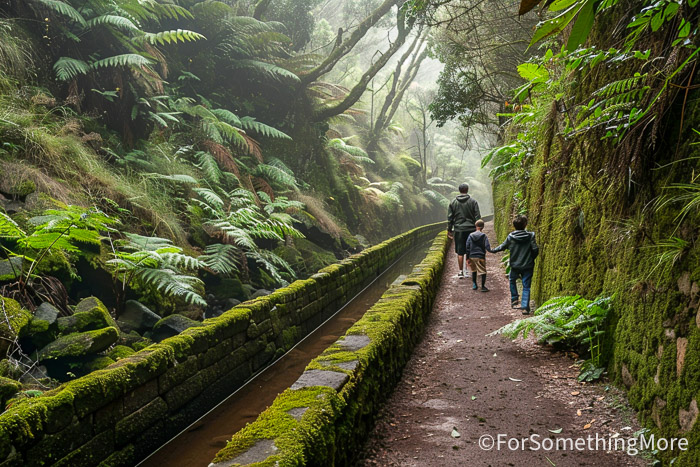
Madeira and the Azores are strong choices for families who want hiking to feel different from a traditional Alpine trip, with volcanic terrain, coastal routes, forests, crater lakes, and waterfalls adding variety to the experience.
Both destinations work well when hiking is only one part of the trip. Families can alternate trail days with swimming, road trips, wildlife experiences, or easier sightseeing, which helps prevent younger hikers from becoming worn down by consecutive mountain days.
Is Madeira Good for Hiking With Kids?
Madeira can be a very good family hiking destination because its levada trails, coastal routes, and forest walks offer a wide range of difficulty levels.
Levadas are irrigation channels that cross much of the island, and many walking routes follow them through forests, valleys, and mountain terrain.
Some family-friendly areas and route types include:
- Levada walks
- Laurisilva forest
- Ribeiro Frio
- Ponta de São Lourenço
- Shorter coastal and forest trails
The main advantage is variety. Families can choose a relatively level levada walk one day and a more exposed coastal route another.
Are Madeira’s Levada Walks Always Easy?
No, levada walks are not automatically easy just because they have limited elevation gain.
Some routes include:
- Narrow paths
- Drop-offs
- Tunnels
- Wet or slippery surfaces
- Limited railings
- Long stretches without easy exits
This matters with younger kids.
A trail can look easy on a map because the elevation profile is gentle while still requiring careful supervision because of exposure.
Families should check the exact route rather than assuming all levada walks are equally appropriate for children.
Madeira’s official tourism authority provides current information about classified walking routes and trail conditions, which families should review before heading out.
How Much Hiking Should Families Plan in Madeira?
One main trail per day is usually enough, especially if the route includes exposed terrain or several hours of walking.
Madeira is also easy to combine with:
- Coastal viewpoints
- Beaches and natural swimming areas
- Scenic drives
- Villages
- Botanical gardens
- Shorter walks
With younger kids, alternating a more demanding hiking day with a lighter sightseeing or swimming day can make the trip much easier to sustain.
How Is Hiking in the Azores Different?
The Azores offer a broader mix of volcanic hiking, crater lakes, coastal routes, waterfalls, and road-trip exploration across several islands.
São Miguel is the easiest starting point for many families because it offers a wide range of hikes without requiring constant island transfers.
Popular areas include:
- Sete Cidades
- Lagoa do Fogo
- Furnas
- Coastal trails
- Waterfall routes
- Volcanic viewpoints
The islands generally lend themselves well to shorter hikes combined with driving and other outdoor stops.
Which Azores Island Is Best for Family Hiking?
São Miguel is the most practical choice for most families, while Pico and Faial can add more specialized hiking for older or more experienced children.
São Miguel offers the easiest mix of:
- Crater lakes
- Geothermal areas
- Short and moderate hikes
- Waterfalls
- Scenic drives
- Villages
- Coastal stops
Pico is more demanding if the goal is climbing Mount Pico, Portugal’s highest mountain. That hike is better suited to older kids and families already comfortable with sustained elevation gain.
For most families, there is no need to visit several islands on one trip. Staying longer on one or two islands usually creates better pacing.
Visit Azores provides official information about hiking trails and route classifications throughout the archipelago, which can help families compare difficulty and location before choosing trails.
Madeira or the Azores: Which Is Better for Your Family?
Choose Madeira if your family wants a denser network of established hiking routes; choose the Azores if you want hiking to be part of a broader road-trip and outdoor adventure.
A simple comparison:
| Consideration | Madeira | Azores |
|---|---|---|
| Best for | Levada and coastal hiking | Volcanic hiking + road trips |
| Terrain | Forest, mountain, coastal | Crater lakes, coast, volcanoes |
| Trail network | Extensive | More dispersed |
| Non-hiking options | Villages, coast, swimming | Wildlife, hot springs, road trips |
| Best fit | Families focused on hiking | Families wanting more variety |
Planning Takeaway
Madeira and the Azores are both excellent choices for families who want hiking without committing to a purely mountain-focused trip.
Madeira works best when trails are the main draw and your family is comfortable evaluating exposure carefully. The Azores are better when hiking is one part of a broader outdoor itinerary that also includes road trips, water, wildlife, and volcanic landscapes.
In both destinations, the key is to choose routes based on actual trail conditions rather than distance or elevation alone.
Are the Pyrenees a Good Off-the-Beaten-Path Alternative to the Alps?
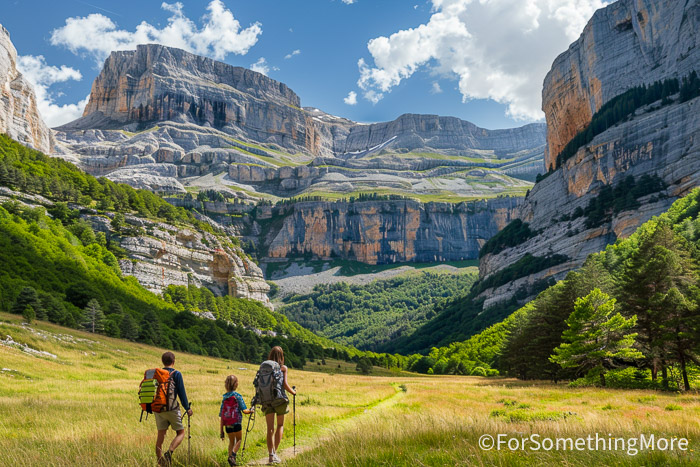
The Pyrenees are a strong choice for families who want quieter mountain hiking, dramatic scenery, and a more independent travel style than they may find in the busiest Alpine regions.
Stretching between France and Spain, the range offers high valleys, lakes, waterfalls, mountain villages, and a wide mix of trail difficulty. The main tradeoff is infrastructure: some areas feel less polished and less transit-friendly than Switzerland or the Dolomites, so families should be comfortable with a little more planning.
Where Should Families Hike in the Pyrenees?
Ordesa y Monte Perdido, Aigüestortes i Estany de Sant Maurici, Gavarnie, and Cauterets are among the strongest areas for families because they combine impressive scenery with established access and a range of route options.
Good places to consider include:
- Ordesa y Monte Perdido National Park in Spain
- Aigüestortes i Estany de Sant Maurici National Park in Spain
- Gavarnie in the French Pyrenees
- Cauterets in the French Pyrenees
- Vall de Boí for access to high mountain lakes and trailheads
Families do not need to cross back and forth between France and Spain to have a complete trip. Choosing one side of the range and staying in one or two bases usually creates better pacing.
Why Choose the Pyrenees Instead of the Alps?
The Pyrenees appeal to families who want a quieter mountain experience and are willing to trade some convenience for fewer resort-style environments.
Compared with the most developed parts of the Alps, you may find:
- Smaller mountain towns
- Less reliance on lifts
- More road-based trail access
- Quieter valleys
- Fewer heavily developed resort areas
- A stronger feeling of moving through mountain landscapes rather than between major tourism hubs
That can be a real advantage for families who already enjoy hiking and road trips.
The downside is that changing plans may be less convenient. A trailhead that requires a drive rather than a gondola becomes harder to swap at the last minute if the weather turns.
Are the Pyrenees Good for Younger Kids?
Yes, the Pyrenees can work well for younger kids when families choose valley walks, lake routes, and shorter trails rather than defaulting to high-mountain objectives.
The important distinction is route selection.
Some hikes are very accessible, while others involve:
- Significant elevation gain
- Long approaches
- Rocky terrain
- Exposure
- Fewer services
- Longer stretches between exit points
With younger children, choose routes that have a clear turnaround option and do not depend on everyone completing the full distance.
A short lake walk with time to stop and explore may work far better than a technically easy but long mountain route.
What Should Families Know About Weather and Remoteness?
Families should expect mountain weather to change quickly and should be prepared for fewer easy backup options in some Pyrenean valleys.
This matters more here than in highly developed Alpine destinations.
Check:
- Forecasts before leaving
- Trail conditions
- Snow at higher elevations
- Thunderstorm risk
- Water availability
- Navigation
- Road access
- Whether trailhead parking fills early
Most families underestimate how much extra effort remote trail access can add to the day. A 45-minute drive to a trailhead, followed by a four-hour hike and the drive back, can feel much longer with kids than the hike itself suggests.
How Much Hiking Should Families Plan?
One main hike per day is usually enough, especially when trail access requires driving or when routes include meaningful elevation.
A realistic rhythm might be:
- One stronger hiking day
- One easier lake or valley walk
- One flexible or sightseeing day
- Another moderate hike
This allows children to recover without making the trip feel inactive.
Families who are already used to mountain hiking may comfortably do more, but the Pyrenees reward slower travel because so much of the experience comes from the valleys, villages, and scenery between trailheads.
How Should Families Evaluate Trail Safety?
Families should focus on elevation, exposure, weather, and remoteness rather than assuming that a quieter trail is an easier trail.
In fact, the opposite can be true.
Less crowded routes may offer fewer services, less frequent signage, and fewer people nearby if something goes wrong.
Parents should consider:
- How easy it is to turn around
- Whether there are exposed sections
- Whether the route crosses streams or snowfields
- Distance from the nearest road
- Mobile coverage
- Weather exposure
- Children’s hiking experience
Spain’s National Parks authority provides official information about protected mountain areas such as Ordesa y Monte Perdido and Aigüestortes i Estany de Sant Maurici, including visitor guidance and park information that families can use when planning routes.
Planning Takeaway
The Pyrenees are best for families who already enjoy independent hiking and want quieter mountain environments with fewer resort-style conveniences.
They are not necessarily harder than the Alps, but they can require more self-sufficiency. If your family values uncrowded trails, scenic valleys, and a slower road-trip style of travel, the extra planning can be worth it.
For families who want maximum convenience, Switzerland or the Dolomites may still be easier. For those who prefer a more off-the-beaten-path mountain experience, the Pyrenees are one of the strongest options in Europe.
How Should Families Plan a European Hiking Trip With Kids?
A successful European hiking trip with kids should balance meaningful trail days with enough flexibility for weather, fatigue, and different energy levels.
The biggest planning mistake is treating every day like a hiking day. Even children who enjoy the outdoors can lose enthusiasm if the trip becomes a sequence of long trails, early starts, and constant transfers.
How Many Major Hikes Should Families Plan?
Most families should plan one substantial hike per day and build easier days into the trip.
A practical rhythm might include:
- One stronger hiking day
- One shorter scenic walk
- One flexible or rest day
- Another moderate hike
- One non-hiking outdoor activity
This gives children time to recover and makes it easier to move a major hike when the weather changes.
With younger kids, expect energy to fluctuate more from day to day than adults may anticipate. A child who walks easily for several hours one day may be far less interested the next morning.
What Should Families Pack for Hiking in Europe?
Families should pack for changing weather, uneven terrain, and the possibility that a short hike may take longer than expected.
A basic family hiking kit should include:
- Waterproof outer layer
- Warm midlayer
- Comfortable hiking shoes
- Water
- Snacks
- Sun protection
- Small first-aid kit
- Offline map or navigation
- Extra layer for children
- Child carrier when appropriate
Mountain regions can feel warm in the valley and considerably cooler higher up, so lightweight layers are generally more useful than one heavy item.
Most families also benefit from carrying more snacks than they think they will need. A short food break can solve a pacing problem before it becomes a much bigger one.
How Should Parents Evaluate Trail Safety?
Parents should evaluate elevation gain, exposure, trail surface, weather, and turnaround options rather than relying only on a trail’s distance or difficulty label.
Before choosing a route, ask:
- Is there significant exposure?
- Are there steep drop-offs?
- Is the trail rocky or slippery?
- Could afternoon storms develop?
- Is snow still present?
- Is there an easy turnaround point?
- Can the route be shortened if needed?
A trail described as “easy” may still be uncomfortable with a young child if it includes exposed sections or uneven footing.
Official tourism boards, national parks, and regional trail authorities should be checked for current conditions before heading out. For broader route planning, the European Ramblers Association provides information about established walking routes and trail standards across Europe.
Should Families Use Public Transportation or Rent a Car?
The better option depends on the destination and how much flexibility your family wants.
Switzerland works especially well without a car because trains, buses, mountain railways, and lifts connect many hiking areas.
Ireland, Slovenia, the Azores, and the Pyrenees often give families more flexibility with a rental car, especially when trailheads are spread across rural areas.
The Dolomites can work with either approach depending on the base you choose.
The main consideration is not simply transportation cost. Think about how easily you can change plans when a child is tired or weather affects a trail.
How Early Should Families Start Hiking?
Earlier starts are generally better for mountain hikes, particularly in places where afternoon weather can become less stable.
Starting earlier can also help with:
- Cooler temperatures
- Easier parking
- Quieter trails
- More time for breaks
- Less pressure to finish quickly
That does not mean every family needs to be on the trail at sunrise.
For shorter hikes, a relaxed morning may work perfectly well. The goal is to leave enough time that normal kid pacing does not turn into a rushed return.
Planning Snapshot: Which Destination Fits Your Family Style?
- Switzerland: best for easy logistics and lift-assisted alpine hiking
- Ireland: best for hiking mixed with culture and road trips
- Slovenia: best for compact mountain and lake exploration
- Dolomites: best for lift access and mountain huts
- Madeira: best for levada and coastal walking
- Azores: best for hiking mixed with water and volcanic landscapes
- Pyrenees: best for quieter, more independent mountain travel
Planning Takeaway
A good family hiking trip should feel active without becoming relentless.
Choose one or two strong bases, plan one meaningful trail objective per day, and leave enough room to adjust for weather or energy. The more flexible the itinerary, the easier it is to keep hiking enjoyable across several days rather than turning the trip into something everyone is simply trying to finish.
What Does a Realistic 7-Day European Family Hiking Trip Look Like?
A realistic seven-day family hiking trip should include three or four meaningful trail days, one or two easier outdoor days, and enough flexibility to adjust for weather and tired legs.
The goal is not to hike every day. A better approach is to create a rhythm that lets kids recover while still keeping the trip active and outdoors-focused.
How Should Families Pace a Week of Hiking?
Families should alternate stronger hiking days with easier activities rather than scheduling difficult trails back to back.
A practical seven-day framework could look like this:
- Day 1: Arrival and easy village or town exploration
- Day 2: Moderate family hike
- Day 3: Shorter walk plus a non-hiking activity
- Day 4: Flexible, rest, or weather day
- Day 5: Main adventure hike
- Day 6: Easier scenic walk, lake visit, or outdoor activity
- Day 7: Departure or onward travel
This pacing works especially well in destinations such as Switzerland, Ireland, Slovenia, the Dolomites, Madeira, and the Azores, where it is easy to combine hiking with other activities.
With younger kids, the flexible day is particularly useful. It gives you room to move an important hike if weather changes or simply take a slower day if everyone needs it.
Should Families Stay in One Place or Move Between Regions?
One or two bases usually work better than changing accommodations repeatedly during a week-long hiking trip.
Staying several nights in one place gives you:
- More flexibility with weather
- Less packing
- Easier access to familiar trailheads
- More predictable meals and routines
- Less time spent driving or transferring
In Switzerland, a base such as Wengen or Grindelwald can give families access to several hiking areas without relocating.
In Ireland, staying several nights in one region such as Kerry or Connemara allows you to choose routes according to the day’s conditions.
The same principle applies throughout Europe: fewer transfers generally leave more energy for the actual hiking.
How Should Families Choose the Main Hike of the Trip?
The main adventure hike should be challenging enough to feel significant but still comfortably within your children’s demonstrated abilities.
Do not make the longest or most difficult route the goal simply because you have traveled a long way.
A better choice is a trail that offers:
- A clear destination or viewpoint
- Manageable elevation gain
- Good turnaround options
- Interesting terrain
- Reliable access
- Something kids can look forward to along the way
That might be a mountain hut in the Dolomites, a lake in Slovenia, a coastal viewpoint in Ireland, or a lift-assisted alpine trail in Switzerland.
Kids often respond better when the hike has a clear purpose rather than simply accumulating mileage.
What Should Families Do on the Easier Days?
Easier days should keep the family active without requiring another major physical effort.
Depending on the destination, that could mean:
- Swimming in a lake
- Exploring a village
- Taking a scenic train
- Visiting a beach
- Riding a mountain lift
- Taking a short waterfall walk
- Visiting a castle or historic site
- Exploring geothermal areas
- Taking an easy coastal walk
These days are not wasted time.
They help prevent cumulative fatigue and can make the next major hike considerably more enjoyable.
What Happens If Weather Disrupts the Itinerary?
Families should expect at least one hiking plan to change and build enough flexibility into the week to move important trails to another day.
Mountain weather is especially unpredictable.
A planned high-elevation hike may need to become a valley walk because of rain, wind, cloud, thunderstorms, or lingering snow.
Rather than scheduling every day rigidly, identify:
- One or two priority hikes
- Several easier alternatives
- One flexible day
- Indoor or lower-elevation options if needed
That approach makes a weather change a scheduling adjustment rather than a problem.
Official destination and trail resources should be checked shortly before individual hikes because conditions can change after an itinerary is originally planned.
Should Families Build a Trip Around Hiking Alone?
Most families will enjoy a European hiking vacation more if hiking is the main theme rather than the only activity.
That is particularly true with children.
Switzerland can combine trails with scenic railways and lakes. Ireland adds villages, beaches, and historic sites. Slovenia combines mountains with lakes and gorges, while Madeira and the Azores offer coastal and volcanic experiences alongside hiking.
Even families who hike regularly can benefit from changing the type of activity throughout the week.
Planning Takeaway
A seven-day family hiking trip does not need seven major hikes to feel substantial.
Three or four well-chosen trails, a couple of lighter outdoor days, and one flexible day usually create a better balance. You will have room to respond to weather, adjust to your children’s energy, and spend less of the trip rushing between trailheads and accommodations.
The best itinerary leaves enough structure that you know what you want to do, but enough flexibility that changing Tuesday’s hike to Thursday does not disrupt the entire trip.
Final Thoughts – Family Hiking in Europe
Family hiking in Europe is very achievable when you choose a destination that matches your children’s abilities, your preferred pace, and how much hiking you actually want to build into the trip. The strongest options are the ones that give you room to adjust, whether that means using mountain transport in Switzerland, mixing trails with villages in Ireland, or choosing quieter routes in the Pyrenees.
This type of trip is best suited to families who enjoy active days but still want flexibility rather than a rigid hiking schedule. Repeated trail days can become tiring faster than the mileage suggests, so pacing matters as much as destination choice. With realistic expectations and the right planning, you can build a European hiking trip that feels adventurous without making it harder than your family needs it to be.
FAQs – Hiking in Europe with Kids
- Q: What are the best places for family hiking in Europe? A: Strong options include Switzerland, Ireland, Slovenia, the Dolomites, Madeira, the Azores, and the Pyrenees. The best choice depends on your children’s hiking experience, how much elevation you want, and whether hiking will be the main focus of the trip or one part of a broader vacation.
- Q: Is Switzerland good for hiking with kids? A: Yes. Switzerland is one of the easiest alpine destinations for families because mountain lifts, trains, well-marked trails, and village-based accommodation make it easier to adjust hikes around children’s energy levels.
- Q: Is Ireland a good family hiking destination? A: Yes. Ireland works especially well for families who want to combine coastal and countryside walks with villages, beaches, historic sites, and road-trip exploration rather than spending every day on demanding mountain trails.
- Q: Are the Dolomites suitable for children? A: Yes, when families choose routes carefully. Mountain lifts and hut-based hiking make many areas easier to access, but parents should still check trail exposure, terrain, and elevation rather than assuming every lift-accessed route is child-friendly.
- Q: Is Slovenia good for a family hiking trip? A: Yes. Slovenia is a strong option for families because lakes, gorges, valleys, and mountain trails are relatively close together, making it easier to mix harder hiking days with shorter outdoor activities.
- Q: Is Madeira good for hiking with kids? A: Madeira can work very well for families, particularly on selected levada and forest routes. Families should check individual trails carefully because some levada walks include narrow paths, tunnels, wet surfaces, or exposed sections.
- Q: Which Azores island is best for family hiking? A: São Miguel is the easiest starting point for most families because it offers crater lakes, waterfalls, geothermal areas, coastal scenery, and a wide range of shorter and moderate hikes without requiring frequent island transfers.
- Q: Are the Pyrenees good for families? A: Yes, especially for families already comfortable with independent hiking. The Pyrenees can offer quieter trails and mountain villages, but some areas have fewer transportation and lift options than Switzerland or the Dolomites.
- Q: How many hikes should families plan during a one-week Europe trip? A: Three or four meaningful hikes is a realistic target for many families, with easier outdoor days and at least one flexible day in between. This helps prevent cumulative fatigue and gives you room to adjust for weather.
- Q: How long should a family hike be? A: There is no single ideal distance because elevation gain, trail surface, exposure, weather, and children’s experience matter as much as mileage. A shorter alpine route can be much harder than a longer, flatter walk.
- Q: Should families stay in one place or move between hiking regions? A: One or two bases usually work better for a week-long family hiking trip. Staying longer in one area reduces packing and transfers while giving you more flexibility to choose trails based on weather and energy.
- Q: Do families need a hiking guide in Europe? A: Not necessarily. Many established European trails can be hiked independently, but guides can be useful when families want customized routes, transportation support, local knowledge, or help choosing terrain suited to different ages and abilities.
- Q: What should families pack for hiking in Europe? A: Families should generally carry weather-appropriate layers, suitable hiking footwear, water, snacks, sun protection, basic first-aid supplies, and reliable navigation. Mountain weather can change quickly, so flexible layering is especially important.
- Q: What is the easiest European hiking destination for beginners? A: Switzerland and the Dolomites are among the easiest places to manage because lifts, public transportation, and extensive trail networks make it easier to shorten routes and adjust difficulty.
- Q: What is the best European hiking destination if kids do not want to hike every day? A: Ireland, the Azores, Slovenia, and Madeira are particularly good choices because families can easily alternate hiking with beaches, villages, lakes, road trips, wildlife experiences, and other outdoor activities.
+++BEFORE using this information, please read our Legal Disclaimer+++