
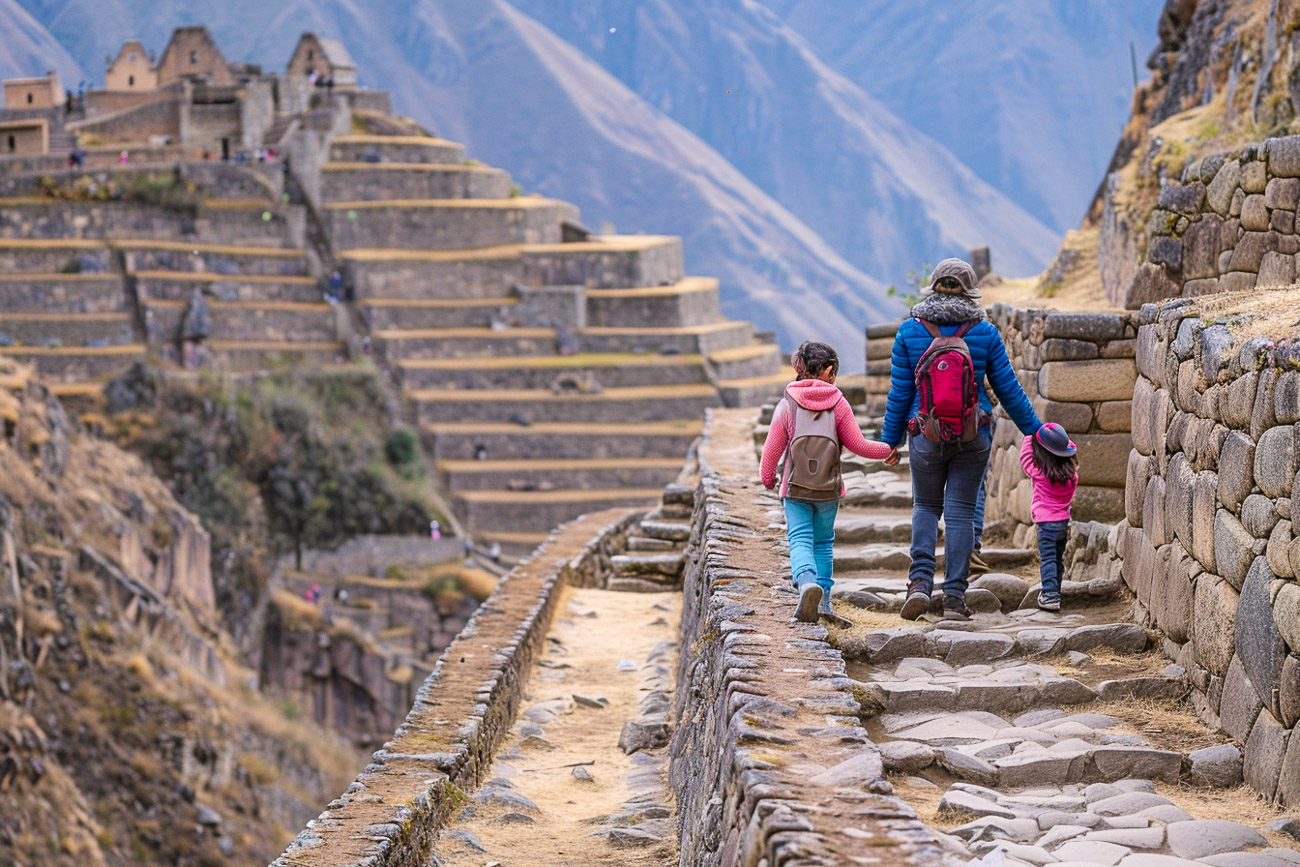
Planning a trip to Machu Picchu with kids requires a different approach than planning an adults-only visit, but it is entirely achievable for families who enjoy active, outdoor-focused travel. This guide is designed to help you approach Machu Picchu and Peru’s Sacred Valley at a realistic family pace, with enough structure to feel prepared without turning the trip into a tightly scheduled checklist.
A family trip to Machu Picchu combines mountain terrain, archaeological sites, changing weather, elevation, and structured sightseeing with opportunities to explore beyond the region’s busiest attractions. Even children who are strong hikers at home may move more slowly at elevation, so building flexibility into your expectations is important from the beginning.
If your family enjoys hiking, exploring outdoors, and experiencing destinations beyond their most famous landmarks, Machu Picchu and the Sacred Valley can fit naturally into that style of travel. With realistic expectations and thoughtful preparation, you can plan an adventurous Peru trip that remains manageable for both kids and parents.
If you have any comments/questions, please leave them below.
Table of Contents
Is Machu Picchu Worth Visiting With Kids?
Machu Picchu is worth visiting with kids who can comfortably handle several hours of walking, uneven stone steps, changing weather, and a structured sightseeing day, but families should plan around altitude and energy levels rather than age alone.
A family trip to Machu Picchu is different from visiting an attraction where you can simply leave when the kids have had enough. Entry times, designated circuits, transportation, and the mountain setting make the day relatively structured. Good preparation matters, especially with younger children.
What Age Is Best for Machu Picchu With Kids?
There is no single ideal age for Machu Picchu, but elementary-age children and teenagers who already enjoy hiking and outdoor travel will generally have an easier time with the experience.
A child’s normal activity level is more useful than an arbitrary age cutoff. A 7-year-old accustomed to hiking may handle the terrain better than an older child who rarely walks long distances.
With younger kids, expect the visit to move more slowly. Stone stairs, crowds, bathroom planning, and periods when children simply need a break can turn what seems like a manageable outing into a fairly full day.
Before committing, consider whether your child can:
- Walk on uneven terrain for several hours
- Handle extended sections of stone stairs
- Follow directions around archaeological structures and steeper terrain
- Carry at least some of their own water and personal items
- Manage a day with fixed transportation and entry times
- Stay comfortable when weather changes unexpectedly
Parents should also be realistic about carrying tired children. At this elevation and on uneven terrain, carrying even a relatively small child can make the experience substantially harder for the adult.
How Difficult Is Visiting Machu Picchu for Families?
Visiting Machu Picchu requires moderate physical effort, although the difficulty varies considerably depending on the circuit and additional hikes your family chooses.
Machu Picchu sits at approximately 7,970 feet (2,430 meters) above sea level. While that is considerably lower than Cusco, which sits at roughly 11,150 feet (3,400 meters), families arriving from low elevation may still notice the altitude.
Most families underestimate the cumulative effect of altitude, stairs, travel logistics, and an early start. A child who normally handles a several-mile hike without difficulty may have noticeably less energy after several days of travel at elevation.
This is one reason it makes sense to spend time acclimatizing before making Machu Picchu the centerpiece of your trip rather than scheduling it immediately after arriving in the region.
What Should Families Expect Once Inside Machu Picchu?
Families should expect a controlled archaeological-site visit rather than an open-ended hiking area where they can freely change routes throughout the day.
Machu Picchu uses designated visitor circuits, and the route you choose determines which areas of the site you can access. Entry procedures and circuits can change, so check the official Peruvian government Machu Picchu information before purchasing tickets.
Once inside, expect:
- Uneven stone surfaces and frequent stairs
- Limited opportunities to change your planned route
- Significant sun exposure on clear days
- Rain and slippery surfaces during wet conditions
- Few opportunities for young children to simply run around
- A need for closer supervision around steep or uneven areas
Weather can also affect how difficult the visit feels. A cool, cloudy morning may be comfortable for walking, while strong midday sun or rain can quickly make the same route more tiring with kids.
Should You Add a Machu Picchu Hike With Kids?
Families should add one of Machu Picchu’s additional hikes only when their children are comfortable with steep terrain and the extra physical effort will not compromise the main visit.
It can be tempting to maximize a once-in-a-lifetime ticket by adding as much as possible. With kids, that can backfire.
The archaeological site itself already involves substantial walking and climbing. Families interested in additional hiking should consider the child’s experience with elevation gain, steep stairs, heights, and sustained activity before adding another objective.
If hiking is a major priority, it can also make sense to save some of that energy for the Sacred Valley, where families have more flexibility to choose trails based on weather and how everyone is feeling that day.
Planning Takeaway
Machu Picchu with kids works best for families that treat it as one demanding day within a slower Peru itinerary rather than something to squeeze between other activities.
Plan enough time in the region to adjust to the elevation, choose your visitor circuit carefully, and keep the rest of your Machu Picchu day simple. If your children already enjoy hiking, tolerate structured travel days, and can safely navigate uneven terrain, the experience can fit naturally into a broader outdoor family adventure through Peru.
How Should Families Plan a Machu Picchu Visit?
Families should plan Machu Picchu by securing their entry date and circuit first, then arranging transportation and lodging around that reservation rather than building the rest of the itinerary and trying to fit Machu Picchu into it later.
Unlike many outdoor destinations, visiting Machu Picchu involves several connected pieces: timed admission, specific visitor circuits, trains, buses, and potentially an overnight stay in Aguas Calientes. With kids, simplifying those logistics can make the difference between a manageable adventure and an unnecessarily stressful day.
Should You Visit Machu Picchu Independently or With a Tour?
Families can visit Machu Picchu independently, but a tour can be worthwhile if you would rather have someone coordinate the major transportation, ticketing, and scheduling details.
Independent travel provides more control over your itinerary and can work particularly well for families already spending several days in Cusco and the Sacred Valley. The tradeoff is that you are responsible for making sure several separate reservations work together.
Families who prefer to simplify those arrangements can book a Machu Picchu tour, particularly when coordinating transportation, admission, and other logistics independently would add unnecessary complexity to the trip.
Neither approach is inherently better. The decision comes down to how much flexibility you want versus how much logistical responsibility you want to handle yourself.
With younger kids, fewer moving parts can be particularly valuable. Early departures, waiting for transportation, missed meals, and rushed connections tend to become more difficult when children are already tired or adjusting to elevation.
How Does Machu Picchu Entry Work?
Machu Picchu requires visitors to select a specific entry time and visitor circuit, so families should understand what their ticket includes before purchasing it.
You cannot assume that every Machu Picchu ticket provides access to the same viewpoints and archaeological areas. Peru uses designated circuits to manage visitors through different portions of the site, and regulations can change.
Before purchasing tickets, review the current rules and available circuits through Peru’s official Ministry of Culture ticketing platform.
For families, consider:
- How long the selected route is likely to take
- How much climbing and descending it requires
- Whether it includes the areas your family most wants to see
- Whether your children are comfortable with stairs and uneven terrain
- Whether you are adding an optional hike
- How the entry time fits with your train and bus schedule
Most families should prioritize a route they can comfortably complete rather than simply choosing the longest option available.
How Should Families Get to Machu Picchu?
Most families will reach Machu Picchu by traveling through the Sacred Valley to Ollantaytambo, taking a train to Aguas Calientes, and then using the shuttle bus to reach the archaeological site.
The journey is part of what makes planning Machu Picchu more complicated than simply choosing a trailhead and arriving in the morning.
A typical sequence looks like this:
- Spend several days acclimatizing in Cusco and/or the Sacred Valley.
- Travel to Ollantaytambo.
- Take the train from Ollantaytambo to Aguas Calientes.
- Stay overnight or coordinate your arrival with your Machu Picchu entry.
- Take the bus from Aguas Calientes to the Machu Picchu entrance.
- Complete your designated circuit.
- Return to Aguas Calientes and continue your itinerary.
Trying to combine too many of these steps into one day creates unnecessary pressure. Train schedules, bus lines, meals, bathroom stops, and tired children all introduce variables that look minor on paper but can compound quickly.
Should Families Stay Overnight in Aguas Calientes?
Staying overnight in Aguas Calientes is often the easier option for families because it removes a major transportation leg from the morning of the Machu Picchu visit.
Aguas Calientes, also known as Machupicchu Pueblo, sits below the archaeological site and serves as the primary gateway for visitors. Staying there the night before allows families to wake up close to the shuttle buses rather than coordinating an early train journey on the same morning.
The tradeoff is another hotel change.
Families who dislike repeatedly packing and unpacking may prefer to keep their Sacred Valley accommodations and make a tighter transportation plan. Families prioritizing a less rushed Machu Picchu morning may find the overnight worthwhile.
Planning Takeaway
Book Machu Picchu in the order that the least flexible pieces require: choose your date and appropriate circuit, then arrange transportation and accommodations around them.
Leave buffers between connections, especially when traveling with younger children. A schedule that depends on every train, bus, meal, and child running exactly on time is too tight for a family trip.
Once those fixed logistics are handled, you can build the more flexible parts of your Peru with kids itinerary around them.
Where Should You Base Your Family Before Machu Picchu?
Most families should spend at least a few days in the Sacred Valley before visiting Machu Picchu, using places like Ollantaytambo or Urubamba as a base rather than rushing directly from Cusco.
Where you stay affects more than transportation. Elevation, travel time, access to outdoor activities, and how often you change hotels can all influence how manageable the trip feels with kids.
Should Families Stay in Cusco or the Sacred Valley?
The Sacred Valley is generally the better place to slow down and acclimatize with kids, while Cusco offers easier access to major historical sites, restaurants, and cultural attractions.
Cusco sits at roughly 11,150 feet (3,400 meters), considerably higher than many communities in the Sacred Valley. Urubamba, for example, sits at approximately 9,400 feet (2,870 meters).
That difference can matter during the first few days of a family trip.
Rather than filling your first afternoon with sightseeing, keep arrival day deliberately light. Children may seem energetic immediately after arriving but tire more quickly once walking, stairs, elevation, and travel fatigue begin to compound.
Families should review current altitude and travel-health guidance from the CDC before traveling to Peru, particularly when planning activities at higher elevations.
Is Ollantaytambo a Good Base With Kids?
Ollantaytambo is one of the most practical Sacred Valley bases for families because it combines archaeological sites, mountain scenery, a walkable historic center, and direct train connections toward Machu Picchu.
The town works especially well for families who want outdoor exploration without spending several hours in a vehicle every day.
You can explore the main Ollantaytambo archaeological complex, walk through the old town, and use the community as a starting point for other Sacred Valley excursions.
There is also a logistical advantage: trains between Ollantaytambo and Aguas Calientes make it a natural stopping point on the way to Machu Picchu.
With younger kids, being able to return to your accommodation without another long transfer can be more valuable than squeezing an additional destination into the day.
Is Urubamba a Better Choice for Families?
Urubamba can be a better base for families who prioritize a quieter, more centrally located stay within the Sacred Valley over being within walking distance of a major archaeological site.
Its central location makes it useful for day trips throughout the valley, including excursions toward Maras, Moray, Pisac, and Ollantaytambo.
Urubamba also has a broader selection of larger hotels and properties with outdoor space. That can matter on longer family trips, when children benefit from downtime that does not involve another archaeological site, restaurant, or vehicle ride.
The tradeoff is transportation. Unlike staying in central Ollantaytambo, most excursions from Urubamba require arranging a driver, taxi, tour, or other transportation.
When Should Families Stay in Aguas Calientes?
Families should primarily use Aguas Calientes as the staging point for Machu Picchu rather than as their main base for exploring the Sacred Valley.
Staying one night can substantially simplify the Machu Picchu day. You can arrive by train the afternoon before, have dinner, organize your daypacks, and start the following morning without first traveling across the Sacred Valley.
For many families, that convenience outweighs the inconvenience of another hotel change.
A practical progression could be:
- 2–3 nights in the Sacred Valley
- 1 night in Aguas Calientes
- Machu Picchu the following day
- Return to the Sacred Valley or Cusco afterward
Avoid packing the Aguas Calientes arrival day with another major excursion. Train travel and changing accommodations already consume time and energy.
How Often Should Families Change Hotels?
Families should minimize hotel changes whenever possible and use two or three strategic bases instead of moving accommodations every night.
Frequent hotel changes can look efficient on a map but often work poorly with children. Packing, checking out, transporting luggage, waiting for rooms, and finding meals can consume a surprising portion of each day.
For a weeklong family trip centered around Machu Picchu, a combination of the Sacred Valley, Aguas Calientes, and Cusco is usually enough.
Planning Takeaway
Choose your base according to what you want the trip to feel like, not simply which town appears closest to the most attractions.
Ollantaytambo works particularly well for families prioritizing walkability, archaeological sites, and easy train access. Urubamba offers a quieter and more central Sacred Valley base, while Aguas Calientes is primarily useful for simplifying the Machu Picchu visit itself.
Whichever combination you choose, spend enough time in each place to explore without turning every day into another packing and transportation day.
What Outdoor Adventures Can Families Do Beyond Machu Picchu?
Some of the best outdoor family adventures near Machu Picchu are spread throughout the Sacred Valley, where families can combine archaeological sites, hiking, biking, rafting, and smaller communities without the rigid schedule of a Machu Picchu visit.
The key is not trying to do everything. Altitude and transportation make seemingly simple days more tiring, so choose a few experiences that match your children’s abilities and leave room for slower afternoons.
Explore Ollantaytambo Beyond the Main Ruins
Ollantaytambo is one of the easiest places to combine archaeology and outdoor exploration without committing to a full-day excursion.
The main archaeological complex climbs the mountainside above town and involves substantial stone stairs. Families can adjust how much they explore according to energy levels rather than treating reaching every viewpoint as the goal.
The historic town itself is also worth exploring on foot. Its narrow streets, stone walls, and surviving Inca-era water channels make it possible to continue exploring without another vehicle ride.
For families with older children who want more hiking, trails in the surrounding mountains provide additional options. Check trail difficulty and elevation gain rather than judging a hike only by mileage; at altitude, even a relatively short climb can feel considerably harder.
Visit Pisac With Kids
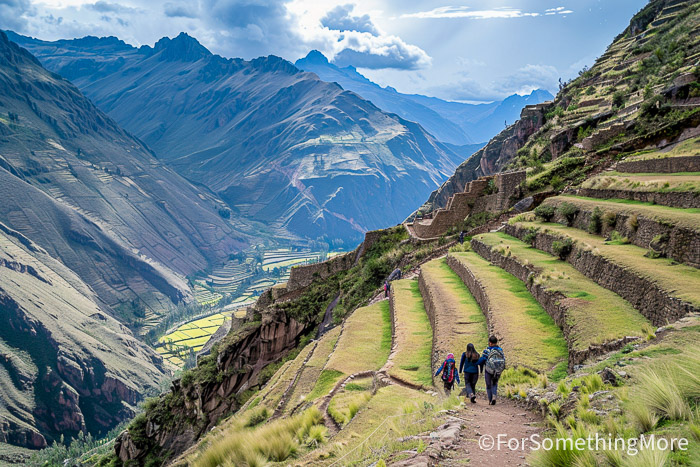
Pisac works well for families because you can combine its extensive archaeological site with time in the modern town below.
The archaeological complex sits high above the Sacred Valley and includes terraces, ruins, and walking routes between different areas of the site. Families do not necessarily need to complete the longest possible route to make the visit worthwhile.
With younger kids, plan enough time for the ruins without automatically adding a major hike afterward. Sun exposure, stairs, and elevation can make a few hours of exploration more tiring than expected.
Pisac’s town and market can then provide a lower-energy second half of the day.
Explore Moray and the Maras Salt Mines
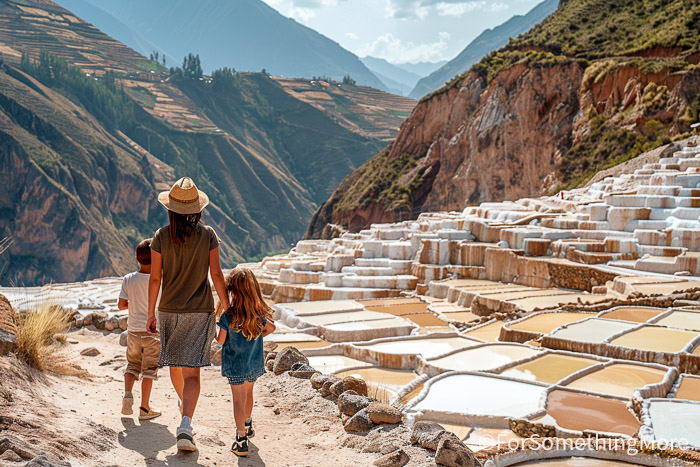
Moray and the Maras salt mines are good choices for families looking for an outdoor sightseeing day without the physical demands of a long hike.
Moray is known for its large circular agricultural terraces built into natural depressions in the landscape. Nearby, the Maras salt ponds form thousands of small pools along a mountainside where salt has been harvested for generations.
Because these sites can be combined geographically, they work well as a single excursion.
They can also provide a useful recovery day between more demanding adventures. Families often underestimate how much consecutive days of stairs, walking, and elevation can affect children’s energy.
For current destination information and responsible travel guidance in the Sacred Valley, Peru’s official tourism site is a useful planning resource.
Go Hiking in the Sacred Valley
The Sacred Valley offers hiking opportunities for a wide range of abilities, but families should choose trails based on elevation gain, altitude, exposure, and access rather than distance alone.
A three-mile mountain hike at elevation is not equivalent to a three-mile walk near home.
Before choosing a trail, consider:
- Starting elevation
- Total elevation gain
- Steep or exposed sections
- Availability of shade
- Water access
- Distance from transportation
- Whether the route is out-and-back or point-to-point
- How easily your family can turn around if a child gets tired
Start conservatively during the first few days. If everyone is handling the altitude well, you can increase the difficulty later in the trip.
Can Families Go Rafting, Biking, or Horseback Riding?
Rafting, mountain biking, and horseback riding can add more active outdoor adventure to a Sacred Valley family trip, but the right activity depends heavily on children’s ages, experience, and current conditions.
For rafting, ask operators about water levels, rapid classifications, minimum ages, personal flotation devices, guide qualifications, and their procedures for children.
For mountain biking, determine whether a route involves vehicle traffic, steep descents, technical terrain, or primarily quiet dirt roads. A child who confidently rides around home may not be ready for a long descent at altitude.
Horseback riding can require less cardiovascular effort, but families should still ask about helmets, guide-to-guest ratios, horse temperament, and the terrain covered.
Do not choose an operator solely because they advertise an activity as “family-friendly.” Ask what that specifically means for your children’s ages and abilities.
How Many Outdoor Activities Should Families Plan?
Most families should plan one primary outdoor experience per day and leave enough flexibility to shorten or change plans when needed.
A morning exploring ruins followed by rafting, a long hike, and an evening tour may technically fit on a schedule, but it leaves very little margin for altitude, weather, transportation delays, or tired kids.
A more realistic rhythm is:
- One primary adventure
- A relaxed meal
- One optional low-effort activity
- Unscheduled time before dinner
This becomes particularly important immediately before Machu Picchu. Avoid exhausting everyone on a demanding hike simply because you have an open day in the itinerary.
Planning Takeaway
Treat the Sacred Valley as an outdoor adventure destination in its own right rather than simply the route to Machu Picchu.
Ollantaytambo and Pisac combine history with active exploration, while Moray and Maras provide a lower-effort day between bigger adventures. Hiking, rafting, biking, and horseback riding can take families farther off the standard sightseeing circuit, but choose activities based on your children’s actual abilities and current energy levels.
Leaving some space in the itinerary gives you the flexibility to take on more when everyone feels good—and slow down when they don’t.
What Is a Realistic 7-Day Machu Picchu Family Itinerary?
A realistic 7-day Machu Picchu family itinerary should include several days in the Sacred Valley, one primary adventure most days, an overnight near Machu Picchu, and enough flexibility for altitude, weather, and tired kids.
Seven days is enough to experience Machu Picchu and several highlights of the Sacred Valley without changing hotels every night or treating the trip like a checklist. The biggest planning mistake is filling every available morning and afternoon simply because activities appear close together on a map.
Day 1: Arrive and Head to the Sacred Valley
Use your first day primarily for arrival, transportation, and adjusting to the elevation rather than sightseeing.
If your family flies into Cusco, consider continuing into the Sacred Valley and settling into a base such as Urubamba or Ollantaytambo. Keep the remainder of the day simple with a meal, a short walk, and an early night.
Children who seem energetic immediately after arrival can still tire quickly once travel fatigue and elevation catch up with them.
Day 2: Explore Pisac and the Sacred Valley
Make Pisac your primary activity and keep the rest of the day flexible.
Explore the archaeological complex at a comfortable pace, choosing how much walking to do based on how everyone is responding to the altitude. Afterward, spend time in Pisac town or return to your accommodations for a quieter afternoon.
This is also a useful first test of your family’s energy. If the stairs and elevation feel harder than expected, adjust the next several days rather than pushing through the original schedule.
Day 3: Visit Moray and Maras
Use Moray and the Maras salt mines as a lower-intensity exploration day between more physically demanding activities.
Both sites provide plenty to explore without requiring a major mountain hike. Depending on your children’s energy, you can make these the entire day’s outing or add another short stop in the Sacred Valley.
Avoid adding a strenuous afternoon activity simply because the morning finishes earlier than expected. Recovery time at altitude can pay off later in the week.
Day 4: Explore Ollantaytambo
Spend the day exploring Ollantaytambo and its archaeological sites before traveling toward Machu Picchu.
The main ruins involve plenty of climbing, so let this serve as the day’s primary physical activity. Walk through the historic town afterward, have a relaxed meal, and prepare what you need for the next stage of the trip.
If you have been staying elsewhere in the Sacred Valley, this is also a logical point to transition toward Ollantaytambo for the train.
Day 5: Take the Train to Aguas Calientes
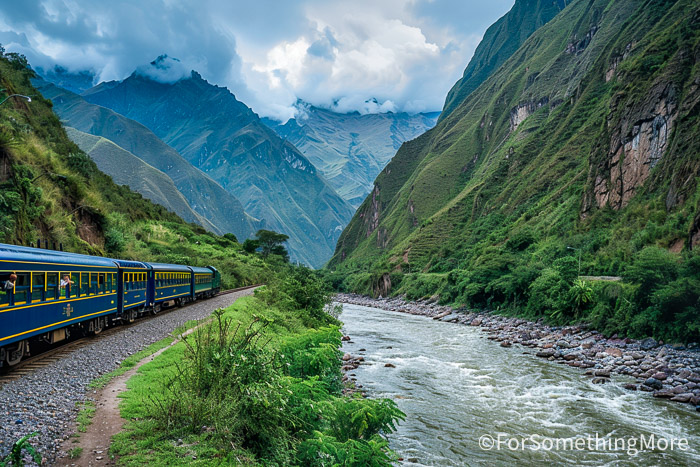
Treat the journey to Aguas Calientes as part of the day’s experience rather than trying to squeeze another major excursion around it.
Travel by train from Ollantaytambo, check into your accommodations, and use the remaining time to organize tickets, daypacks, transportation, and meals for the following day.
This intentionally lighter day gives everyone a chance to recover before Machu Picchu.
Families should confirm current entry requirements and visitor regulations through Peru’s Ministry of Culture before their visit.
Day 6: Visit Machu Picchu
Make Machu Picchu the only major objective of the day.
Allow enough time for breakfast, the shuttle bus, entry procedures, and your designated circuit without creating pressure to rush through the site.
Keep expectations realistic with kids. Stairs, uneven terrain, altitude, sun, rain, and crowds can all affect how quickly your family moves.
After completing your visit, return to Aguas Calientes for food and downtime. Depending on train schedules and your broader itinerary, you can either stay another night or begin traveling back toward Ollantaytambo or Cusco.
Day 7: Return Toward Cusco
Use the final day to transition back toward Cusco while keeping the schedule flexible around transportation.
If your family still has plenty of energy, add a low-key activity after arriving. If everyone is tired, there is little downside to having an intentionally easy final afternoon.
Avoid scheduling a departing flight too tightly around your return from the Machu Picchu area. Multiple transportation connections introduce opportunities for delays, and families generally benefit from some buffer.
Planning Snapshot
A balanced seven-day itinerary could look like this:
- Day 1: Arrival + Sacred Valley
- Day 2: Pisac
- Day 3: Moray + Maras
- Day 4: Ollantaytambo
- Day 5: Train + Aguas Calientes
- Day 6: Machu Picchu
- Day 7: Return toward Cusco
The itinerary deliberately alternates more demanding days with easier ones. If your family wants to add rafting, mountain biking, horseback riding, or a substantial hike, consider replacing one of the sightseeing days rather than simply adding another activity.
Planning Takeaway
A successful Machu Picchu family itinerary should leave enough room to adjust once you see how your children respond to the altitude and pace.
Seven days gives you time to make Machu Picchu the centerpiece without making it the entire trip. Keep one primary objective per day, minimize unnecessary hotel changes, and resist filling every open afternoon.
The result is a trip that allows families to experience Machu Picchu while also having enough time and energy to explore the Sacred Valley beyond its most heavily visited stops.
What Should Families Pack for Machu Picchu?
Families should pack light for Machu Picchu while carrying enough layers, rain protection, sun protection, water, and child-specific essentials to handle rapidly changing mountain conditions.
The goal is not to prepare for every possible scenario. It is to carry what your family realistically needs for several hours outside without making parents haul unnecessarily heavy daypacks up and down stone stairs.
What Should Kids Wear to Machu Picchu?
Kids should wear lightweight layers that can be added or removed as temperature, sun, wind, and rain conditions change.
Mountain weather can shift considerably throughout the day. A cool or damp morning does not necessarily mean those same clothes will be comfortable once the sun comes out and everyone starts climbing stairs.
A practical clothing system includes:
- Lightweight moisture-wicking base layer
- Fleece or other light insulating layer
- Packable rain jacket
- Comfortable hiking pants or shorts appropriate for the season
- Hiking shoes or walking shoes with good traction
- Sun hat
- Extra socks
Avoid testing new footwear at Machu Picchu. Kids should arrive wearing shoes they have already used comfortably for longer walks.
What Should Go in Your Family Daypack?
Your daypack should contain the essentials your family will realistically use while remaining light enough to carry comfortably throughout the visit.
Consider packing:
- Water
- Sunscreen
- Sunglasses
- Rain protection
- An extra child-sized layer
- Any necessary medications
- Tissues or basic personal-care items
- Phone and portable battery
- Tickets and reservation information
- Identification when required
Keep digital copies of important reservations on your phone, but also save them for offline access. Cell service should never be the only way you can retrieve information needed for a timed reservation.
Parents of younger kids should assume that anything placed in a child’s backpack may eventually end up in an adult’s backpack. Pack accordingly.
How Should Families Prepare for Sun and Rain?
Families should prepare for both strong sun and rain regardless of how the weather looks when leaving their accommodations.
At elevation, sun exposure can become significant quickly, particularly when families spend several hours outside. Apply sunscreen before entering and bring appropriate sun protection for children.
Rain creates a different challenge. Stone surfaces can become slippery, making good footwear and slower pacing more important.
During wetter conditions, prioritize traction and supervision over maintaining your planned pace.
Should Families Bring Food and Snacks?
Families should check the current visitor regulations before deciding what food, drinks, and other supplies to bring into Machu Picchu.
Rules governing what visitors may carry into the archaeological site can change, so do not assume that something permitted on another hike or archaeological visit will automatically be allowed here.
Peru’s Ministry of Culture provides official information about Machu Picchu regulations and visitor requirements, and families should review the current rules shortly before their visit.
Plan meals around your entry time so children are not beginning several hours of walking already hungry.
With younger kids, meal timing can have as much influence on the day as the difficulty of the terrain.
What Should Families Leave Behind?
Families should leave unnecessary equipment and bulky gear at their accommodations rather than carrying it through Machu Picchu.
Large bags, excessive camera equipment, extra clothing, and “just in case” items add weight without necessarily making the family better prepared.
Before leaving your accommodations, ask one practical question: Is someone likely to use this during the next several hours?
If the answer is probably not, it may be better left behind.
Planning Takeaway
Pack for Machu Picchu as you would for a moderate family hike with variable mountain weather, but verify current site restrictions before finalizing your daypack.
Prioritize layers, rain and sun protection, reliable footwear, water where permitted, necessary medications, and offline access to reservations. Keep everything else minimal.
The best family daypack is not the one prepared for every imaginable situation; it is the one that contains what you actually need without becoming another source of fatigue.
How Do You Keep a Machu Picchu Family Trip Safe and Manageable?
The best way to keep a Machu Picchu family trip safe and manageable is to plan conservatively around altitude, weather, physical fatigue, transportation, and your children’s actual abilities rather than trying to maximize every day.
Machu Picchu itself is only one part of the equation. Families are often traveling between high-elevation destinations, navigating unfamiliar transportation, spending hours outside, and completing several active days in a row. Building flexibility into the itinerary helps prevent relatively small problems from disrupting the entire trip.
How Should Families Handle the Altitude?
Families should increase activity gradually and pay attention to how each person responds to elevation before committing to strenuous hikes or tightly scheduled days.
Cusco sits at roughly 11,150 feet (3,400 meters), while Machu Picchu is lower at approximately 7,970 feet (2,430 meters). Much of the Sacred Valley falls between those elevations.
Altitude affects people differently, and fitness does not guarantee that someone will feel well at elevation. Children who normally have plenty of hiking stamina may tire faster or simply move more slowly.
Common symptoms associated with altitude illness can include headache, nausea, dizziness, fatigue, and difficulty sleeping. Families should take symptoms seriously rather than assuming a child is simply tired or irritable.
The CDC provides guidance on altitude illness and current health considerations for travelers to Peru, making it a useful resource to review before your trip.
If someone develops concerning or worsening symptoms, seek appropriate medical care rather than continuing with the day’s itinerary.
How Should Weather Affect Your Plans?
Families should treat weather as a factor that can change the day’s pace rather than something to work around at all costs.
Conditions around Machu Picchu and the Sacred Valley vary by season and elevation. Rain can make stone stairs and trails slippery, while strong sun can increase fatigue and sun exposure.
Bring layers and rain protection even when conditions look favorable at the beginning of the day.
With kids, slowing down on wet stone steps is more important than staying on schedule. If weather makes an optional hike or outdoor activity inappropriate for your family’s abilities, change the plan.
How Do You Manage Steep Terrain With Kids?
Parents should keep children close on steep, uneven, or exposed terrain and choose routes that match their demonstrated hiking ability.
Machu Picchu and other archaeological sites throughout the Sacred Valley contain stone stairs, irregular surfaces, and areas where a fall could be more consequential than on a typical paved attraction.
Young children may also become less careful when tired.
A few practical habits help:
- Keep younger children within immediate reach on steep sections
- Wear shoes with reliable traction
- Avoid rushing to keep up with other visitors
- Take breaks before children become exhausted
- Let faster groups pass rather than feeling pressured to maintain their pace
- Reconsider optional hikes if conditions are wet or children are already tired
Most families underestimate how much coordination deteriorates when kids become fatigued. Ending an activity while everyone still has some energy is often better than pushing until a child is completely exhausted.
How Should Families Handle Food and Water?
Families should plan meals, hydration, and bathroom stops around transportation and timed activities rather than assuming those needs will conveniently fit into the schedule.
Travel days involving trains, buses, archaeological sites, and fixed entry times can create longer gaps between meals than children are accustomed to.
Have breakfast before a major outing and know where your next realistic meal opportunity will be. Carry water and permitted snacks when appropriate, while checking current rules for archaeological sites before entering.
Parents should also use normal food and water precautions while traveling. A minor stomach issue is inconvenient at a hotel; it becomes considerably more difficult during a day involving trains, buses, and several hours of walking.
How Much Transportation Buffer Do Families Need?
Families should leave meaningful buffers around trains, Machu Picchu admission times, and other reservations that cannot easily be changed.
Avoid building an itinerary that depends on arriving somewhere and immediately making the next connection.
Children need bathroom stops. Meals take longer than expected. Bags need to be reorganized. Transportation can be delayed.
Those small delays become stressful only when the schedule has no margin.
This is particularly important when returning toward Cusco or connecting to a flight. Whenever possible, avoid making your international or domestic flight dependent on several same-day transportation connections from the Machu Picchu area.
How Do You Avoid Over-Scheduling Peru With Kids?
Plan one primary activity per day and treat additional activities as optional rather than required.
A schedule can look perfectly reasonable on paper while being exhausting in practice. Altitude, stairs, unfamiliar food, early mornings, transportation, and repeated hotel changes all consume energy.
A useful family rhythm is:
- One primary adventure or archaeological site
- Enough time for a relaxed meal
- An optional lower-effort activity
- Unscheduled downtime
If everyone feels strong, use the extra time to explore more. If someone is tired, you can stop without feeling as though the itinerary has fallen apart.
Planning Takeaway
The safest and most manageable Machu Picchu family trip is usually the one with the most flexibility built into it.
Acclimatize gradually, pay attention to changing weather, supervise children carefully around steep terrain, and leave buffers around fixed transportation and reservations. Most importantly, adjust the itinerary when your family’s energy or conditions on the ground differ from what you expected.
A family itinerary does not need to accomplish everything available in the Sacred Valley. It needs to leave everyone with enough time and energy to safely enjoy the experiences you decided mattered most.
Is Machu Picchu the Adventure—or Part of a Bigger Peru Family Trip?
Machu Picchu works best as one part of a broader Peru family adventure, with enough time in the Sacred Valley to hike, explore smaller communities, visit archaeological sites, and experience the region beyond its most famous landmark.
For many families, Machu Picchu will understandably determine when and how the trip is planned. But building the entire itinerary around a single day misses much of what makes this part of Peru particularly well suited to adventurous family travel.
Why Should Families Spend More Time in the Sacred Valley?
The Sacred Valley gives families more flexibility than Machu Picchu itself, making it easier to adjust activities around children’s energy, weather, and changing travel plans.
Instead of moving directly between Cusco and Machu Picchu, spend several days using Ollantaytambo, Urubamba, or another Sacred Valley community as a base.
That gives you time for experiences such as:
- Exploring Ollantaytambo on foot
- Visiting Pisac and its archaeological complex
- Seeing Moray and the Maras salt mines
- Choosing a family-appropriate hike
- Rafting or mountain biking with a qualified local operator
- Exploring smaller Sacred Valley communities
- Leaving an afternoon completely unscheduled
This slower approach also gives families more time to adjust to elevation before taking on demanding activities.
How Do You Get Off the Beaten Path Near Machu Picchu?
Families can get beyond the busiest tourist route by spending more time in the Sacred Valley and choosing a few outdoor experiences rather than moving quickly between its best-known attractions.
Going off the beaten path does not necessarily mean finding somewhere completely remote. With kids, it often means creating enough time to explore beyond the standard Cusco–Machu Picchu itinerary.
A half-day hike, a smaller archaeological site, or an afternoon exploring on foot can provide a very different experience from moving between major attractions on a tightly scheduled tour.
Keep logistics in mind when choosing more remote activities. A quieter trail or rural destination becomes considerably less practical if reaching it requires several additional hours in a vehicle with tired children.
Peru’s official tourism website provides information on destinations and experiences throughout the country that can help families identify places beyond Machu Picchu when planning a broader itinerary.
Should You Add More Destinations to Your Peru Family Trip?
Families with additional time should consider adding destinations only when they can do so without turning the trip into a sequence of transportation days.
Peru offers far more than can realistically fit into a weeklong trip. Adding another region may make sense if you have two or three weeks, but it is not automatically a better use of limited time.
With kids, every additional destination usually means another transfer, hotel check-in, packing session, and adjustment to a new environment.
For a shorter trip, spending more time around Cusco and the Sacred Valley often creates more opportunities for actual outdoor adventure than trying to cover a larger portion of Peru.
How Much Unscheduled Time Should Families Leave?
Families should leave at least some unscheduled time throughout the trip so they can respond to altitude, weather, transportation delays, and changing energy levels.
Not every open afternoon needs to become another excursion.
Children may want time to play or rest after several days of ruins and hiking. Parents may need time to reorganize luggage, do laundry, or simply have a meal without watching the clock.
Those slower periods are not wasted travel time. They are what make the more demanding days sustainable.
A flexible afternoon can also become an unexpected opportunity. If everyone feels good and the weather cooperates, you can always add a short walk or local activity.
Planning Takeaway
Plan your Peru family trip around the region rather than around a single Machu Picchu entry ticket.
Give your family several days in the Sacred Valley, choose outdoor activities according to your children’s abilities, and leave enough unscheduled time to adjust as you go.
Machu Picchu may be the landmark that initially brings your family to this part of Peru, but places like Ollantaytambo, Pisac, Moray, Maras, and the surrounding mountains are what allow you to turn the visit into a broader off-the-beaten-path outdoor adventure.
For families who prefer active travel over simply moving between famous sights, that wider Sacred Valley experience is worth making room for.
Final Thoughts – Machu Picchu with Kids
Visiting Machu Picchu with kids is entirely achievable when you build the trip around realistic pacing, thoughtful preparation, and enough flexibility to adjust along the way. Rather than treating Machu Picchu as an isolated attraction, use this guide to plan a broader family adventure through the Sacred Valley that balances archaeological sites, outdoor activities, transportation, and downtime.
This trip is particularly well suited to families who enjoy active travel and are comfortable slowing down when conditions or energy levels require it. At elevation, even capable kids may move more slowly than they do at home, so a flexible itinerary will usually serve your family better than a packed one. With clear expectations and a manageable pace, you can approach the trip knowing what to expect and how to make it work for your family.
FAQs – Family Trip to Machu Picchu
- Q: Is Machu Picchu worth visiting with kids? A: Yes. Machu Picchu can be an excellent family adventure for children who can comfortably handle several hours of walking, uneven stone steps, changing weather, and a structured sightseeing day.
- Q: What is the best age to visit Machu Picchu with kids? A: There is no single ideal age, but elementary-age children and teenagers who already enjoy hiking and active travel will generally have an easier time. A child’s hiking ability, stamina, and comfort following directions around steep terrain matter more than age alone.
- Q: Is Machu Picchu difficult for children? A: It can be moderately challenging because of the elevation, numerous stone steps, uneven terrain, weather, and several hours of walking. Families should choose a visitor circuit that matches their children’s abilities.
- Q: How many days should a family spend around Machu Picchu? A: Plan at least several days in the region rather than visiting Machu Picchu immediately after arriving. A 7-day itinerary provides enough time to explore the Sacred Valley, acclimatize, visit Machu Picchu, and maintain a reasonable family pace.
- Q: Should families stay in Cusco or the Sacred Valley before Machu Picchu? A: The Sacred Valley is often a practical choice for families because it is lower in elevation than Cusco and provides easy access to outdoor activities and archaeological sites. Ollantaytambo and Urubamba both make useful family bases.
- Q: Should families stay overnight in Aguas Calientes? A: Staying overnight in Aguas Calientes can make the Machu Picchu visit easier by eliminating a major transportation leg on the morning of your entry. The tradeoff is adding another hotel change to your itinerary.
- Q: Can families visit Machu Picchu without a tour? A: Yes. Families can organize their own admission, transportation, accommodations, and other logistics. A guided or organized tour may be preferable for families who want to simplify those arrangements.
- Q: What else can families do near Machu Picchu? A: The Sacred Valley offers hiking, rafting, mountain biking, horseback riding, archaeological sites, and smaller communities to explore. Ollantaytambo, Pisac, Moray, and the Maras salt mines are particularly useful additions to a family itinerary.
- Q: What should kids wear to Machu Picchu? A: Kids should wear comfortable, broken-in walking or hiking shoes and lightweight layers that can adapt to changing temperatures. Bring rain and sun protection because mountain conditions can change throughout the day.
- Q: Is altitude a concern when visiting Machu Picchu with children? A: Yes. Families should allow time to acclimatize and pay attention to how each person responds to elevation. Cusco is considerably higher than Machu Picchu, and altitude can affect people differently regardless of fitness.
- Q: How much should families plan each day in the Sacred Valley? A: One primary activity per day is a practical starting point. Additional activities can remain optional depending on children’s energy, weather, altitude, and transportation times.
- Q: How can families make a Machu Picchu trip feel more off the beaten path? A: Spend more time exploring the Sacred Valley instead of treating it solely as a route between Cusco and Machu Picchu. Hiking, visiting smaller communities, and slowing down in places like Ollantaytambo can turn the trip into a broader outdoor family adventure.
+++BEFORE using this information, please read our Legal Disclaimer+++