

Table of Contents
Using Public Transportation Can Save You Money Extending Your Travels
Traveling with your family is an adventure, and one of the key parts of that adventure is getting around. Public transportation is often the most affordable and convenient way for families to explore new cities. By choosing buses, trains, and trams over taxis or rental cars, you can save a significant amount of money—money that can be spent on extending your travels or experiencing more of what a destination has to offer. Each country, however, has its own unique set of rules, fares, and systems. Understanding these differences in advance can help your family navigate foreign transportation smoothly and without stress.
In this guide, we’ll show you how to make the most of public transportation in some of the world’s most family-friendly cities, highlighting not only the practical aspects but also how it can help stretch your budget, leaving more room for adventure and creating lifelong memories with your loved ones.
If you have any comments/questions, please leave them below.
Why These Cities?
In this guide, we’ve selected cities that are popular family travel destinations, known for their efficient and well-connected public transportation systems. These cities have a variety of options that make them accessible for families, whether traveling with infants, toddlers, or older children.
Additionally, they offer unique cultural and scenic experiences that can be enjoyed by both kids and adults while using public transportation. From the iconic double-decker buses in London to the funicular rides in Prague, each city provides a transportation experience that can become a memorable part of your family’s travel adventure.
General Family-Friendly Transportation Tips
Before diving into specific cities, here are some universally helpful tips for families using public transportation:
- Preload Transportation Apps: Many cities have public transportation apps that show real-time schedules, route maps, and ticketing options. Download these apps before your trip to make navigating easier when you arrive.
- Stroller-Friendly Options: Not all public transport is stroller-friendly, so it’s important to check if the stations or buses have step-free access or elevators. Look for buses that have designated stroller spaces and make sure you understand which metro or tram stations have accessibility features.
- Bring Essentials: Traveling with kids can involve long waits or unexpected delays. Bring plenty of snacks, water, and small toys or games to keep your children entertained while using public transportation.
- Avoid Rush Hours: Wherever possible, avoid traveling during peak hours. Crowded buses or subway cars can be overwhelming for young children, and finding seating can be difficult.
- Plan Short Journeys: Children can get restless during long public transportation rides. If possible, break your journeys into shorter trips with fun stops along the way.
Prague: Compact and Easy for Families
The Czech capital, Prague, is a family favorite due to its manageable size and variety of transportation options. The city offers buses, trams, and a small but efficient metro system with only three lines, making it less confusing for visitors.
- Family-Friendly Features: Most stations and vehicles are stroller-accessible, and the funicular up to Petřín Hill is a must for families. Not only does it offer incredible views, but kids will enjoy the novelty of this mode of transport.
- Ticketing Tip: Families can buy day passes that cover all transportation options, saving both time and money. Children under a certain age (usually six) often travel for free, so be sure to ask about any family fare options.
- Must-Visit for Kids: Hop off the metro at Malostranská to visit the beautiful playground in Petřín Park, perfect for kids to burn off some energy after a fun ride on public transport.
Germany: Organized and Reliable
Germany’s transportation system is renowned for its reliability and ease of use, even for first-time visitors. Cities like Berlin, Munich, and Hamburg offer families well-connected public transportation networks that include buses, trams, and metro lines.
However, regardless of how good Germany’s public transportation is, there is one thing that can make a trip to any of the countries extremely uncomfortable – a lack of mobile communications. While people used to have to buy roaming data SIM cards when traveling, eSIM makes everything much easier. This is a virtual SIM card, or SIM card for travel, that will allow you to easily and comfortably visit the most visited cities in the world while remaining in touch.
- Family Tickets: In most cities, you can buy day passes or group tickets that allow up to five people to travel together at a discounted rate. This is especially helpful for families.
- Accessibility: Germany’s transportation system is very family-friendly, with most stations providing elevators and ramps. Families with strollers will find boarding buses and trains easy thanks to designated spaces for strollers and wheelchairs.
- Regional Day Trips: Germany’s trains make it easy to take day trips to nearby towns and attractions without the need for a rental car. Consider hopping on a regional train for a family excursion to one of the many castles or nature parks.

Amsterdam: Streetcars and Bicycles
Amsterdam’s streetcars (trams) are the most popular mode of transportation for tourists and locals alike. With up to 16 tram lines, the city is well-connected, making it easy for families to get around.
- Tram Tips: When riding trams with young kids, be sure to use the stroller-friendly entrances, typically located in the middle section of the tram. Trams also have priority seating for families with young children, making it more comfortable during your ride.
- Watch for Bikes: Amsterdam is famous for its bicycles, so be extra cautious when walking with kids or pushing a stroller across streets. Many roads are shared between trams, cars, and cyclists.
- Kid-Friendly Stops: Don’t miss Vondelpark, a large park with multiple playgrounds and wide paths that are perfect for walking or cycling with kids. It’s easily accessible by tram from most parts of the city.
Stockholm: Art Meets Transportation
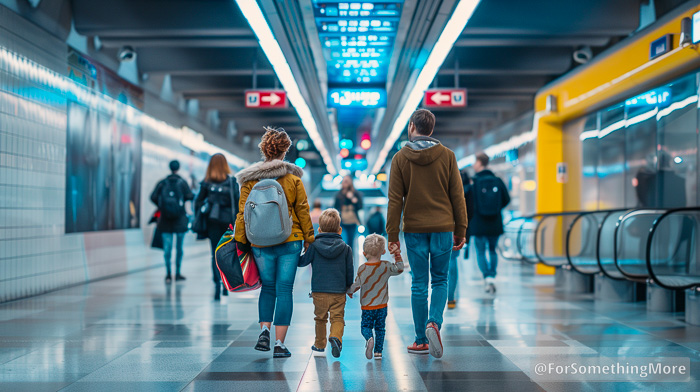
Stockholm’s public transportation system is both efficient and artistic. The subway, or Tunnelbana, is famous for its beautifully decorated stations, many of which are painted by local artists.
- Stroller-Friendly: Stockholm’s buses and metro cars are extremely stroller-friendly, with dedicated spaces and wide doors to accommodate families. Parents won’t have to worry about folding strollers when boarding, making the journey hassle-free.
- Family Passes: Consider purchasing a family travel card, which covers all forms of public transportation, including the metro, buses, and ferries. This pass also allows children to travel for free in certain age groups, making it a budget-friendly option for families.
- Fun for Kids: Don’t miss the opportunity to stop at the Kungsträdgården metro station, which features some of the most fascinating underground art in the world, sure to entertain curious young minds.
Oslo: Ferries and Buses
Oslo offers a variety of public transportation modes, including buses, ferries, and a metro system. One unique option for families is to take a ferry ride to the nearby islands, where kids can explore nature trails or enjoy a picnic by the water.
- Day and Night Buses: Oslo’s day buses run on regular routes, while night buses operate after-hours on demand. Be aware that a regular bus pass won’t work for the night buses, so plan accordingly.
- Family-Friendly Routes: The ferries to the nearby islands are a highlight for families. They are not only scenic but offer a relaxing break from the hustle and bustle of the city. Many ferries also allow strollers on board without the need for folding them up.
Austria & Poland: Metro in Vienna, Trams in Warsaw
Vienna and Warsaw offer contrasting transportation systems that families can easily navigate. In Vienna, the underground (U-Bahn) is the most convenient option for families, while Warsaw’s extensive tram network is the best way to explore the city.
- Vienna’s Family Card: Vienna offers a family card that allows parents and children to travel on all public transportation for a set price. Many stations are equipped with elevators, and strollers are easily accommodated.
- Warsaw’s Trams: Warsaw’s trams are easy to access with strollers and run frequently across the city. However, make sure to purchase the correct ticket for each mode of transport, as the city requires different tickets for buses, trams, and the metro.
London: Iconic and Efficient
London’s public transportation is a family-friendly way to see the sights of this vast city. The iconic double-decker buses are a fun option for kids, while the Tube is the fastest way to get around – although of course the Tube has it’s own pros and cons. The same rule applies to eSim. Check out this Yesim review. Here you will find answers to all your questions.
- Oyster Card: Families should consider getting an Oyster card for ease of travel. The card works across all forms of transportation, and children under 11 travel for free on buses and trams when accompanied by an adult.
- Stroller Considerations: Many older Tube stations don’t have elevators or escalators, which can make travel with a stroller challenging. Stick to bus routes or newer stations with step-free access whenever possible.
- Must-See for Families: Don’t miss taking a ride on the Thames Clipper, a boat service along the River Thames, which offers fantastic views of the city’s most famous landmarks, including Big Ben and Tower Bridge.
Hong Kong: Fast and Family-Friendly
Hong Kong boasts one of the most efficient and family-friendly transportation systems in the world. Whether you’re using the MTR (Mass Transit Railway), ferries, or buses, getting around Hong Kong is simple and convenient for families.
- MTR Highlights: The MTR is not only clean and safe but also stroller-friendly, with many stations equipped with elevators and wide gates for easy access. The system covers most of the city and even extends to outlying areas such as Disneyland Hong Kong, a must-visit for families.
- Octopus Card: Families should get an Octopus Card, which is a rechargeable smart card that can be used across all modes of public transportation, as well as for purchases in stores and attractions.
- Family-Friendly Activities: The Star Ferry ride across Victoria Harbour is a popular and scenic option for families. Kids will love the views of the city’s famous skyline, and it’s an affordable and fun way to experience Hong Kong’s maritime culture.
Paris: Efficient and Scenic
Paris’ public transportation network is extensive, with a variety of options including buses, trams, the metro, and even electric trains. Families can easily get around using a Paris Visite Pass, which allows unlimited rides on all transportation for a set number of days.
- Stroller Access: Some older metro stations in Paris lack elevators, but buses are usually stroller-friendly, and Paris’ trams provide easy access for families with young children.
- Paris with Kids: Take a break from the metro and hop on a boat ride along the Seine River with Batobus, a water taxi service that stops at some of the city’s most famous attractions, like the Eiffel Tower and Notre Dame.
Conclusion: Making Public Transportation a Fun Family Experience
Public transportation doesn’t have to be stressful, even when traveling with young children. With a little preparation and the right strategies, it can become a fun part of your family’s adventure. From Amsterdam’s trams to Oslo’s ferries, each city offers unique transportation options that can add to the excitement of your trip. Plan ahead, keep your children entertained, and don’t forget to explore kid-friendly stops along the way!
Wherever your journey takes you, using public transportation as a family can help you see the world in a new light while saving money and making lasting memories.
FAQ: Common Questions About Using Public Transportation with Kids
- Q: Are strollers allowed on all forms of public transportation?
A: Most cities have stroller-friendly public transportation, but it’s always a good idea to check ahead. Buses and trams often have dedicated stroller spaces, and many metro systems provide elevators and ramps. However, older metro stations may lack accessibility features, so plan your routes accordingly. - Q: What’s the best way to buy tickets for a family?
A: Many cities offer family or group passes that are more economical than buying individual tickets. Look for day passes or family cards that allow unlimited travel for a set number of days across various transportation modes. - Q: How do I keep my kids entertained during long trips?
A: Pack small toys, books, or games to keep your kids entertained during longer rides or unexpected delays. Apps, music, or audiobooks can also help pass the time. Snacks and water are also a must for keeping kids happy while traveling. - Q: Are there discounts for children on public transportation?
A: Yes, many cities offer free or discounted fares for children. The age at which kids travel for free varies by city, but it’s often under 6 years old. Be sure to ask about any family fare options or child-specific discounts. - Q: What should I do if I get lost or confused about the routes?
A: Most cities have tourist information centers or help desks at major transportation hubs. If you’re unsure about a route, ask a local or consult the city’s transportation app. It’s also a good idea to download offline maps before your trip, so you can navigate even without Wi-Fi.
+++BEFORE using this information, please read our Legal Disclaimer+++