
If you are looking for family adventure destinations that go beyond conventional beach vacations, water-based trips can open the door to wildlife, remote islands, expedition travel, snorkeling, kayaking, and coastal exploration. This guide is for families who want active, off-the-beaten-path travel but still need to balance adventure with realistic pacing, safety, and the abilities of their children.
These trips range from cold-water expeditions to tropical marine adventures, and the right choice depends less on how dramatic a destination looks and more on how well its conditions and travel style match your family. A common planning mistake is underestimating how tiring repeated boat rides, changing weather, sun exposure, cold, or time in the water can become for kids over several days.
With the right preparation, these family adventure vacation ideas are very achievable. The goal is not to choose the most extreme destination, but to find a water-based adventure that gives your family meaningful outdoor experiences without pushing the logistics, activity level, or pace beyond what everyone can comfortably manage.
If you have any comments/questions, please leave them below.
Table of Contents
What Makes a Great Water-Based Family Adventure?
The best water-based family adventures combine a destination worth traveling for with activities your kids can realistically participate in, manageable logistics, appropriate safety precautions, and enough flexibility that the trip still feels like a vacation rather than an endurance test.
For families looking beyond conventional beach trips, water can become the actual means of exploration. Expedition ships can take you among Antarctica’s ice and wildlife, yachts can connect remote islands in Raja Ampat, kayaks can put you beneath Norwegian fjord walls, and snorkeling can bring kids remarkably close to marine life in Belize and the Galápagos.
The key is choosing the adventure for the family you actually have. A destination can look ideal on paper but become considerably more challenging when you factor in children’s ages, swimming ability, weather tolerance, boat transfers, long travel days, and how much structured activity they can comfortably handle.
What Should Families Consider Before Choosing a Water Adventure?
Start by matching the destination’s everyday demands to your children’s abilities rather than choosing primarily on scenery or wildlife.
Before committing to any remote family adventure, consider:
- Children’s ages and swimming confidence
- Amount of time spent aboard boats
- Open-ocean versus sheltered-water conditions
- Availability of appropriately sized safety equipment
- Snorkeling, kayaking, hiking, or other physical requirements
- Hot, cold, wet, or windy conditions
- Seasickness
- Distance from medical facilities
- Guided versus independent exploration
- Minimum ages established by individual operators
- Travel time required simply to reach the destination
- Opportunities for rest and unstructured time
A child does not necessarily need to be a strong swimmer for every water-based destination, but swimming ability becomes much more important when snorkeling, kayaking, and entering the water directly from boats are central to the itinerary.
Most families also underestimate cumulative fatigue. A two-hour boat excursion may sound easy, but add an early wake-up, transfer to the harbor, sun or cold exposure, wet clothing, snorkeling, and another transfer back, and the experience becomes a substantial part of a child’s day.
How Remote Is Too Remote When Traveling With Kids?
A remote destination can work well for families when parents understand what becomes harder once they leave established tourism infrastructure.
Antarctica and Raja Ampat illustrate this particularly well. Both offer exceptional water-based exploration, but neither gives families the same flexibility they would have at a conventional coastal resort.
In Antarctica, families generally explore from an expedition vessel, with weather and ice conditions influencing where and when landings occur. In Raja Ampat, hundreds of islands and significant distances between them make boats fundamental to getting around.
That doesn’t make either destination inappropriate for families. It means parents should consider:
- How quickly medical assistance could be reached
- Whether an itinerary can be modified if a child is tired or unwell
- How much boat time occurs each day
- Whether meals and downtime fit the family’s routine
- What happens when weather changes planned activities
- Whether the children are comfortable with uncertainty
With younger kids, the inability to simply return to your hotel room whenever you choose can matter more than parents initially expect.
Should Families Choose Guided or Independent Water Adventures?
Guided experiences generally make more sense when water conditions, wildlife, remoteness, or specialized equipment create risks that families cannot reasonably manage themselves.
The appropriate level of support varies enormously among the seven destinations in this guide.
Families can independently explore substantial portions of the Azores or Belize, for example, while using qualified local operators for activities such as whale watching, diving, or snorkeling excursions. Antarctica sits at the opposite end of that spectrum, where expedition travel determines almost the entire structure of the experience.
Raja Ampat falls somewhere between the two. Because the destination is spread across a large archipelago, the vessel you choose can significantly influence where you go, how much time you spend traveling, and how easily you can adjust the day’s pace.
We’ll look more closely at these choices in the individual destination sections, including when a scenic Antarctica cruise makes sense for an expedition-focused family and when a private yacht charter in Raja Ampat can provide useful flexibility for exploring remote islands with kids.
Which Type of Water Adventure Fits Your Family?
The right destination depends less on which place looks most impressive and more on what your family actually enjoys doing together.
A useful starting point is to think about the experience your kids would be excited to repeat for several days.
| If your family prioritizes… | Consider… |
|---|---|
| Wildlife and expedition travel | Antarctica |
| Snorkeling and remote islands | Raja Ampat |
| Accessible wildlife encounters | Galápagos |
| Whales plus hiking and road trips | Azores |
| Reef plus rainforest adventures | Belize |
| Kayaking plus mountain scenery | Norwegian fjords |
| Kayaking and wilderness closer to home | Apostle Islands |
These aren’t rigid categories. Several destinations overlap considerably, which is why logistics, climate, cost, and children’s abilities should ultimately help narrow the choice.
How Important Are Weather and Water Conditions?
Weather and water conditions should be treated as core planning factors because they directly affect both safety and how much children will enjoy the experience.
Cold-water destinations require particularly careful thinking. Norway’s fjords and Lake Superior can appear calm while still presenting serious consequences if someone enters cold water unexpectedly. Antarctica adds cold, wind, sea conditions, and rapidly changing expedition plans.
Tropical destinations present different challenges. Strong sun, heat, currents, dehydration, and extended time on boats can gradually wear children down even when everyone is having fun.
The U.S. National Weather Service explains that water temperatures below 70°F should be approached cautiously because cold-water immersion can impair breathing and physical ability much faster than many recreational swimmers expect.
Parents should always follow destination-specific guidance and qualified local operators rather than applying the same assumptions about swimming, kayaking, or boating everywhere they travel.
Planning Snapshot
Before choosing among these family adventure destinations, ask five practical questions:
- Can our kids safely participate in the main activities?
- Will they tolerate the amount of time spent aboard boats?
- Are we comfortable with the destination’s remoteness?
- Can we build rest and flexibility into the itinerary?
- Would our kids actually enjoy doing this type of activity repeatedly?
If the answer to the fifth question is uncertain, pay attention to it. Remote family adventure travel becomes expensive quickly, and the destination itself cannot compensate for an activity style your children simply don’t enjoy.
Planning Takeaway
Choose the type of water adventure first and the destination second.
Families comfortable with cold, uncertainty, wildlife encounters, and expedition schedules may find Antarctica worth the considerable journey. Strong swimmers and snorkelers may get much more from Raja Ampat or Belize. Families wanting a more forgiving balance between water and land can look toward the Azores, Norway, or the Galápagos, while the Apostle Islands offer a substantially more accessible way to test your family’s appetite for water-based wilderness closer to home.
The seven destinations ahead offer very different versions of family adventure travel, but the same principle applies to all of them: the best trip is the one that challenges your family enough to feel adventurous without asking your kids to manage conditions, activities, or pacing they aren’t ready for.
Is Antarctica a Realistic Family Adventure?
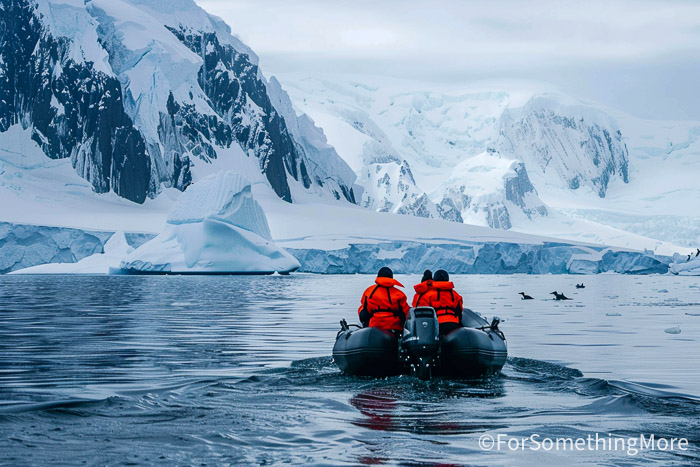
Antarctica can be a realistic family adventure for families with children old enough to handle long travel days, cold and changing conditions, small-boat excursions, and the structured but unpredictable rhythm of expedition travel.
This is not an easy family vacation in the conventional sense. Reaching Antarctica takes considerable time and money, and once you’re there, weather, sea conditions, and wildlife influence what happens each day.
For the right family, however, those constraints are part of what makes Antarctica different. Instead of visiting a destination built around attractions, you’re traveling through an environment where wildlife, ice, ocean conditions, and expedition opportunities shape the experience.
What Can Families Actually Do in Antarctica?
Families can experience Antarctica through wildlife viewing, Zodiac excursions, shore landings, educational programs, and opportunities to explore the Antarctic landscape with expedition guides.
A typical expedition may include opportunities to:
- Watch penguin colonies from designated viewing areas
- Look for humpback, minke, and other whales
- Observe seals resting on ice or shore
- Cruise among icebergs by Zodiac
- Make shore landings
- Walk through designated landing areas
- Attend talks from naturalists and expedition specialists
- Learn about Antarctic wildlife, geology, climate, and exploration
- Photograph glaciers, ice formations, and wildlife
For kids interested in animals, Antarctica has an obvious advantage: wildlife isn’t a side activity added to the itinerary. It is one of the central reasons for being there.
The challenge is that families cannot expect a predictable attraction-by-attraction schedule. Landings and excursions depend on conditions, and expedition teams may change plans when weather, ice, or wildlife make another option safer or more worthwhile.
That uncertainty is much easier with children who can accept that today’s plan may not be tomorrow’s reality.
What Age Is Best for Taking Kids to Antarctica?
Antarctica generally makes the most sense for older children and teenagers, although the appropriate age depends on the individual child and the requirements of the expedition operator.
There is no universal minimum age that applies to every Antarctic voyage. Families need to check the policies of the specific operator and vessel they are considering.
Beyond formal age restrictions, think about whether your child can comfortably:
- Spend extended periods aboard a ship
- Follow safety instructions consistently
- Wear bulky cold-weather equipment
- Board and exit Zodiacs with assistance
- Handle changing schedules without becoming overly frustrated
- Remain interested during sea days
- Tolerate cold and wind
- Participate appropriately around wildlife
- Manage potentially rough seas
Maturity can matter almost as much as age.
A highly adaptable 10-year-old who loves wildlife and boats may be a better fit than an older child who dislikes cold weather, gets severely seasick, or needs a highly predictable daily routine.
Families should also check minimum-age rules before getting attached to a particular itinerary. These can differ not only between companies but sometimes between activities offered during the same voyage.
How Do Families Actually Explore Antarctica?
Most leisure travelers experience Antarctica aboard an expedition ship, using smaller Zodiac boats for many wildlife excursions and shore landings.
That distinction is important when comparing an Antarctic expedition with a conventional cruise.
The ship is your accommodation and transportation, but much of the actual exploration happens beyond it. Depending on the itinerary and conditions, passengers may leave the vessel by Zodiac to cruise near ice and wildlife or reach approved landing sites.
For families comparing options for a scenic Antarctica cruise, the most useful comparison isn’t simply which vessel has the nicest cabins. Look closely at expedition staff, passenger numbers, shore-landing opportunities, Zodiac excursions, minimum-age policies, educational programming, and the overall expedition style.
A smaller or more expedition-focused vessel may offer a very different experience from a larger ship primarily designed around onboard amenities.
This is also where parents should think carefully about what they want from Antarctica. If the priority is getting off the ship and experiencing the environment as actively as conditions allow, excursion opportunities deserve considerable weight when choosing an itinerary.
What Is the Drake Passage Like With Kids?
Crossing the Drake Passage can be one of the biggest practical considerations for families because the roughly 500-mile stretch of ocean between South America and Antarctica is known for potentially rough conditions.
Some crossings are relatively calm. Others aren’t.
Parents should not assume their child’s experience on ferries or recreational boats predicts how they’ll respond to an extended ocean crossing.
Seasickness can affect adults and children differently, and spending significant time feeling unwell can change the beginning or end of an otherwise carefully planned trip.
Families concerned about the crossing can investigate itineraries that incorporate flights across the Drake Passage, although those trips introduce their own cost, scheduling, luggage, and weather considerations.
If seasickness is a concern, discuss appropriate prevention and treatment with your child’s healthcare professional before traveling rather than waiting to solve the problem once you’re aboard.
How Cold Is Antarctica for a Family Trip?
Antarctic cruise season falls during the Southern Hemisphere’s austral summer, but families still need to prepare for cold, wind, wet conditions, and rapid weather changes.
Conditions also vary by month and location.
The bigger family challenge is often not simply temperature. It’s keeping children comfortable through repeated transitions between a warm ship and an exposed Zodiac or landing site.
Appropriate gear may include:
- Waterproof outer layers
- Insulating midlayers
- Warm base layers
- Gloves or mittens
- Warm hat
- Neck protection
- Suitable socks
- Sunglasses
- High-SPF sunscreen
Some expedition operators provide items such as waterproof boots or expedition parkas, while others have different arrangements. Verify exactly what is included before buying or packing specialized equipment.
With kids, simple gear management matters. A missing glove or wet base layer is much harder to ignore when the next excursion involves wind, cold, and an open Zodiac.
How Safe Is Antarctica With Kids?
Antarctica requires families to take safety and environmental rules seriously because the destination is remote, conditions can change quickly, and medical resources are inherently limited.
Parents should be comfortable with the fact that this is not a destination where comprehensive medical care is immediately nearby.
Travel insurance, medical coverage, evacuation provisions, operator procedures, and any pre-existing health considerations deserve more attention here than they might on a conventional family vacation.
Families also have responsibilities toward the environment.
The International Association of Antarctica Tour Operators provides visitor guidance covering responsible behavior around wildlife, protected areas, biosecurity, and environmental protection, and families should review these expectations with children before traveling.
Children need to be capable of following instructions about wildlife distances and where they may walk even when an animal suddenly appears somewhere exciting.
What Do Families Commonly Underestimate About Antarctica?
Families are more likely to underestimate the cumulative demands of an Antarctic expedition than any single activity.
Individually, watching penguins, riding in a Zodiac, or taking a short shore walk may not sound difficult.
Put together, however, the rhythm can involve dressing in multiple layers, preparing equipment, boarding small boats, dealing with cold and wind, exploring ashore, returning to the ship, removing wet gear, eating, attending educational programming, and preparing to do it again later.
For younger travelers, excitement does not eliminate fatigue.
Families should resist the urge to participate in absolutely everything simply because Antarctica feels like a once-in-a-lifetime trip. Missing an optional activity to rest can make the next excursion considerably better.
Planning Takeaway
Antarctica is best suited to families who are genuinely excited by wildlife, expedition travel, and remote environments and are comfortable accepting the additional cost, preparation, uncertainty, and physical demands that come with them.
For older kids and teenagers who enjoy animals, boats, science, photography, or outdoor exploration, the experience can offer far more than simply seeing Antarctica from a ship.
The deciding question is not whether Antarctica can be done with kids. It can. The more useful question is whether your particular children will enjoy the way Antarctica has to be experienced: long-distance travel, cold conditions, expedition schedules, small boats, and plans that sometimes change with the environment.
Is Raja Ampat Worth the Journey With Kids?
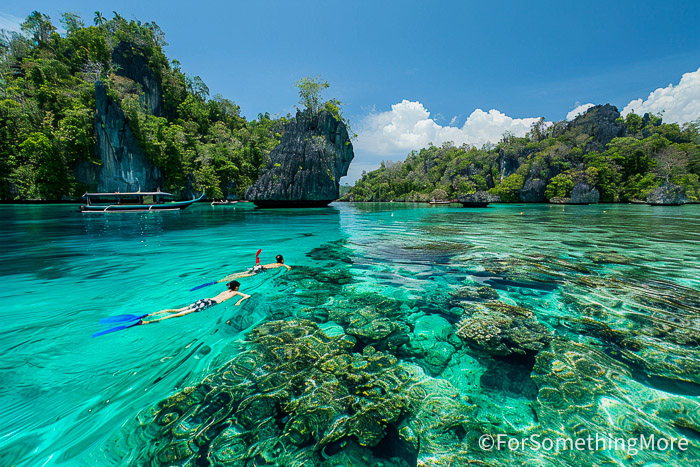
Raja Ampat can be an exceptional family adventure for water-confident kids, but its remote location, boat-dependent logistics, tropical conditions, and emphasis on snorkeling make it better suited to families comfortable traveling beyond conventional resort destinations.
Located in Indonesia’s Southwest Papua province, Raja Ampat is an archipelago of hundreds of islands surrounded by coral reefs and exceptionally diverse marine ecosystems. Rather than arriving at one destination and exploring outward by road, families experience much of Raja Ampat from the water.
That creates an unusual kind of family adventure. Days can revolve around snorkeling, island hopping, swimming, wildlife, beaches, and boat journeys rather than conventional sightseeing.
What Makes Raja Ampat Different From a Typical Tropical Family Vacation?
Raja Ampat is primarily an exploration destination rather than a conventional tropical resort vacation.
The archipelago is spread across a large marine area, and many of its most interesting places are separated by water. Boats therefore aren’t simply optional excursions—they’re fundamental to how families experience the region.
The appeal comes from combining:
- Coral reefs
- Snorkeling
- Tropical islands
- Marine wildlife
- Limestone karst landscapes
- Secluded beaches
- Island communities
- Kayaking and paddling opportunities
- Birdlife and rainforest
- Boat-based exploration
For adventurous families, that variety creates opportunities to alternate time in the water with island exploration rather than spending every day at the same beach.
The tradeoff is convenience. Parents accustomed to destinations where they can change plans, drive somewhere else, or quickly return to their accommodation need to adjust their expectations.
What Can Kids Do in Raja Ampat?
Kids can snorkel, swim, explore beaches and islands, look for marine wildlife, paddle in suitable areas, and experience one of the world’s most biologically diverse marine environments.
Snorkeling is likely to be the defining activity for many families.
Children may encounter colorful reef fish, corals, rays, turtles, and other marine life depending on the location and conditions. For kids already interested in oceans and wildlife, seeing these ecosystems directly can make Raja Ampat considerably more engaging than a trip built primarily around sightseeing.
However, being comfortable in a swimming pool does not automatically mean a child is ready for snorkeling from a boat in deeper tropical water.
Before planning a trip heavily centered on snorkeling, consider whether your child can:
- Swim confidently
- Use a mask and snorkel comfortably
- Enter and exit a boat safely with assistance
- Follow instructions in the water
- Remain calm when encountering currents
- Wear a flotation device when appropriate
- Communicate clearly if uncomfortable
- Spend repeated periods in the water without becoming exhausted
A flotation vest can make snorkeling substantially easier for children, but it does not replace supervision or basic water confidence.
Is a Boat-Based or Land-Based Trip Better for Families?
Boat-based exploration generally provides greater access to Raja Ampat’s scattered islands, while land-based accommodation may appeal to families who prefer a more consistent home base.
There isn’t one correct approach.
A land-based stay can give children a familiar room and routine each evening. Depending on the location, families can then arrange day trips to reefs, islands, and other attractions.
Boat-based travel changes that dynamic. Instead of repeatedly traveling outward and returning to the same accommodation, the accommodation moves with you.
Because Raja Ampat is an archipelago, that can be a significant logistical advantage.
A private yacht charter in Raja Ampat can be particularly useful for families who value greater control over daily pacing, meals, snorkeling stops, downtime, and which areas they explore. That flexibility may matter more with children than luxury itself, especially when someone needs a slower morning or an earlier finish.
Parents should still investigate the individual vessel carefully. Ask about safety equipment, sleeping arrangements, child policies, crew experience, food flexibility, railings and deck safety, and what happens if a child becomes ill.
How Difficult Is It to Reach Raja Ampat With Kids?
Getting to Raja Ampat requires more planning than reaching most mainstream Southeast Asian family destinations, and families should treat the journey itself as part of the logistical challenge.
Sorong is the principal gateway for many Raja Ampat trips. From there, travelers generally continue by boat or connect with the vessel or accommodation arranged for their itinerary.
For families arriving internationally, this can mean multiple flights followed by additional transfers.
That matters with children.
A complicated travel day becomes considerably harder when it follows a long international flight, especially if the itinerary leaves little margin for delays or lost luggage.
Build buffer into your arrival plan where possible. Essential medications, swimwear, basic clothing, and anything your children absolutely need should travel in carry-on luggage rather than depending entirely on checked bags arriving on schedule.
With younger kids, an extra night used to recover from travel can be more valuable than squeezing another excursion into an already ambitious itinerary.
When Is the Best Time for Families to Visit Raja Ampat?
Families should choose their travel period around regional sea and weather conditions rather than assuming tropical weather is essentially the same year-round.
Raja Ampat’s conditions vary across the year, and the best timing can also depend on which part of the archipelago you plan to explore and what you hope to do.
This matters particularly when snorkeling and boating are central to the trip. Rain alone may not ruin an adventure, but wind, waves, currents, and visibility can influence whether particular water activities are comfortable or appropriate for children.
Before booking, ask your operator specifically about expected conditions for your dates rather than relying only on generalized monthly weather averages.
Indonesia’s official tourism information can also help families understand Raja Ampat’s geography, attractions, and broader destination context while planning their trip.
What Should Families Know About Sun, Heat, and Water Exposure?
Families should manage tropical sun and cumulative water fatigue as carefully as they manage the more obvious risks of snorkeling and boating.
Raja Ampat can involve repeated exposure to sun reflecting from the water, warm temperatures, salt water, and extended periods aboard boats.
Kids who are having fun may not recognize that they’re becoming tired or dehydrated.
Useful preparation includes:
- Rash guards or other sun-protective clothing
- Reef-conscious sun protection appropriate to local rules
- Hats for boat travel
- Sunglasses
- Refillable water bottles
- Dry clothing
- Water shoes where appropriate
- Personal snorkeling equipment if fit is important
- Lightweight rain protection
- Dry bags for essential gear
Plan actual breaks out of the sun rather than assuming boat travel automatically counts as rest.
Most families also don’t need to schedule snorkeling at every possible opportunity. One excellent morning in the water followed by a quieter afternoon can work better with kids than repeatedly getting them geared up for another session.
How Should Families Approach Marine Wildlife and Coral Reefs?
Families should treat Raja Ampat’s reefs as environments to observe without touching, chasing, collecting, or disturbing wildlife.
This is particularly important with children because snorkeling can create an understandable impulse to get closer when they see something interesting.
Before entering the water, establish simple rules:
- Don’t touch coral.
- Don’t stand on reefs.
- Don’t chase marine animals.
- Don’t collect shells, coral, or wildlife where prohibited.
- Maintain appropriate distance from animals.
- Follow the guide’s instructions.
- Keep fins under control in shallow areas.
Parents should model the same behavior they expect from children.
This is also one reason a knowledgeable local guide can add considerable value. Kids often become more interested when someone can identify what they’re seeing and explain why the ecosystem matters.
Is Raja Ampat Better for Younger Kids or Older Kids?
Raja Ampat generally becomes easier as children become confident swimmers and more capable of handling boat travel, although individual ability matters more than choosing an arbitrary minimum age.
A younger child who is comfortable aboard boats and happy playing on beaches may still enjoy the destination even without extensive snorkeling.
However, much of what makes Raja Ampat distinctive lies beneath the water.
Families traveling with older children who can snorkel confidently are therefore likely to access more of what makes the journey worthwhile.
For teenagers interested in marine biology, wildlife photography, diving, snorkeling, kayaking, or remote travel, Raja Ampat can offer considerable independence and depth compared with a conventional tropical vacation.
The key is not forcing every family member into the same activity. A flexible itinerary becomes particularly valuable when one child wants another snorkeling session while another has had enough time in the water.
Planning Takeaway
Raja Ampat is best for adventurous, water-confident families willing to accept more complicated logistics in exchange for a remote tropical experience centered on reefs, islands, wildlife, and the sea.
Families comparing it with Antarctica are choosing between two very different versions of remote family adventure travel. Antarctica emphasizes cold-weather expedition travel and wildlife observation, while Raja Ampat places families directly into a warm-water environment where snorkeling and island exploration can become everyday activities.
For Raja Ampat specifically, swimming ability and comfort aboard boats should carry more weight than simply whether your children enjoy beach vacations. If your kids already love snorkeling, marine wildlife, and being on the water—and your family is comfortable with the additional effort required to reach remote places—the journey becomes much easier to justify.
Which Wildlife-Focused Water Adventures Are Easiest With Kids?
The Galápagos Islands and the Azores are two of the strongest choices for families who want wildlife-focused water adventures without committing to the extreme remoteness and logistical demands of Antarctica or Raja Ampat.
Both destinations combine time on the water with substantial opportunities to explore on land. That flexibility matters with kids because families aren’t dependent on everyone wanting to snorkel, paddle, or spend hours aboard a boat every day.
The experiences are quite different, though. The Galápagos are primarily about extraordinary wildlife encounters, while the Azores provide a broader mix of whales, dolphins, volcanic landscapes, hiking, natural swimming areas, and independent exploration.
Why Are the Galápagos Islands So Good for Adventurous Families?
The Galápagos Islands work particularly well for families because wildlife, snorkeling, hiking, and boat-based exploration can all be incorporated into the same trip.
Located roughly 600 miles off mainland Ecuador, the archipelago is remote enough to feel like a genuine expedition without requiring families to travel as far from established infrastructure as they would in Antarctica.
Wildlife is the primary draw.
Depending on the islands and itinerary, families may encounter:
- Galápagos giant tortoises
- Marine iguanas
- Sea lions
- Galápagos penguins
- Blue-footed boobies
- Sea turtles
- Rays
- Reef fish
- Numerous endemic bird species
For kids, one of the biggest advantages is that wildlife encounters aren’t limited to sitting quietly on a boat and hoping something appears in the distance.
Animals can become part of hiking, snorkeling, beach visits, and everyday exploration.
That variety helps prevent wildlife-focused family adventure vacations from becoming repetitive.
What Can Kids Actually Do in the Galápagos?
Kids can snorkel, hike, explore beaches, take small-boat excursions, observe wildlife, and learn directly about conservation and volcanic island ecosystems.
The appropriate activities depend on age, swimming ability, itinerary, and conditions.
Confident swimmers may get considerably more from the Galápagos because snorkeling opens up another side of the ecosystem. Sea lions, turtles, rays, fish, and other marine species can turn time in the water into one of the most memorable parts of the trip.
Younger children don’t necessarily need to participate in every snorkeling excursion to enjoy the islands.
Land-based wildlife encounters, beaches, short walks, tortoise viewing, and boat excursions can still provide plenty to do.
The bigger issue is cumulative activity.
Families sometimes underestimate how tiring a day becomes when a morning hike is followed by snorkeling, lunch, a boat transfer, and another wildlife excursion. With younger kids, one major water activity and one easier land activity can be more realistic than filling every available time slot.
Should Families Choose a Galápagos Cruise or Stay on the Islands?
A cruise allows families to reach more remote visitor sites efficiently, while a land-based Galápagos trip provides more control over daily routines and downtime.
This is an important decision for families.
On a cruise, your accommodation travels between islands, allowing you to wake up closer to different visitor sites. That can increase the range of places you experience without repeatedly arranging independent transfers.
The tradeoff is structure. Meals, excursions, and movement between locations generally follow the vessel’s itinerary.
A land-based trip can provide greater flexibility. Families can stay on inhabited islands such as Santa Cruz, San Cristóbal, or Isabela and build boat excursions around a more predictable home base.
For families with younger kids, that ability to have a quieter afternoon or return to familiar accommodation may be valuable.
For families with older children who enjoy being aboard boats and want to maximize wildlife opportunities, a cruise may make more sense.
The Galápagos National Park Directorate provides official information about protected areas, conservation, visitor sites, and the rules designed to protect the archipelago’s wildlife and ecosystems.
Why Are the Azores a Good Alternative for Families?
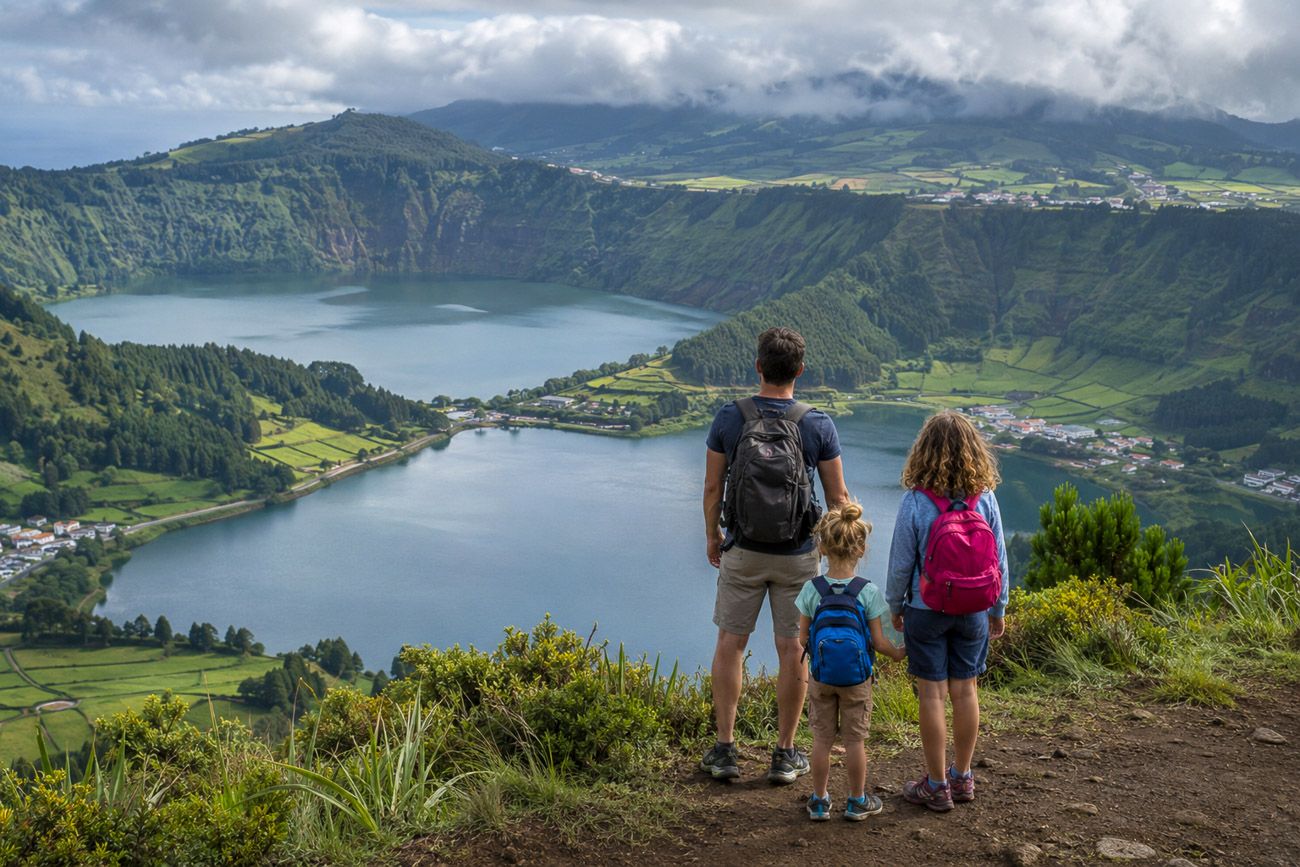
The Azores offer families a more flexible water-based adventure that combines marine wildlife with hiking, volcanic scenery, road trips, and independent exploration.
This Portuguese archipelago sits in the North Atlantic and consists of nine volcanic islands.
For a first remote-ish family adventure by water, the Azores can be considerably easier to manage than Antarctica, Raja Ampat, or even some Galápagos itineraries.
Families can choose from activities such as:
- Whale watching
- Dolphin watching
- Sea kayaking
- Coastal hiking
- Natural swimming areas
- Volcanic landscapes
- Beaches
- Waterfalls
- Geothermal areas
- Boat trips between or around islands
São Miguel is particularly practical for families who want variety without constantly changing accommodation.
You can spend one day on the water looking for whales and dolphins, then follow it with hiking, geothermal areas, waterfalls, or a road trip the next day.
That ability to alternate demanding and easier days can make a significant difference when traveling with children.
Where Should Families Go in the Azores?
São Miguel is the easiest starting point for many families, while islands such as Pico and Faial can add more focused whale-watching, hiking, and island-hopping experiences.
São Miguel offers a particularly broad mix of activities.
Families can explore places such as Sete Cidades, Lagoa do Fogo, Furnas, coastal viewpoints, natural swimming areas, and hiking trails while using the island as a relatively straightforward base.
Pico changes the emphasis.
The island is dominated by Mount Pico, Portugal’s highest mountain, and also has a strong connection to whale watching and the Azores’ maritime history. Families with older children may find it particularly appealing if hiking is as important as being on the water.
Faial can also fit naturally into a multi-island itinerary, especially when paired with Pico.
You don’t need to visit several islands simply because there are nine of them. With younger kids, staying longer on one or two islands usually creates a more manageable pace than repeatedly packing, transferring, and adjusting to new accommodations.
Is Whale Watching in the Azores Good With Kids?
Whale and dolphin watching can be an excellent family activity in the Azores, but parents should choose the boat and excursion length according to their children’s age and comfort on the water.
The waters surrounding the islands support numerous cetacean species at different times of year.
The experience can involve considerable waiting between sightings, however.
A child who loves animals may still become restless after an extended period on a small boat without seeing anything. Seasickness, wind, spray, sun exposure, and limited movement can also affect how enjoyable the excursion becomes.
Ask operators about:
- Minimum ages
- Vessel type
- Typical excursion duration
- Life jackets for children
- Shade and weather protection
- Seasickness considerations
- Toilet availability
- Cancellation policies
- Expected conditions for your travel period
For younger children, a larger vessel with more room to move may sometimes be a better choice than the fastest or most adventurous option.
Visit Azores, the region’s official tourism organization, provides practical information about the islands, outdoor activities, nature, and planning travel throughout the archipelago.
Galápagos or Azores: Which Is Better for Your Family?
Choose the Galápagos if wildlife is the primary reason for your trip; choose the Azores if your family wants greater flexibility and a more even balance between water and land adventures.
The distinction becomes clearer when you compare them directly:
| Consideration | Galápagos | Azores |
|---|---|---|
| Primary appeal | Exceptional wildlife | Wildlife + varied outdoor adventure |
| Snorkeling | Major part of many trips | Available but less central |
| Whale watching | Possible depending on itinerary | Major activity |
| Hiking | Wildlife and volcanic landscapes | Extensive volcanic and coastal hiking |
| Independent road trips | More limited | Excellent |
| Flexible daily pacing | Best with land-based trip | Relatively easy |
| Boat dependence | Moderate to high | Low to moderate |
| Best fit | Wildlife-focused families | Families wanting variety |
Neither destination is inherently better with kids.
The Galápagos justify the additional structure when your children are genuinely fascinated by animals and marine life. The Azores make more sense when family members have different interests or when you want the freedom to decide each morning whether the day should involve a boat, hike, swim, or road trip.
Planning Takeaway
For families who like the idea of remote water-based adventure but aren’t ready for Antarctica or Raja Ampat, the Galápagos and Azores provide two more manageable paths into this style of family adventure travel.
Choose the Galápagos when wildlife encounters are worth structuring much of the trip around boats, guided visitor sites, and protected environments. Choose the Azores when you want wildlife and time on the water without making either one the defining activity every day.
For families new to adventurous travel with kids, the Azores may offer the easier starting point. For children already fascinated by wildlife and comfortable snorkeling and traveling by boat, the Galápagos can justify the additional planning and structure.
Where Can Families Combine Warm Water With Outdoor Adventure?
Belize is one of the strongest family adventure destinations for combining warm-water activities with rainforest, wildlife, caves, and inland exploration without requiring the complicated logistics of more remote destinations such as Raja Ampat.
The Belize Barrier Reef makes snorkeling and other marine experiences an obvious part of a trip, but families don’t need to spend their entire vacation on the coast. Within the same trip, you can move between Caribbean islands and reefs, tropical forest, rivers, caves, wildlife areas, and Maya archaeological sites.
That variety is particularly useful with kids. Several consecutive days of snorkeling and boat excursions can become tiring even when children love the water, while alternating reef days with inland adventures gives everyone a physical and mental change of pace.
Why Does Belize Work So Well for Adventurous Families?
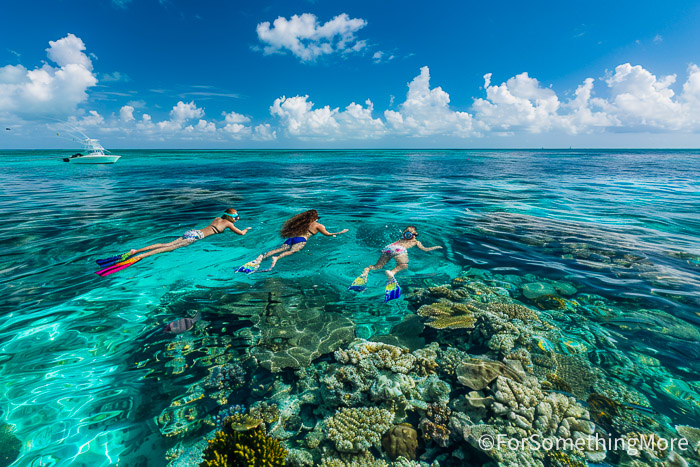
Belize works particularly well for families because it allows you to combine substantially different outdoor environments within one relatively compact country.
A family adventure might include:
- Snorkeling on the Belize Barrier Reef
- Kayaking or paddleboarding
- Swimming
- Wildlife watching
- Mangrove exploration
- Island and beach time
- Jungle hiking
- Cave exploration
- River activities
- Maya archaeological sites
- Wildlife sanctuaries
This makes Belize particularly appealing for families whose interests don’t completely overlap.
A child who loves snorkeling can spend time exploring the reef, while another who prefers hiking, wildlife, or caves still has substantial parts of the trip built around activities they enjoy.
For parents, the advantage is that you don’t have to choose between a tropical water vacation and an active inland adventure. Belize can realistically provide both.
Where Should Families Base Themselves for Reef Adventures?
Ambergris Caye and Caye Caulker are two of the most established bases for families who want convenient access to snorkeling and the Belize Barrier Reef.
Ambergris Caye generally offers more accommodation, restaurants, services, and organized excursions. San Pedro is its main population center and makes a practical base for families who prefer having plenty of options nearby.
Caye Caulker is smaller and generally slower-paced.
The right choice depends less on which island is “best” and more on how much infrastructure your family wants.
Families should also consider mainland coastal areas and other cayes depending on the specific reef experiences they hope to access.
If snorkeling is a priority, choose your base according to the marine areas you actually want to explore rather than simply selecting accommodation first and assuming every reef excursion is equally convenient.
What Can Kids See on the Belize Barrier Reef?
Families can encounter coral reefs, tropical fish, rays, sea turtles, and other marine wildlife while snorkeling in Belize, although sightings always depend on the location and conditions.
For children who are already comfortable snorkeling, reef excursions can provide a very different type of wildlife experience from observing animals on land.
Instead of standing at a viewpoint, kids are entering the ecosystem.
That makes preparation important.
Before booking a substantial snorkeling excursion, consider whether your child can:
- Swim confidently enough for the planned conditions
- Breathe comfortably through a snorkel
- Keep a mask properly fitted
- Follow instructions in open water
- Remain close to the guide and family
- Avoid touching coral or wildlife
- Recognize when they’re becoming tired
- Get back aboard the boat safely
With younger or less experienced children, don’t make their first-ever snorkeling attempt the most ambitious excursion of the trip.
Practice in calm, shallow water first when possible.
How Can Families Combine the Reef With Belize’s Rainforest?
Families can create a more balanced Belize itinerary by splitting their time between the coast or cayes and an inland base near the country’s rainforest and outdoor attractions.
This is where Belize becomes particularly interesting for off-the-beaten-path family adventure travel.
After several days centered on salt water and boats, move inland for activities such as:
- Jungle hiking
- River exploration
- Wildlife watching
- Cave experiences
- Waterfalls
- Maya archaeological sites
The Cayo District is one of the most practical areas for this combination, with San Ignacio commonly used as a base for inland exploration.
Rather than attempting the coast and interior as repeated day trips, families may find it easier to divide the trip into separate bases.
That means packing and transferring once, but it eliminates repeated long days spent traveling back and forth.
With younger kids, fewer but longer stays usually work better than changing accommodations every night or two.
Are Belize’s Caves Appropriate for Kids?
Some cave experiences can work well for families, but parents need to choose them according to children’s ages, swimming abilities, comfort in dark enclosed environments, and the physical demands of the specific excursion.
“Cave tour” can describe very different experiences.
One might involve relatively relaxed tubing through a cave system. Another may require swimming, climbing, scrambling, or spending hours underground.
Do not assume an activity is child-friendly simply because an operator allows children.
Ask specifically about:
- Minimum ages
- Swimming requirements
- Water depth and current
- Walking distance
- Climbing or scrambling
- Time underground
- Required footwear
- Helmets and flotation equipment
- Exit options if a child becomes uncomfortable
- Total excursion duration
A child who loves hiking may still dislike darkness or extended time underground, while another may consider the cave the highlight of the entire trip.
What Do Families Underestimate About Belize?
Families often underestimate how much tropical sun, heat, humidity, and repeated time in the water can reduce children’s energy.
A morning snorkeling excursion can involve much more than snorkeling.
There may be a boat ride, direct sun exposure, swimming against mild currents, repeated water entries, salt, heat, and another boat ride before returning to your accommodation.
Adding a second demanding activity simply because the afternoon is technically free can be counterproductive.
Sun protection deserves particular attention around water because exposure accumulates quickly.
Useful items include:
- UPF rash guards
- Hats
- Sunglasses
- Refillable water bottles
- Appropriate sunscreen
- Dry clothing
- Water shoes where needed
- Lightweight rain protection
- Dry bags
Schedule shade and hydration deliberately rather than waiting until kids say they’re hot or thirsty.
How Should Families Protect the Belize Barrier Reef?
Families should treat snorkeling in Belize as an opportunity to observe the reef without touching coral, disturbing wildlife, or damaging the marine environment.
Basic rules kids can understand include:
- Never stand on coral.
- Don’t touch or collect coral.
- Don’t chase marine animals.
- Keep fins away from the reef.
- Follow guides and protected-area rules.
- Keep an appropriate distance from wildlife.
- Don’t leave trash or equipment behind.
Belize’s Fisheries Department oversees the country’s fisheries resources and marine reserves, and its official information can help families understand protected areas and the rules intended to conserve Belize’s marine ecosystems.
Explaining these rules before children enter the water is much easier than trying to correct behavior once they are excited about something they’ve spotted underwater.
How Many Days Does a Family Need in Belize?
Families should consider roughly a week or more if they want to experience both Belize’s marine and inland environments without turning the trip into a series of transfers.
A practical structure could look something like:
- Days 1–3: Reef and island-based adventures
- Day 4: Transfer and slower afternoon
- Days 5–7: Rainforest, caves, wildlife, and inland exploration
With additional time, stretch both halves rather than simply adding more destinations.
For a longer trip, an intentionally slower day can also be valuable after several active excursions.
This is especially important with younger kids. The fact that an activity is enjoyable does not mean it isn’t tiring.
Planning Takeaway
Belize is one of the most versatile choices among these seven remote family adventures by water because families can experience a major coral reef without committing the entire vacation to boats and snorkeling.
It is particularly well suited to families who want warm water and marine wildlife but also want hiking, caves, rainforest, rivers, and cultural experiences within the same trip.
If your kids are new to water-focused family adventure travel, Belize can also be a more forgiving place to begin than Raja Ampat. You can make snorkeling a major part of the trip without making your family’s enjoyment of the entire destination depend on everyone wanting to be in the water every day.
Where Can Families Have a Cold-Water Adventure Without Going to Antarctica?
Norway’s fjords offer families a dramatic cold-water adventure with far easier logistics than Antarctica, combining kayaking and boat travel with hiking, cycling, waterfalls, villages, and scenic routes that allow you to spend as much—or as little—time on the water as your kids can comfortably handle.
This flexibility is Norway’s biggest advantage for families. You can paddle through a fjord one morning, hike the next day, take a scenic boat trip when everyone needs something easier, and explore by road or rail without making every day dependent on a boat.
For families intrigued by Antarctica but not ready for its expense, remoteness, or expedition-style logistics, Norway provides a much more accessible introduction to cold-water family adventure travel.
Which Norwegian Fjords Are Best for Families?
Nærøyfjord, Geirangerfjord, and Hardangerfjord are strong choices for families because each combines water-based exploration with substantial opportunities for outdoor activities on land.
You don’t need to see every major fjord on a single trip.
A better family strategy is to choose one region and explore it thoroughly rather than spending a significant portion of the vacation moving between destinations.
Some areas worth considering include:
- Nærøyfjord for narrow fjord scenery, kayaking, and easy connections with Flåm
- Aurlandsfjord for paddling, hiking, and access to Flåm and Aurland
- Geirangerfjord for waterfalls, boat excursions, viewpoints, and hiking
- Hardangerfjord for hiking, waterfalls, orchards, and a broader road-trip itinerary
Flåm can be particularly practical for families because it provides access to both water and land experiences without requiring constant accommodation changes.
The Norwegian Scenic Routes program also provides official information about designated driving routes through many of the country’s most distinctive landscapes, which can help families connect fjord adventures with hikes, viewpoints, and other outdoor stops.
Can Kids Kayak in the Norwegian Fjords?
Yes, children can kayak in some Norwegian fjords when conditions, equipment, age requirements, and the specific guided trip are appropriate for them.
Guided family kayaking is generally the most sensible starting point.
Operators may use stable tandem kayaks that allow a child to paddle with an adult, but minimum ages and requirements vary. Families should confirm those policies directly rather than assuming a particular excursion will accommodate their children.
Before booking, ask about:
- Minimum ages
- Tandem kayak availability
- Required swimming ability
- Personal flotation devices in children’s sizes
- Water temperature
- Typical wind and wave conditions
- Paddling distance
- Total excursion duration
- Clothing or dry gear provided
- Guide-to-participant ratios
- Procedures if weather deteriorates
With younger kids, shorter isn’t necessarily less worthwhile.
A relatively brief guided paddle can give children the experience of seeing the fjord from water level without requiring them to maintain interest, body temperature, and paddling effort for several hours.
How Serious Is Cold-Water Safety in Norway?
Families should treat Norway’s fjords as genuinely cold-water environments even when the surface appears calm and the weather feels comfortable.
This is an important distinction.
A sunny summer afternoon beside a quiet fjord can look considerably less intimidating than the open ocean around Antarctica. That doesn’t eliminate the risks associated with entering cold water.
Cold-water immersion can rapidly affect breathing, coordination, and the ability to swim. Children also have less body mass than adults and may become cold more quickly.
For kayaking and other small-watercraft activities:
- Wear properly fitted personal flotation devices.
- Use clothing appropriate to the water temperature, not just the air temperature.
- Follow local guides’ instructions.
- Avoid independent paddling beyond your family’s abilities.
- Check wind and weather conditions.
- Keep younger children paired appropriately with adults.
- Know how long the planned route will take.
Never use calm-looking water as your primary indication that conditions are safe.
Norway’s official water-safety organization, Redningsselskapet—the Norwegian Society for Sea Rescue—provides boating and water-safety information useful for understanding safe recreation around Norway’s coast and waterways.
What Can Families Do If Not Everyone Wants to Kayak?
Families can still experience Norway’s fjords through sightseeing boats, hiking, cycling, scenic drives, rail journeys, and shoreline exploration when kayaking isn’t appropriate or appealing to everyone.
This is one of the strongest reasons Norway works for families with mixed interests or age ranges.
One parent and an older child might choose a guided paddle while another parent spends the same morning on a shorter walk with a younger sibling. The family can then regroup for an activity everyone can comfortably do together.
Alternatives include:
- Fjord cruises
- Short family hikes
- Waterfall walks
- Scenic viewpoints
- Cycling
- Village exploration
- Scenic rail journeys
- Road trips
- Longer hikes for older kids and teenagers
This flexibility also provides a useful backup when weather changes.
Unlike an expedition itinerary where your family is committed to the vessel and its schedule, a Norwegian road trip gives you considerably more control over what happens next.
How Can Families Combine Fjords With Hiking?
Norway works particularly well for families who want water to be one part of an outdoor trip rather than the entire focus.
A realistic itinerary might alternate:
- Kayaking day
- Hiking day
- Scenic boat trip
- Easier village or road-trip day
- Another hike or cycling experience
That pattern helps manage children’s energy.
Most families underestimate how much upper-body effort kayaking can require when children aren’t accustomed to paddling. Following a longer kayaking excursion immediately with a demanding hike may look efficient on an itinerary but feel very different once everyone is actually tired.
Instead, alternate more physically demanding experiences with lower-intensity exploration.
This becomes particularly useful during a week-long family adventure, when the goal should be maintaining enough energy to enjoy the entire trip rather than maximizing activity every day.
What Weather Should Families Expect Around the Fjords?
Families should prepare for cool, wet, windy, and rapidly changing conditions even during the warmer travel season.
Weather can differ considerably by region, elevation, and proximity to the water.
Pack for flexibility rather than relying on one forecast.
Useful items may include:
- Waterproof outer layers
- Warm midlayers
- Quick-drying clothing
- Comfortable hiking shoes
- Warm hat
- Sunglasses
- Sun protection
- Small daypack
- Dry bag for water activities
- Extra socks
Cotton clothing becomes particularly uncomfortable once wet, so quick-drying layers are generally more practical for days combining paddling and hiking.
Rain also doesn’t automatically mean the day is lost. Some hiking and sightseeing can continue safely in light rain, while strong wind may have a much greater impact on kayaking or boat excursions.
Plan according to the activity rather than simply whether precipitation appears in the forecast.
Is Norway Easier Than Antarctica for Families?
Yes, Norway provides many of the qualities families may find appealing about cold-water expedition travel while giving parents considerably more control over logistics and daily pacing.
The experiences aren’t substitutes for each other.
Antarctica offers wildlife, ice, remoteness, and a true expedition environment that Norway cannot replicate. Norway provides fjords, mountains, waterfalls, villages, hiking, kayaking, and much easier independent travel.
The family-planning difference is substantial.
In Norway, you can:
- Choose your accommodation independently.
- Drive between destinations.
- Take rest days.
- Change activities according to weather.
- Separate for different activities.
- Buy supplies relatively easily.
- Shorten a day when kids are tired.
- Combine major adventures with ordinary downtime.
For families who haven’t previously taken children on remote or cold-water adventures, that flexibility can make Norway a sensible step before considering something significantly more demanding.
How Long Should Families Spend in the Norwegian Fjords?
A week gives families enough time to establish a base or explore a small portion of fjord country without turning the trip into a sequence of long transfers.
Trying to cover several famous fjord regions in a short visit can undermine one of Norway’s biggest advantages: the ability to travel slowly.
For a roughly seven-day trip, consider:
- Day 1: Arrival and easy local exploration
- Day 2: Fjord cruise or short water activity
- Day 3: Family hike
- Day 4: Flexible or lower-intensity day
- Day 5: Guided kayaking
- Day 6: Scenic drive, cycling, or another hike
- Day 7: Departure or onward travel
Treat that as a pacing model rather than a fixed itinerary.
Weather may make Tuesday better for kayaking than Wednesday, and a tired child may make an easy afternoon more useful than the hike you originally planned.
Planning Takeaway
Norway’s fjords are one of the strongest choices in this guide for families who want a serious outdoor adventure without committing themselves to expedition travel.
You still need to respect cold water, changing weather, and the physical demands of paddling. But you retain far more control over where you stay, how long you explore, and what your family does each day.
For families curious about colder and more remote family adventure destinations, Norway can also serve as a useful test. If your kids enjoy kayaking in cold environments, hiking in variable weather, wearing technical layers, and adjusting plans when conditions change, you may eventually decide that a more demanding expedition such as Antarctica is a realistic next step.
Can Families Have a Remote Water Adventure Without Leaving the U.S.?
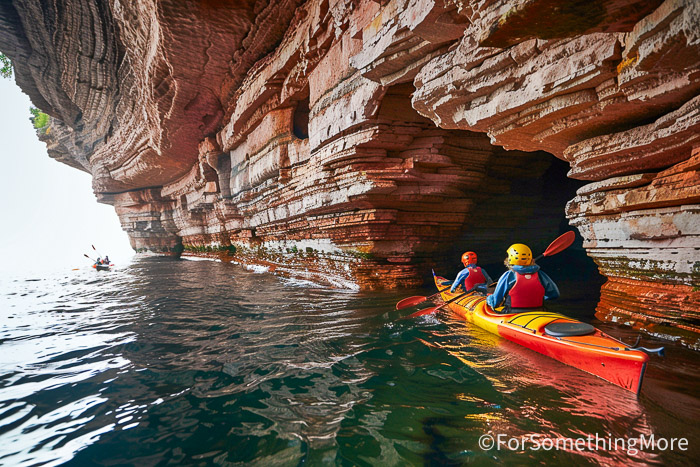
Apostle Islands National Lakeshore in northern Wisconsin offers families a remote-feeling combination of Lake Superior kayaking, islands, beaches, hiking, camping, and historic lighthouses without the international flights and complicated logistics required by many of the other destinations in this guide.
Spread along the Lake Superior shoreline near Bayfield, the Apostle Islands provide a useful middle ground for families. You can experience genuine wilderness and cold-water adventure while retaining the flexibility of a U.S. road trip.
The important distinction is that Lake Superior demands respect. Despite being a lake, its cold water, wind, waves, and rapidly changing conditions can create risks more comparable to sea kayaking than casual paddling on a typical inland lake.
What Can Families Do at Apostle Islands National Lakeshore?
Families can combine paddling and boat-based exploration with beaches, hiking, camping, lighthouse visits, and relatively easy land-based activities.
The national lakeshore includes 21 islands and a stretch of mainland shoreline along Lake Superior.
Depending on children’s ages and your family’s experience, activities can include:
- Sea kayaking
- Guided paddling
- Boat tours
- Island exploration
- Hiking
- Beaches
- Camping
- Lighthouse visits
- Wildlife watching
- Sailing
- Fishing where permitted
The variety matters because kayaking doesn’t have to determine whether your family enjoys the destination.
Younger children can experience Lake Superior from beaches and larger boats, while older children and teenagers may be ready for appropriately guided paddling adventures.
That makes Apostle Islands easier to adapt to mixed ages than a destination where everyone needs to participate in the same water activity.
Are the Apostle Islands Sea Caves Good for Families?
The mainland sea caves can be an excellent family adventure, but reaching them by kayak should only be attempted when children’s abilities, equipment, experience, and Lake Superior conditions make the trip appropriate.
The sandstone formations along the mainland shoreline are among the area’s best-known features.
From the water, paddlers can encounter cliffs, arches, chambers, and passages carved into the shoreline.
This can also make the trip look deceptively approachable in photographs.
Conditions on Lake Superior can change rapidly, and the caves themselves aren’t the only consideration. Families first have to safely paddle the open-water route required to reach and return from them.
Parents shouldn’t select this excursion based simply on whether a child can physically paddle a kayak.
Consider:
- Previous paddling experience
- Swimming ability
- Comfort around deep water
- Cold-water preparation
- Wind and wave conditions
- Appropriate clothing
- Properly fitted PFDs
- Distance and duration
- Ability to follow instructions
- Availability of qualified guides
For families without appropriate sea-kayaking experience, a guided trip is the more sensible option.
How Dangerous Is Lake Superior for Kayaking?
Lake Superior can be hazardous for paddlers because the water remains cold, weather can change quickly, and wind and waves can make conditions considerably more difficult than they initially appear.
This is one of the most important planning points in the entire article.
Do not treat Apostle Islands kayaking like recreational paddling on a small inland lake.
Even during warmer months, cold-water immersion can quickly become dangerous. Wind can also make the return portion of a paddle much more difficult than the outbound journey.
The National Park Service specifically warns visitors about Lake Superior’s cold water, rapidly changing weather, waves, and the specialized preparation required for sea kayaking at Apostle Islands National Lakeshore.
Families should check current National Park Service guidance and local conditions before heading onto the water, even if they have paddled in the area previously.
A calm morning doesn’t guarantee a calm afternoon.
Should Families Take a Guided Kayaking Trip?
A guided kayaking trip is the better choice for most families who want to experience the Apostle Islands from a kayak but don’t already have substantial cold-water sea-kayaking experience.
A qualified local guide can help families evaluate conditions, choose an appropriate route, use suitable equipment, and understand the specific hazards of Lake Superior.
Before booking, ask:
- What is the minimum age?
- Is previous kayaking experience required?
- Are tandem kayaks available?
- What clothing or immersion protection is provided?
- Are children’s PFDs available?
- How long is the trip?
- How much open-water paddling is involved?
- What happens if conditions deteriorate?
- How are cancellations handled?
- What swimming ability is expected?
Minimum age alone shouldn’t determine whether an excursion fits your child.
A child who technically qualifies but becomes cold easily, dislikes waves, or has never spent several hours in a kayak may be better served by an easier introduction.
What Can Younger Kids Do Instead of Sea Kayaking?
Younger children can still experience Apostle Islands National Lakeshore through beaches, hiking, boat trips, camping, and shoreline exploration without undertaking a demanding sea-kayaking excursion.
This flexibility is one reason the destination works well for family adventure travel.
Depending on conditions and current operations, families can consider:
- Exploring accessible mainland areas
- Spending time at beaches
- Taking a sightseeing cruise
- Hiking
- Camping
- Visiting Bayfield
- Exploring lighthouse history
- Joining shorter age-appropriate guided activities
A larger sightseeing boat can provide a useful alternative for families who want to see more of the islands without putting young children into small watercraft.
It can also be a good recovery-day activity after hiking, camping, or other active experiences.
With younger kids, don’t measure the success of the trip by whether you complete the destination’s most demanding activity.
Should Families Camp in the Apostle Islands?
Camping can substantially increase the wilderness element of an Apostle Islands trip, but island camping requires more preparation than staying on the mainland.
Families comfortable with backcountry travel may appreciate the opportunity to camp away from roads and conventional accommodation.
However, island camping can add several logistical layers:
- Boat transportation
- Weather dependence
- Food storage
- Water planning
- Camping equipment
- Limited facilities
- Emergency preparation
- Keeping gear dry
- Managing younger children’s routines
For a family’s first visit, staying around Bayfield or another mainland base and taking day trips may be considerably easier.
Families can then decide whether they want a future trip centered on island camping or multi-day paddling.
This incremental approach can be particularly useful if you’re trying to determine how your kids respond to more remote family adventure vacations.
When Is the Best Time to Visit Apostle Islands With Kids?
The warmer months are generally the most practical time for families interested in hiking, camping, boating, and paddling, but Lake Superior conditions still need to be evaluated day by day.
Don’t assume summer eliminates cold-water risk.
Air temperatures can feel comfortable while the water remains cold enough that an unexpected swim becomes serious.
Weather can also change your plans.
Instead of creating an itinerary where one specific activity must happen on one specific morning, leave enough flexibility to move a kayaking excursion to the safest available conditions.
A weather day isn’t wasted if you can hike, explore Bayfield, visit a beach, or choose another land-based activity instead.
That flexibility is much easier here than in many of the international destinations in this guide.
How Do the Apostle Islands Compare With Norway?
Apostle Islands and the Norwegian fjords both provide cold-water paddling adventures, but Apostle Islands are easier to reach for many U.S. families while Norway offers a much broader combination of fjords, mountains, villages, and transportation options.
For American families, Apostle Islands can serve as a useful introduction to the realities of cold-water adventure.
Kids can learn whether they actually enjoy:
- Wearing technical paddling gear
- Spending extended time in a kayak
- Being on cold open water
- Camping in less-developed settings
- Adjusting plans around weather
- Following stricter water-safety procedures
Those experiences can help parents make better decisions about future family adventure destinations.
If everyone loves it, Norway may become a logical international progression. If cold water and unpredictable paddling conditions prove stressful, your family may be happier focusing future trips on warmer destinations such as Belize or Raja Ampat.
Planning Takeaway
Apostle Islands National Lakeshore is one of the most accessible ways for U.S. families to experience the combination of water, wilderness, remoteness, and changing conditions that defines many of the destinations in this guide.
The key is not confusing accessibility with simplicity. You can drive to northern Wisconsin rather than crossing an ocean, but once your family launches a kayak onto Lake Superior, cold-water safety and changing weather deserve serious attention.
For families who approach those conditions appropriately, Apostle Islands can provide a genuine off-the-beaten-path family adventure—and a practical way to discover whether your kids are ready for even more ambitious water-based adventures farther from home.
How Do You Turn These Destinations Into a Realistic Family Adventure?
The best family adventure destination is not necessarily the most remote or dramatic one; it is the destination whose water conditions, logistics, activities, and daily pace match what your children can realistically handle.
Antarctica, Raja Ampat, the Galápagos, the Azores, Belize, Norway, and the Apostle Islands all offer meaningful adventure by water, but they ask very different things of a family. Some require confidence in open water. Others demand tolerance for cold, long boat journeys, changing weather, or complicated transportation.
The most useful final step is therefore not ranking the destinations from best to worst. It is matching the trip to your family’s current abilities and interests.
Which Destination Is Best for Younger Kids?
Families with younger children should generally favor destinations that offer easy alternatives when someone has had enough time on the water.
The Azores and Belize stand out because families can alternate boating or snorkeling with land-based activities relatively easily. Norway can also work well when you build the trip around shorter outings rather than ambitious paddling days.
With younger kids, flexibility has significant value.
A destination becomes much easier when you can replace a planned boat excursion with:
- A short hike
- A beach
- A wildlife stop
- A scenic drive
- An easier boat ride
- A low-key afternoon
That is harder in Antarctica, where your family is committed to an expedition schedule, or Raja Ampat, where boats are fundamental to accessing much of the destination.
Age alone should not determine the choice, however. A water-confident 8-year-old may be better prepared for Raja Ampat than a much older child who dislikes snorkeling and boat travel.
Which Destinations Are Best for Older Kids and Teenagers?
Older kids and teenagers can generally take fuller advantage of Antarctica, Raja Ampat, longer kayaking trips, and other adventures requiring more stamina, patience, and independence.
That does not mean these destinations automatically become easy once children reach a certain age.
The advantage is that older kids are generally better positioned to:
- Manage their own outdoor gear
- Handle longer travel days
- Follow more complicated safety instructions
- Snorkel or kayak independently where appropriate
- Tolerate changing plans
- Spend longer periods aboard boats
- Understand environmental and wildlife rules
- Appreciate the broader significance of remote destinations
Teenagers interested in wildlife, photography, marine biology, kayaking, hiking, or conservation may get particularly significant value from these trips.
The bigger question is interest.
An ambitious expedition is rarely worthwhile simply because a teenager is physically capable of doing it. They still need to enjoy the basic style of travel.
Which Destination Should Wildlife-Focused Families Choose?
Antarctica and the Galápagos are the strongest choices when wildlife is the primary reason for traveling.
Antarctica emphasizes penguins, seals, whales, seabirds, ice, and expedition-style wildlife observation.
The Galápagos offer an unusually close connection between marine and terrestrial wildlife, with snorkeling, hiking, beaches, and boat excursions all contributing to the experience.
Choose between them largely according to the type of adventure your family wants.
Antarctica involves:
- Cold conditions
- Expedition ships
- Zodiac excursions
- Longer travel
- Greater expense
- More uncertainty
The Galápagos offer:
- Warm-weather activities
- Snorkeling
- Island exploration
- Easier access to land-based experiences
- More flexibility when using an island-based itinerary
Both require children to follow strict wildlife rules.
Which Destination Is Best for Families Who Love Snorkeling?
Raja Ampat and Belize are the strongest choices when snorkeling and marine ecosystems are central to the trip.
Raja Ampat offers a more remote, boat-dependent experience and makes the most sense for families willing to accept additional travel complexity.
Belize provides more flexibility.
Families can spend several days snorkeling the Belize Barrier Reef and then move inland for caves, rainforest, wildlife, rivers, and Maya archaeological sites.
For families still discovering how much their children actually enjoy repeated snorkeling days, Belize may be the more forgiving choice.
For confident swimmers who actively want a marine-focused journey, Raja Ampat can provide a substantially deeper immersion in island and reef exploration.
Which Destination Is Best for Kayaking Families?
Norway and Apostle Islands National Lakeshore are the strongest kayaking-focused destinations in this guide.
Both require families to take cold-water conditions seriously.
Norway provides a broader supporting itinerary of hiking, villages, cycling, rail travel, waterfalls, and scenic driving. That makes it easier for families to keep kayaking as one part of the adventure.
Apostle Islands offer a more concentrated wilderness experience around Lake Superior and can be considerably easier for U.S. families to reach.
For inexperienced families, neither destination should become a place to casually experiment with challenging open-water kayaking.
Start with appropriately guided excursions and gradually increase difficulty based on how your children actually respond.
How Much Adventure Should You Schedule Each Day?
Most families should plan one significant outdoor or water-based experience per day rather than stacking several physically demanding activities together.
This principle becomes more important as the trip becomes longer.
A child may happily snorkel for several hours and still need a quiet afternoon. A teenager may complete a demanding kayaking trip without complaint but have much less enthusiasm for an ambitious hike immediately afterward.
A useful daily rhythm is:
- One primary adventure
- A relaxed meal
- A lower-intensity secondary activity if everyone feels good
- Genuine downtime
- Flexibility for weather or fatigue
Parents often underestimate cumulative fatigue on adventure trips because each activity looks manageable when considered individually.
The goal is not to determine the maximum amount your kids can accomplish. It is to preserve enough energy that they are still enthusiastic several days into the trip.
What Does a Realistic 10-Day Family Adventure Look Like?
A realistic 10-day trip should alternate substantial adventure days with easier days and leave some room for weather or changing energy levels.
The exact activities will vary dramatically by destination, but the pacing framework can remain similar.
A practical model is:
- Day 1: Arrival and settling in
- Day 2: Easy exploration and orientation
- Day 3: First major water adventure
- Day 4: Moderate land-based activity
- Day 5: Second major adventure
- Day 6: Rest or low-intensity exploration
- Day 7: Major water or wildlife experience
- Day 8: Flexible weather day
- Day 9: Final shorter adventure
- Day 10: Departure or onward travel
Antarctica operates differently because expedition itineraries determine much of the schedule. Even there, however, families do not need to participate in every optional excursion simply because it is offered.
For destinations where you control the schedule, resist filling the flexible day before the trip even begins.
A weather day that eventually becomes another adventure is useful. A completely packed itinerary with nowhere to move a canceled excursion is not.
How Should Families Prepare for International Adventure Travel?
Families should review health, entry, insurance, and destination-specific safety information well before departure, particularly when traveling somewhere remote.
Remote family adventure travel requires a different planning threshold from visiting a major city or conventional resort.
Depending on the destination, families may need to consider:
- Travel insurance
- Emergency evacuation coverage
- Routine and destination-specific health precautions
- Medication availability
- Passport validity
- Entry requirements
- Operator minimum ages
- Water safety
- Wildlife regulations
- Weather-related disruptions
The CDC’s Travelers’ Health resources provide destination-specific health information that families can review as part of their preparation for international travel.
For particularly remote destinations, understand what would actually happen if someone became seriously ill or injured rather than assuming normal medical infrastructure will be nearby.
Which of These Seven Family Adventure Destinations Is Right for You?
Choose Antarctica for expedition wildlife, Raja Ampat for remote tropical marine exploration, the Galápagos for wildlife, the Azores for flexibility, Belize for reef-and-rainforest variety, Norway for fjord adventure, and Apostle Islands for a U.S.-based wilderness introduction.
A simple comparison looks like this:
| Destination | Best For |
|---|---|
| Antarctica | Once-in-a-lifetime wildlife expedition |
| Raja Ampat | Remote tropical snorkeling and island exploration |
| Galápagos | Wildlife-focused family adventure |
| Azores | Flexible mix of water and land activities |
| Belize | Reef plus rainforest |
| Norwegian Fjords | Kayaking, hiking, and cold-water adventure |
| Apostle Islands | Accessible U.S. wilderness and paddling |
There is no universally best option.
The family that thrives in Antarctica may find Belize too conventional. The family that loves Belize may decide Raja Ampat requires more boat time than their children want. Another family may discover at Apostle Islands that their kids would happily spend every vacation in a kayak.
Those differences are exactly why matching the destination to your family matters more than simply choosing the most impressive place on the list.
Planning Takeaway
The strongest family adventure vacations challenge kids enough to make the experience feel different from everyday travel without pushing them beyond the conditions, activities, or pace they can realistically manage.
Start with what your family already enjoys. If your kids love snorkeling, look first at Belize or Raja Ampat. If wildlife drives the trip, compare the Galápagos and Antarctica. If paddling and hiking are already part of your family life, Norway or Apostle Islands may be a better fit.
Then build the itinerary with enough flexibility to accommodate weather, fatigue, and changing interests. Remote family adventures work best when the destination provides the challenge and the schedule provides the breathing room.
Final Thoughts – Family Adventure Destinations
Remote family adventures by water can be realistic with the right match between destination, activities, and your children’s abilities. Whether you choose Antarctica, Raja Ampat, the Galápagos, the Azores, Belize, Norway, or the Apostle Islands, the most useful approach is to focus less on doing everything and more on choosing the kind of experience your family is genuinely prepared to enjoy.
These family adventure destinations are best suited to families who are comfortable with active travel, changing conditions, and building flexibility into the itinerary. Pacing matters more than most families expect, especially when boating, snorkeling, kayaking, wildlife excursions, or long travel days are involved. With realistic expectations and the right preparation, you can choose a destination that feels adventurous without making the trip harder than it needs to be.
FAQs – Family Adventure Destinations
- Q: What are the best remote family adventures by water? A: Some of the strongest options include Antarctica, Raja Ampat, the Galápagos Islands, the Azores, Belize, the Norwegian fjords, and Apostle Islands National Lakeshore. The best choice depends on your children’s ages, swimming ability, tolerance for boat travel, and how much flexibility your family wants.
- Q: Which water-based family adventure is best for younger kids? A: The Azores and Belize are generally among the easiest options for younger children because families can alternate water activities with hiking, wildlife, beaches, road trips, and other land-based experiences.
- Q: Which destination is best for older kids and teenagers? A: Antarctica and Raja Ampat are particularly well suited to older kids and teenagers who can handle longer travel days, more time on boats, changing conditions, and activities such as snorkeling, expedition cruising, or wildlife excursions.
- Q: What is the best family adventure destination for wildlife? A: Antarctica and the Galápagos are two of the strongest choices for wildlife-focused families. Antarctica emphasizes penguins, seals, whales, and expedition travel, while the Galápagos combine marine and land-based wildlife with snorkeling and hiking.
- Q: What is the best destination for a family snorkeling trip? A: Raja Ampat and Belize are excellent choices for families who want snorkeling to be a major part of the trip. Raja Ampat offers a more remote and marine-focused experience, while Belize makes it easier to combine reef adventures with rainforest and inland activities.
- Q: Can kids go to Antarctica? A: Yes, kids can visit Antarctica, but the trip generally makes the most sense for children who can handle cold weather, long travel days, expedition schedules, Zodiac excursions, and potentially rough seas. Minimum-age policies vary by operator.
- Q: Is Raja Ampat good for families? A: Raja Ampat can be an excellent family destination for confident swimmers and kids who enjoy snorkeling, boats, marine wildlife, and remote travel. Families should be comfortable with more complicated logistics and less flexibility than they would have at a conventional resort.
- Q: Are the Galápagos Islands good for kids? A: Yes, the Galápagos are particularly good for children interested in wildlife, snorkeling, beaches, and outdoor exploration. Families can choose between cruise-based itineraries and land-based trips depending on how much structure and flexibility they want.
- Q: Are the Azores a good family adventure destination? A: Yes, the Azores are one of the most flexible options for adventurous families because you can combine whale watching, kayaking, hiking, volcanic landscapes, road trips, and natural swimming areas without relying on boats every day.
- Q: Is Belize good for an active family vacation? A: Yes, Belize works especially well for active families because it combines snorkeling and marine wildlife on the Belize Barrier Reef with rainforest, caves, rivers, wildlife, and Maya archaeological sites inland.
- Q: Can kids kayak in the Norwegian fjords? A: Yes, children can kayak in some Norwegian fjords when the trip is appropriate for their age, swimming ability, experience, and the current conditions. Guided family kayaking with properly fitted safety equipment is usually the best starting point.
- Q: Are the Apostle Islands safe for kids? A: Apostle Islands National Lakeshore can be a good family destination, but Lake Superior requires careful planning because of cold water, wind, waves, and rapidly changing weather. Younger kids can still enjoy beaches, hiking, boat tours, camping, and shoreline exploration without sea kayaking.
- Q: How much water experience should kids have before a trip like this? A: It depends on the destination. Some trips, such as the Azores or Norway, can work even if water activities are only one part of the itinerary, while Raja Ampat and snorkeling-focused trips are much more rewarding when children are already confident in the water.
- Q: How many major activities should families plan each day? A: One significant outdoor or water-based activity per day is a realistic starting point for most families. Boat travel, snorkeling, kayaking, sun exposure, cold, and long transfers can create more fatigue than the itinerary may suggest on paper.
- Q: Which remote family water adventure is easiest for U.S. families? A: Apostle Islands National Lakeshore is one of the easiest to reach without international travel, while Belize is one of the more straightforward international options for combining water activities with a broad range of family-friendly outdoor experiences.
+++BEFORE using this information, please read our Legal Disclaimer+++